Penn roofing prices by material and scope — 2026
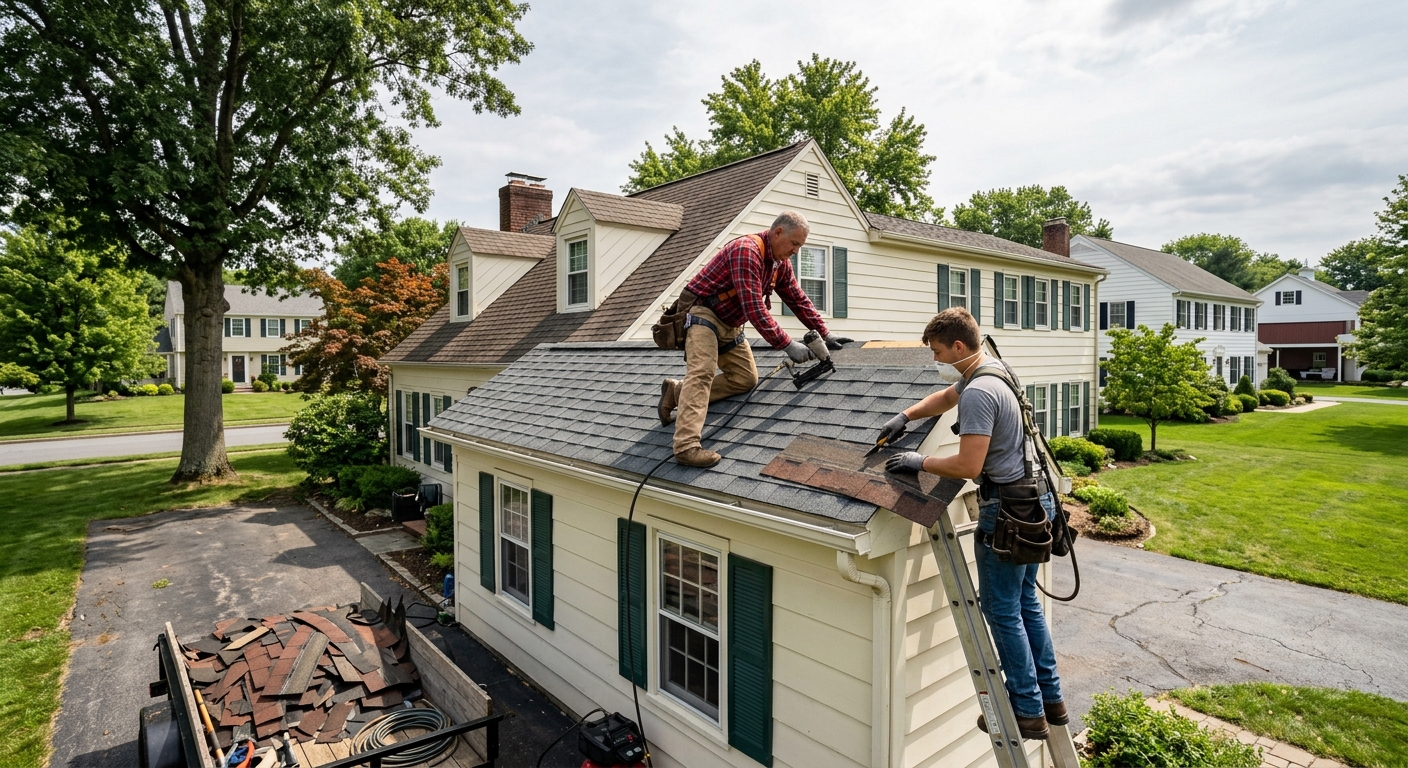
Penn is a part of Chester County where the roofing market looks very different from western Pennsylvania or the Poconos. With a population of just 5,626 and a homeownership rate of 74.0% (U.S. Census Bureau, ACS 2024), the area has a higher-than-average number of older, owner-occupied single-family homes. That's important—these homes, especially in the big subdivisions built from the 1970s through the 1990s in West Goshen and Uwchlan, are now reaching the 30–50 year mark for their first or second roof. That means the overwhelming majority of roof replacements in Penn are full tear-offs for “aging out” asphalt shingle roofs rather than spot repairs for storm damage. With the dominance of architectural asphalt shingles—driven by HOA restrictions and the style of tract development since the 1980s—most homeowners here are facing a substantial but routine replacement job, not a specialty restoration.
In this market, prices are tightly grouped, reflecting strong competition from contractors based in or around West Chester. Shingle roof replacements for typical Penn homes run from $10,500–$22,000, but costs rise for premium or specialty materials and flat roofs. Below is a local cost snapshot:
| Material / Scope |
Lifespan |
Best for |
Price range (installed) |
| Asphalt shingles — architectural (30-yr) |
25–30 yrs |
Most single-family homes in Penn, balances cost and durability |
$10,500–$22,000 |
| Asphalt shingles — impact-resistant (Class 4) |
30+ yrs |
Ridge-line homes facing wind events or insurance premium reduction |
$17,000–$22,000 |
| Metal standing seam |
40–70 yrs |
High-end new construction, long-term owners upgrading durability |
$25,500–$45,000 |
| Flat roof — TPO or EPDM |
15–25 yrs |
Rowhomes, low-slope sections common near borough centers |
$13,000–$26,500 |
| Roof repair — leak or isolated section |
n/a |
Wind or tree-damage repair under one square, typical in Penn storms |
$550–$2,100 |
Prices are estimates for a typical Penn home and vary with roof size, pitch, decking condition and material selection.
Snow load, ice dams and wind in Penn
Snow and wind patterns in Penn present some very local challenges, particularly along the South Valley Hills and the Chester Valley, where ridge-line wind events often damage roofs. The ground snow load here is 30 psf, and winter design temperatures average 14°F. This means you rarely see feet of snow sitting on the roof, but frequent moderate snowfalls with quick freeze-thaw cycles. The freeze-thaw leads to ice dam formation at the eaves—where warm attic air melts the snow, sending water running down to the cold edge, which means refreezing right over the gutter. Over time, this forces meltwater up under the shingles, potentially causing plywood rot or interior leaks. You may see a small repair bill of $550–$2,100 for minor eave leaks, or up to $10,500–$22,000 when you need to replace decking and insulation after prolonged moisture exposure.
This county isn’t in a “snow belt” by Pennsylvania standards, so you won’t order heavy-duty ice and water shield for the entire deck. But in Penn, a standard application along the eaves is essential. Skipping it, or relying on 30-year-old underlayment, is a setup for interior water damage once the next thaw hits. Meanwhile, wind-driven rain from those ridge-line storms can lift shingles and drive rain up under loose tabs—the mechanism most often behind insurance claims and emergency repairs. While rarely producing visible holes, hail can still bruise architectural shingles and void warranties or cause premature granule loss. Always ask your contractor to check for these hidden issues before you face a surprise repair or a denied warranty claim.
What insurance covers on a Penn roof
When roof damage hits in Penn, claims typically start with documentation—before you remove a single shingle, photograph both the roof and any leaks, inside and out. Next, notify your insurer and schedule an adjuster to assess the damage. The adjuster will provide a written scope of loss, showing how much the company will pay. Policies here operate on either “actual cash value” (current value minus age) or “replacement cost” (the full price to restore, less your deductible). Know which you have—many older homes in Penn are insured on cash value because of the age of their roofs and the relatively high median home value.
Pennsylvania’s Home Improvement Consumer Protection Act (HICPA) requires a written contract for any roofing work over $500 in Chester County, and you have a three-day business right of cancellation after signing. It’s illegal for a roofing contractor to offer to waive or “cover” your insurance deductible—contractors violating this are either uninformed or deliberately inviting trouble. Walk away from anyone who proposes this. After your scope of loss is final, reputable Penn contractors will work off the insurer’s line-item estimate, explain the difference between code upgrades and basic repairs, and never pad the bill to “match the check.” In a storm-heavy year, especially after wind events along the South Valley Hills, local adjusters sometimes do on-site walkarounds with both the homeowner and contractor—don’t skip this step, as it ensures your interests are represented. Always keep a copy of your contract, permit, and all receipts for the best chance at a smooth claim and reimbursement.
Water management on a Penn roof
In Penn, a roof without a properly functioning gutter and drainage system is an incomplete job—especially in neighborhoods with tight lot lines and the clay-rich soils of Chester County. Gutters here do more than just catch water; they guide it well away from your foundation. If downspouts dump water too close to the house, moisture can easily work its way into a basement through hairline cracks, especially in older homes with original block or stone foundations.
When replacing a roof, it’s wise to budget for gutter and downspout replacement at the same time. Installing a new roof over old, leaky gutters only guarantees further rot at the eaves and could even void certain workmanship warranties. Many manufacturer and installer warranties require proof that water isn’t backing up or leaking under new shingles. To pair new seamless gutters with a typical Penn roof, expect a range of $1,600–$3,100, depending on gutter material and total footage. Gutter guards add convenience but aren’t always needed unless you have large nearby trees. Good grading, splash blocks, and long extensions finish the job, protecting your investment in both roof and basement for decades to come.
Workmanship vs manufacturer warranty
Homeowners in Penn frequently confuse workmanship warranties—offered by the roofer—and manufacturer warranties, which protect against material defects. A manufacturer warranty covers issues like premature shingle cracking or granule loss due to poor raw materials, but these guarantees are usually prorated and may require annual registration or proof of purchase. A workmanship warranty, by contrast, covers anything the crew missed—like crooked shingle courses, poor flashing, or missed nails—which is where most early leaks happen in Chester County’s high-wind pockets.
Coverage is only as strong as the company backing it; a 25-year workmanship warranty doesn’t help if the roofing company folds after two. Resale and warranty transfer is common in Penn’s move-up suburbs, but paperwork deadlines vary: transfer often must be filed with both the contractor and shingle manufacturer within 30–60 days of closing. Improper attic ventilation, skipping ice barrier at the eaves, or layering new shingles over old will commonly void both warranties in Penn. Always ask about registration timelines and get everything in writing. As a rule, ten years from a local roofer with a known work history in Chester County beats the “lifetime” claim of a company you haven’t seen a truck for since installation.
Timing a roof replacement in Penn
The best months for roofing in Penn are late April through early November, when daytime highs consistently reach above 45°F—ensuring that architectural shingles seal properly and crews aren’t slowed by frost or heat advisories. Crews book up rapidly after heavy spring storms and stay busy through back-to-school, especially since Chester County sits inside the saturated Philadelphia metro market. That market density means you may find good roofers booked three to five weeks in advance, particularly around West Chester and growing townships like Uwchlan and West Goshen.
If your roof fails in deep winter—a February leak or missing shingles from a wind event—expect both material surcharges and higher labor rates. Emergency repairs and tarping can land in the $550–$2,100 range on short notice. A planned replacement in September is almost always smoother and less costly than a rushed job in February, due to easier scheduling, better shingle adhesion, and fewer weather delays. If you’re considering getting on a contractor’s list, aim to call during winter or early spring before the market reaches peak saturation and lead-times balloon.
Permits and code requirements in Penn
Roofing work in Penn falls under the Pennsylvania Uniform Construction Code (UCC), which is based on the International Residential Code (IRC). The PA Department of Labor & Industry oversees enforcement, but in Penn and West Chester Borough, the West Chester Borough Codes Department handles building and roofing permits. Most surrounding townships run their own code offices. If your project in Penn involves full roof replacement with structural deck repair, you’ll need a building permit issued by the relevant local office. Like-for-like shingle repair covering under one roofing square rarely requires a permit in West Chester Borough, so minor repairs are often performed without additional paperwork.
Contractors working on jobs over $500 must be registered with the Pennsylvania Office of Attorney General as a Home Improvement Contractor (HIC), and you can easily verify status at hic.attorneygeneral.gov. Insurance is equally critical—ask for a workers’ compensation certificate, which homeowners can confirm via WCAIS at wcais.pa.gov. There is no specialty roofing license in Pennsylvania; HIC registration is the statewide requirement for contracts over $500, and heavy penalties exist for unregistered work. Always insist on seeing both credentials before work begins, as it’s your legal right under the Home Improvement Consumer Protection Act.
Frequently asked questions — roofing in Penn
How long do architectural shingles last compared to 3-tab?
Architectural shingles on Penn homes typically last 25–30 years—sometimes more if the roof is well vented and tree limbs are kept trimmed back. That’s a significant upgrade from the old 3-tab shingles, which often failed after 15–20 years in the wetter, wind-exposed areas outside West Chester. Many 3-tab roofs installed in the local 1980s–1990s subdivisions are now well past their design life and showing clear signs of trouble. Upgrading to architectural shingles—not only adds curb appeal, but brings real durability for a cost of about $10,500–$22,000 on a typical Penn roof. In this area, you’ll very rarely find anyone still installing 3-tab outside of patch jobs and insurance repairs, especially since architectural shingles better handle the kind of ridge-line wind events common to the county.
What does it mean if my shingles are curling or losing granules?
Curling or granule loss is flashing a warning sign to Penn homeowners: your roof may be out of life, or you’re dealing with underlying ventilation or moisture problems. In southeast Pennsylvania’s freeze-thaw cycles, curling happens when the shingle dries out and loses adhesion, often from repeated sun exposure or steam escaping from a poorly vented attic. Granule loss exposes the shingle mat to UV rays and speeds up aging. Both are common in local subdivisions built before ventilation codes were beefed up; you’ll often find these issues on roofs edging toward their 25th birthday. Sometimes, a limited repair is possible for $550–$2,100, but in most Penn homes, these symptoms mean it’s time to start thinking about full replacement.
What is the best time of year to replace a roof in Penn?
In Penn’s climate, the sweet spot for roofing is from mid-April through October. Temperatures consistently reach levels that ensure shingle adhesive will bond fully, making installations last longer. Early autumn—especially September—offers the best mix of weather stability and contractor availability, and is when many roofers slot in replacements ahead of the winter rain and wind that hit the South Valley Hills. Trying to schedule in February means limited crew availability and may trigger emergency premiums, pushing the cost up towards $2,100 for short-notice repairs. Plan ahead and get on a reputable contractor’s schedule a season in advance if possible.
Does roof pitch affect the price in Penn?
Roof pitch absolutely affects both price and planning here in Penn. Most local subdivisions feature moderate pitches—5/12 to 7/12—so the price bands you see, like $10,500–$22,000 for architectural shingle replacement, reflect these typical roofs. Steeper roofs (think older farmhouses or custom homes) can raise labor costs due to special safety setups or slower progress, while low-pitch or flat roofs—common near West Chester’s town center—may require different materials like TPO or EPDM, which sit in the $13,000–$26,500 range. A reputable Penn contractor will walk your roof and quote accordingly—don’t trust a number over the phone without an on-site look.
What is the difference between replacement cost and actual cash value?
If your Penn home suffers roof damage, your insurance policy will pay either on “actual cash value” or “replacement cost.” Actual cash value means the insurer deducts for age and wear, so a 25-year-old roof gets you cents on the dollar—hardly enough to cover Chester County’s real install costs. Replacement cost, on the other hand, pays for new materials and labor, less your deductible. For example, a full roof replacement on a West Goshen home might cost $17,000, but with actual cash value coverage, you’d get a much smaller payout due to depreciation. Always check your policy and clarify coverage before you need to file a claim, as it can make a five-figure difference after a storm.
Are storm-chasing roofers a problem in Penn?
Storm-chasers—out-of-area companies who arrive after a big storm—do swing through Penn and the surrounding Chester County townships after wind events. They’ll often promise to “cover your deductible” or sign you up on the spot for insurance work, but be very careful: waiving insurance deductibles is prohibited under Pennsylvania law, and contractors who offer to do so are risking your claim—and your wallet. After local storms, it’s common to see a burst in roof repair demand (up to $2,100 for spot repairs), but stick to contractors with real addresses, HIC registration, and local references. The saturated market here means you have real options—don’t hire the first truck after a storm.
Is ice barrier underlayment required in Penn?
In Penn, ice barrier (ice and water shield) underlayment is required by code at the eaves for all roof replacements. The local freeze-thaw cycles and moderate snow load (30 psf) mean even modest winter weather can create ice dam problems if this layer is skipped. Contractors working in West Chester and the surrounding subdivisions will always quote this as standard, and omitting it can void both workmanship and manufacturer warranties on a new install (costing you $10,500–$22,000 if future leakage forces a redo). Always ask to see where your contractor plans to run the barrier—it should extend at least 24 inches past the interior wall line.
How much does a new roof cost in Penn?
For a typical single-family home in Penn, a new architectural shingle roof costs between $10,500–$22,000, depending on roof size, pitch, and shingle model. Metal standing seam upgrades start around $25,500 and can push to $45,000 for larger, custom homes. The numbers reflect tight competition among local contractors and the prevalence of roof replacements in post-1970s subdivisions, especially in West Goshen and Uwchlan. If your home has a flat section—common in Penn’s older areas—TPO/EPDM membrane runs $13,000–$26,500. Always insist on a detailed written quote that matches the actual measurements of your roof, not just a “per square” ballpark.
Why do roofs fail faster in southeastern Pennsylvania?
Roofs in Penn and the southeastern part of Pennsylvania tend to age faster than those in more northern counties. Blame a combination of frequent freeze-thaw, occasional coastal storms, humid summers, and the wind events that ride the South Valley Hills and Chester Valley. Heat and humidity in summer loosen asphalt’s bond, while winter ice dams push water back up under shingles. Over decades, you get soft decking, high rates of granule loss, and attic moisture—especially on 1980s–90s era homes built before better ventilation was standard. That’s why so many Penn homes face full replacements in the $10,500–$22,000 range before their shingles’ advertised lifespan runs out. If you’re proactive with attic ventilation, shingle upgrades, and eave flashing, you can buy more time, but local conditions and builder shortcuts catch up eventually.