Roofing Replacement & Repair costs in Kennett — 2026
Kennett sits in one of Chester County’s most stable, high-income areas, where most homeowners can approach roofing fixes promptly rather than deferring essential work. With 75.9% of residents owning their homes and a median household income of $135,817 (U.S. Census Bureau, ACS 2024), the roofing market here tends toward long-term solutions and quality materials. The dominance of single-family homes—especially in large 1970s–1990s developments in West Goshen and Uwchlan—means Kennett homeowners frequently face full roof replacement, not spot repairs, as original asphalt shingle roofs age out en masse. If your neighborhood features similar housing, expect your roof’s remaining lifespan to mirror those adjacent properties; full replacements are often bulk-priced by HOA or community arrangement in these subdivisions.
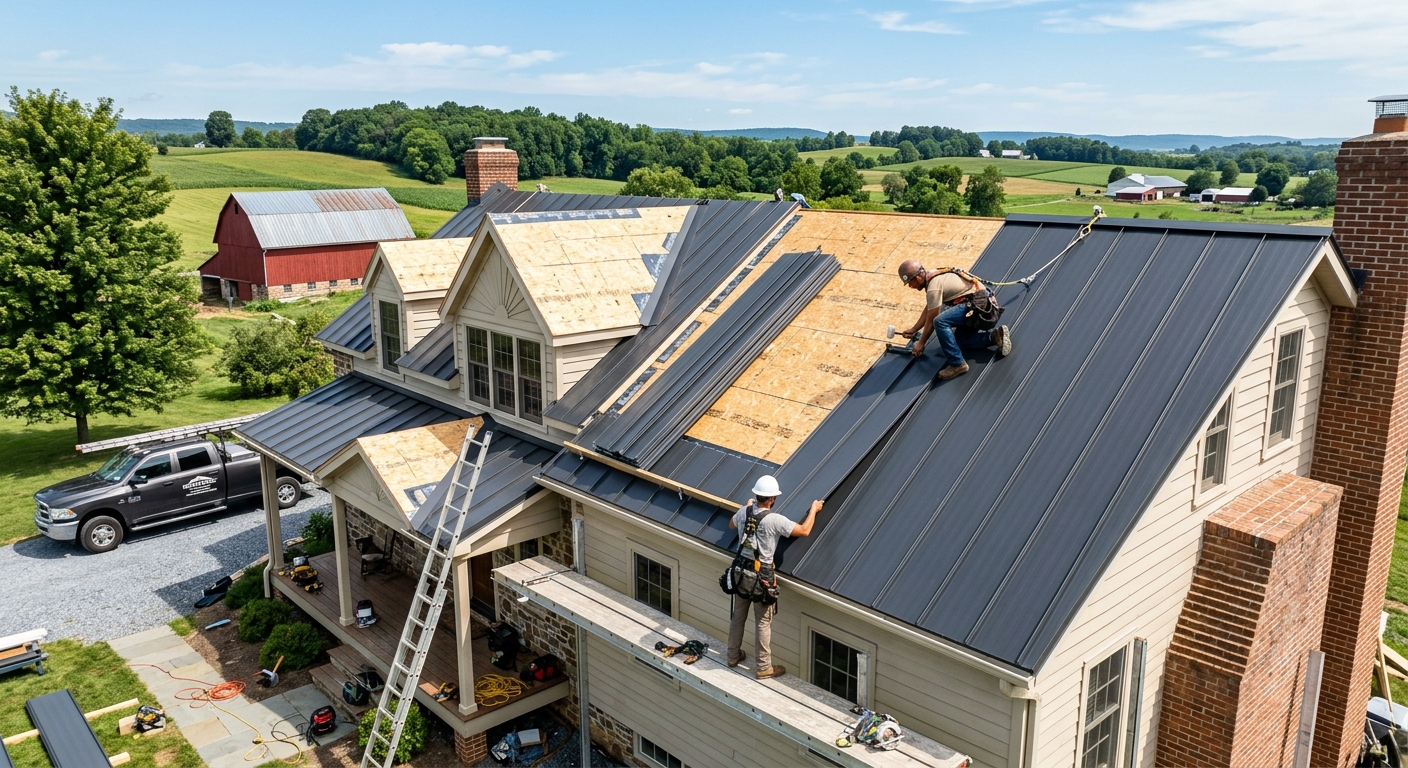
In Kennett, the standard is architectural asphalt shingles, but impact-resistant options and metal standing seam roofs are increasingly popular, especially on high-value homes or where storm damage has occurred. Flat roofs, less common on local single-family homes but often present on additions or garages, require specialty materials like TPO or EPDM. Leak repairs are routine following the kind of wind events central Chester County sees, but most work here is still full replacement due to the age cohort of our housing stock. Below is a realistic guide to current costs:
| Material / Scope |
Lifespan |
Best for |
Price range (installed) |
| Asphalt shingles — architectural (30-yr) |
25–30 yrs |
Suburban single-family, HOAs |
$11,500–$23,500 |
| Asphalt shingles — impact-resistant (Class 4) |
30+ yrs |
Storm-prone ridges, resale-focused owners |
$18,500–$23,500 |
| Metal standing seam |
40–70 yrs |
Premium homes, low-pitch roofs |
$27,500–$48,500 |
| Flat roof — TPO or EPDM |
15–25 yrs |
Porches, garages, additions |
$14,000–$28,500 |
| Roof repair — leak or isolated section |
n/a |
Small storm patches, flashing fixes |
$600–$2,300 |
Prices are estimates for a typical Kennett home and vary with roof size, pitch, decking condition and material selection.
Roofing permits in Kennett: what you need before work starts
In Kennett and throughout Chester County, roofing work falls under the Pennsylvania Uniform Construction Code (UCC), which is based on the International Residential Code (IRC). Oversight is managed by the Pennsylvania Department of Labor & Industry, with most municipalities, including West Chester Borough and its surrounding townships, running their own code enforcement offices. Here’s what you need to know for your project: if you’re replacing your entire roof and structural deck repair is needed, you’ll almost certainly need a building permit from the relevant municipal office. In West Chester Borough, for example, structural deck replacement triggers a permit. Simple like-for-like shingle repair—if smaller than one roofing square (100 square feet)—is commonly performed without a permit.
If your contract exceeds $500 (and in roofing, it nearly always does), the contractor must be registered as a Home Improvement Contractor (HIC) through the Pennsylvania Office of Attorney General. You can independently verify a roofer’s status at hic.attorneygeneral.gov and should insist on seeing proof. All Pennsylvania employers are required to carry workers’ compensation insurance, and up-to-date compliance can be checked via the state’s WCAIS system (wcais.pa.gov).
Get this paperwork right. It is both consumer protection and a legal requirement for any substantial work in Kennett.
Filing a roof claim after a Pennsylvania storm
When your Kennett roof takes storm damage, start with photos or video of every visible impact—before you tarp, clean up, or begin repairs. Insurers expect a clear record of the damage exactly as it looked after the event. Next, contact your insurance carrier and request a written scope of loss; this document details what the adjuster believes is covered. If you proceed with temporary emergency tarping, save those receipts—some policies reimburse this cost, especially after the wind events common in central Chester County.
Pennsylvania insurance settlements often pay out first on “actual cash value,” meaning the depreciated value of your old roof. You’ll receive additional funds for “replacement cost” after you submit proof of completed repairs. Your roofing contractor should help clarify what is and isn’t included in your scope—but don’t sign any agreements promising to “cover your deductible.” Under the Home Improvement Consumer Protection Act, it is prohibited for any contractor to waive, cover, or rebate your insurance deductible; if someone offers, that’s a strong sign to walk away, as you could jeopardize your entire claim and face insurance fraud issues.
Expect an insurer’s adjuster to visit the property to confirm the facts on the ground. Insist on a detailed, itemized contract for all work—Pennsylvania law requires this for projects over $500, and you are entitled to three business days to cancel without penalty if you change your mind after signing.
Why two Kennett roofing quotes can differ by 40%
In Kennett, it isn’t rare to see roof replacement quotes off by thousands—a direct outcome of both house-specific details and the competitive Philadelphia-area market. For instance, an architectural shingle replacement could run anywhere from $11,500 at the entry level all the way to $23,500 for a similar-sized home just across the road. What creates this spread isn’t just profit margin.
The size and design of homes—especially from the 1970s–1990s construction boom in West Goshen and Uwchlan—drive much of this. Bigger roofs (measured in “squares”) and complex pitches require more labor and material, both of which spike pricing. If your house stands on a ridge-line where wind damage is frequent, or along the South Valley Hills where roof decks can show weathering after multiple storms, you may need ice barriers or heavier-duty material, climbing the price ladder.
Chester County homes, with a regional ground snow load of 30 psf and a 14°F winter design temperature, often call for ice barrier membranes at the eaves or even full tear-off and decking repair due to hidden rot. Quotes diverge as these line items accumulate. Below are a few cost drivers specific to Kennett:
| Factor |
Why it matters here |
Cost impact |
| Roof size in squares |
each square is 100 sq ft of roof surface |
primary multiplier |
| Pitch and access |
steep pitches need harnesses and slow the crew |
+20–30% labour |
| Existing layers to tear off |
two or more layers means full tear-off and disposal |
$500–$1,500 per layer |
| Decking condition |
rot is found during tear-off, not before |
$75–$150 per sheet |
| Ice barrier at eaves |
required where ice damming has a history |
$300–$800 |
| Material grade |
3-tab vs architectural vs Class 4 impact-resistant |
$500–$2,500 |
Workmanship vs manufacturer warranty
Most homeowners in Kennett see “30 years” on a warranty and stop reading. But two distinct warranties are at play. The manufacturer warranty covers shingle or membrane defects—granule loss, early cracking, premature curling—usually on a prorated scale: the older your roof, the less cash you get if it fails. This warranty only applies if the product is registered and all rules about underlayments, ventilation, and one-layer installation are followed. Skipping a vent or shingling over old roofs voids it outright, no matter the material.
Then there’s the workmanship warranty: this is your contractor’s promise to fix leaks or installation errors. It can run from two years up to “lifetime.” In reality, it’s only as solid as the company. A 25-year labor warranty from a roofer who opened their doors in 2024 isn’t much security; prioritize a reputable outfit with a verifiable local track record, even if their warranty is just 5 or 10 years. Always ask if warranties are transferable if you sell your house—many require transfer fees or registration within a set number of days after resale. Miss that, and you’re left with nothing if the new owner needs coverage.
How to vet a Kennett roofing contractor
Kennett’s roofing market is crowded, and a quick search will turn up dozens of names—with wildly different credentials. For any work over $500, your contractor must be registered as a Home Improvement Contractor (HIC) with the Pennsylvania Office of Attorney General. Check their HIC status yourself at hic.attorneygeneral.gov. Additionally, ask for a current certificate of workers’ compensation insurance and confirm it is active for the precise business name through WCAIS (wcais.pa.gov).
- Verify HIC registration number and cross-check it online
- Check workers’ compensation coverage using WCAIS
- Ask for local project references from the last two years
- Request a copy of their written contract before signing
- Confirm that any deposit is taken by the registered business, not a sales rep
- Read online reviews, but discount those that sound generic or out-of-market
- Insist on a detailed, written line-item estimate
- Clarify warranty terms—both labor and materials
- Refuse any promise to “cover your deductible” (it’s illegal in PA)
- Visit a finished job they’ve done recently, if possible
- Check their business address—avoid P.O. boxes only or out-of-area listings
- Get proof of lead safety training if your home was built before 1978
Red flags in this saturated market include “storm chaser” door-knockers after storms, crews with no verifiable Chester County address, hurried contracts lacking detail, or a refusal to provide HIC registration info. If you feel rushed or pressured, walk away.
How southeastern Pennsylvania's weather shapes roofing here
In Kennett and across Chester County, the roof you choose and the details you specify are shaped directly by two realities: frequent ridge-line wind events along the South Valley Hills and a regional ground snow load of 30 psf. When a windstorm pushes through, especially in exposed neighborhoods, it can peel or fracture ridge cap and starter courses before most homeowners notice an interior leak—or even visible creasing. Hail is less frequent here than in storm alley counties, but when it does land, it can bruise architectural shingles, knocking off granules and shortening lifespan even without puncturing the surface. $600–$2,300 repairs are common to replace just the worst-hit areas, but full replacements follow sooner if base layers are exposed to repeated wind and precipitation cycles.
The 14°F winter design temperature isn’t just a number on a chart. It means freeze-thaw cycles and snow sitting on low-pitch or poorly insulated eaves—prime conditions for ice damming. When snow melts from an upper roof over a warm attic and refreezes at the cold eaves, water can creep under the shingles and rot the decking. The code in this region requires ice and water shield underlayment at the eaves for a reason; skipping it or undersizing costs you not just code violations but future repair bills well above $1,400 after a single harsh season. This is why Chester County contractors specify detailed ice barrier and attic ventilation strategies, and why a “cheap” quote omitting them almost never plays out well over 10–15 years.
Frequently asked questions — roofing in Kennett
Do metal roofs shed snow better in Kennett?
Metal standing seam roofs are excellent at shedding snow, making them a practical choice for Kennett homeowners interested in reducing winter maintenance risk. Thanks to their smooth surfaces and interlocking seams, snow and ice slide off earlier and more evenly than they do on asphalt shingles, helping prevent the heavy accumulation that can cause leaks or ice dams. With Chester County’s ground snow load at 30 psf, this matters most on lower-pitch roofs and on homes that regularly see snow pile up at the eaves. That said, the cost for a quality metal roof is significant—typically $27,500–$48,500. This investment makes sense if you plan to stay long-term, are already experiencing snow-related roof problems, or want minimal roof maintenance. Otherwise, for many Kennett homes, a well-installed architectural shingle roof with proper underlayment will suffice.
How much deposit should I pay a roofer upfront?
In Kennett—and all across Pennsylvania—the law says your deposit on any roofing or home improvement contract over $500 cannot exceed one third (1/3) of the total project price. For example, if your new roof is quoted at $18,500, your maximum legal deposit would be $6,166. Homeowners should never pay more than this upfront. It’s best practice to pay the deposit by check or credit card to the registered business, not the sales rep personally, and to get a written receipt. Never pay in cash. Only pay the final balance when all contracted work is completed and you’ve received any required warranties and code compliance documentation. Trustworthy Kennett contractors will know and follow these rules—pushback is a red flag.
Does roof pitch affect the price in Kennett?
Roof pitch is a major cost driver for Kennett homeowners, especially on the steeper designs common in subdivisions built between 1970 and 1990. Steeper roofs slow down installation, require special harnesses for safety, and boost the labor component by 20–30%. For instance, replacing a 30-year architectural shingle roof on a steep-pitch house might jump from $11,500 on a low slope to $18,500 or more for higher pitches due to the extra complexity, even if the footprint is identical. The majority of local contractors factor this in, so expect your quote to rise with increased roof angle or hard-to-access rooflines.
How much does a flat roof replacement cost in Kennett?
For flat roof sections on Kennett homes—like additions, porches, or garages—expect a full TPO or EPDM membrane replacement to range between $14,000–$28,500. The typical job lands around $20,000 for an average-size roof. Reasons for higher prices include the need to address any underlying deck rot, upgraded insulation, and premium membrane or flashing systems required to meet Pennsylvania’s building code for such roofs. Always ask if your flat roof presents ponding risk or if custom internal drains are in play, as these drive costs even higher.
Does Kennett get enough hail to justify Class 4 shingles?
Hail occurs in Chester County but isn’t as routine or severe here as in midwestern hail alley regions. However, the local wind events—especially on exposed ridge-line homes—cause more annual roof claims. If you own a home in a spot hit by past storm debris or you want the peace of mind and insurance discounts that sometimes come with impact-resistant materials, a Class 4 shingle may make sense. Expect to pay toward the upper end of the scale: $18,500–$23,500 for a full replacement. For most Kennett homes, standard architectural shingles sufficed historically, but a Class 4 upgrade is a reasonable hedge if you plan to stay long or have experienced past storm roof damage.
Does homeowner's insurance cover roof replacement in Kennett?
Homeowner’s insurance will usually cover roof replacement in Kennett if the damage is sudden and from a covered event—like wind, hail, or falling branches. Aging, routine wear, and maintenance issues aren’t covered. After a qualifying storm, adjusters will generally pay actual cash value first, with additional replacement cost once documentation of a finished roof is submitted. For context, the payout for “replacement cost value” for a typical architectural asphalt roof could land at $18,500, less your deductible. Be wary of contractors offering to “eat” your deductible; Pennsylvania law prohibits this, and violations can put your entire claim at risk.
What is the best time of year to replace a roof in Kennett?
The optimal time to schedule roofing in Kennett is spring through early fall, when temperatures are just right for shingle adhesion and installers can finish work without frequent weather pauses. Harsh winter cold (with a design temperature of 14°F in Chester County) makes installation more difficult and may compromise shingle sealing, while late summer can bring the lingering storms that central Chester County sees. Booking early in the year also helps you avoid the midsummer rush, which sometimes pushes prices toward the top of the band—think $23,500 on a shingle replacement in a backlog period. If your roof isn’t failing actively, wait for the best crew availability and temperate weather.
Can I install new shingles over old ones in Pennsylvania?
Pennsylvania’s building code technically allows up to two layers of asphalt shingles, but most Chester County inspectors and reputable contractors advise against it—especially given the snow load and freeze-thaw cycles around Kennett. Layering can hide deck rot, traps heat, and voids most manufacturer warranties. If you do go this route, know it cuts your upfront price a bit, but you’ll likely pay more later, as a future tear-off gets pricier—expect at least $500–$1,500 more per layer for disposal and extra labor. Full tear-off, inspection, and correct underlayment are best for local homes.
How can I tell if my roof decking is rotted?
Most decking rot in Kennett goes unnoticed until the old shingles come off. But a few signs can tip you off: spongy spots underfoot in the attic, staining around eaves, or the telltale musty odor of wet wood. From the exterior, chronic ice damming (common here given local winter temperatures) or visible sagging sections often mean deck damage. Once construction begins, any suspect sheathing gets exposed and must be replaced, usually at an added cost of $75–$150 per sheet. Don’t let a contractor skip this—unaddressed rot shortens the life of even the best roofing system.