Ohio roofing prices by material and scope — 2026
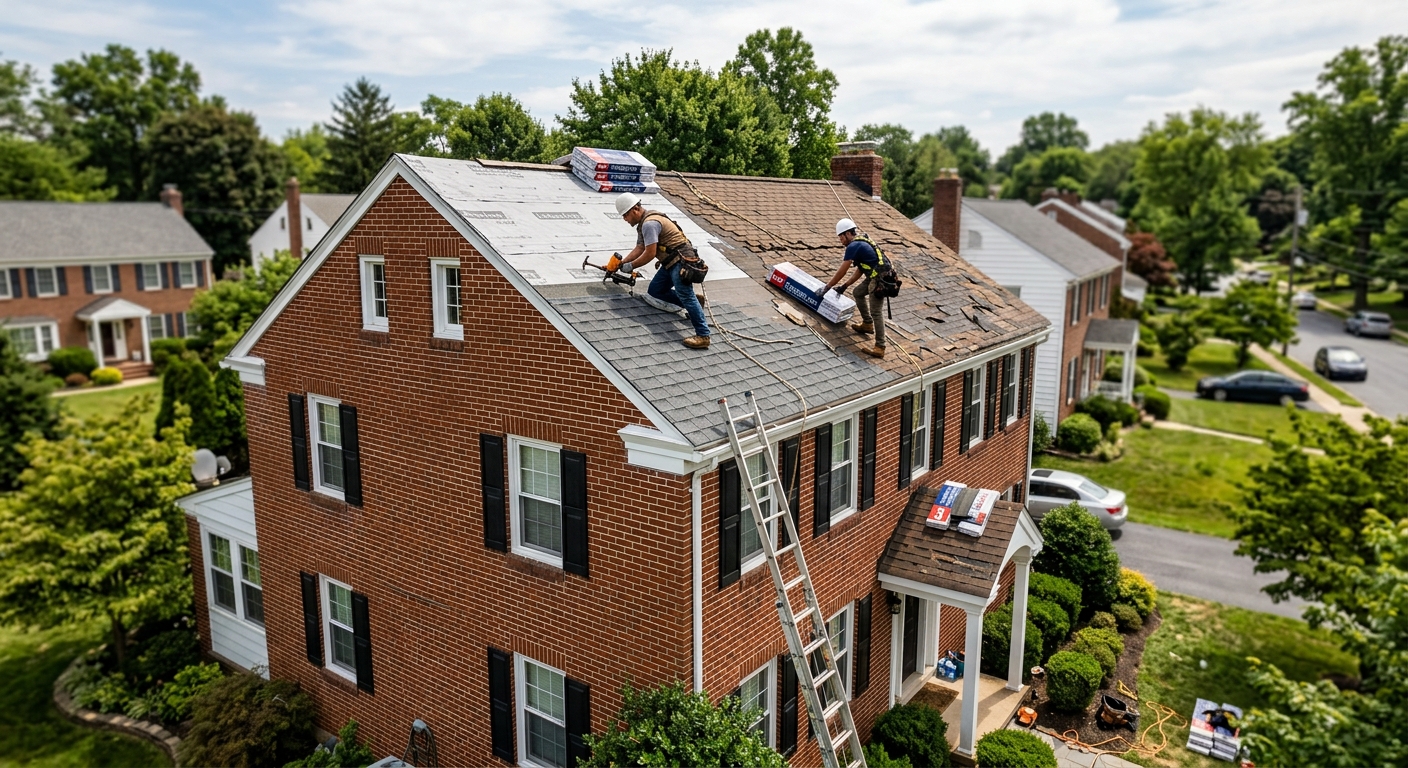
Ohio homeowners planning for a new roof in 2026 are working within a market that closely reflects Allegheny County, Pennsylvania. With a homeownership rate above 86% and more than 70% of homes being single-family residences (U.S. Census Bureau, ACS 2024), this is a region where most roofing projects are full tear-offs, not overlays. As in much of Allegheny County, many Ohio homes were built before 1980, meaning roof work often reveals issues like brittle boards or hidden leaks—especially likely in houses from the 1900–1950 era, when deck repairs come up during almost every reroof. Contractors here are seasoned at prepping for surprise repairs and know that what looks like a straightforward shingle swap often expands into replacing rotted sheathing under old, weathered roofs.
This is not a place where cutting corners on scope pays off. The frequent involvement of deck repairs and tear-offs in older housing stock is built into the cost bands, and the Ohio Valley's weather patterns demand a higher standard of underlayment and material selection. Expect any reputable quote to include specific allowances for sheathing, tear-off, and ice/water shield—especially on 25- to 30-year-old structures. Here’s what to budget for a replacement or repair project:
| Material / Scope |
Lifespan |
Best for |
Price range (installed) |
| Asphalt shingles — architectural (30-yr) |
25–30 yrs |
Standard single-family roofs needing good wind resistance and cost balance |
$10,500–$22,000 |
| Asphalt shingles — impact-resistant (Class 4) |
30+ yrs |
Areas subject to hail or wind, insurance discounts possible |
$17,000–$22,000 |
| Metal standing seam |
40–70 yrs |
Steep or visible roofs, hail- and snow-prone sites |
$25,500–$45,000 |
| Flat roof — TPO or EPDM |
15–25 yrs |
Low-slope additions, garages, dormers |
$13,000–$26,500 |
| Roof repair — leak or isolated section |
n/a |
Targeted fixes, flashing, minor storm damage |
$550–$2,100 |
Prices are estimates for a typical Ohio home and vary with roof size, pitch, decking condition and material selection.
How to compare roofing quotes in Ohio
When reviewing an Ohio roofing quote, details matter because the region’s older roofs and weather exposure lead to surprises mid-job. Always insist that the roof area is listed in "squares"—one square equals 100 square feet—with the roof pitch clearly stated. A thorough estimate for an Ohio home will break out tear-off and disposal of existing layers, itemize underlayment by brand and thickness, specify how much ice and water shield (especially at eaves) is included, and list the price per sheet for decking replacement if rot or breakage is found. Flashing and vent boots need to be described in materials and scope, not just “as needed.”
Demand two separate warranty descriptions: one from the installer for workmanship, another from the shingle manufacturer. Confirm the payment schedule—most Ohio jobs require a deposit under 15%. If a quote glosses over scope and rolls everything into a lump sum without a clear measurement, it’s hiding where corners might be cut. Especially in neighborhoods with homes over 50 years old, ask about contingencies for unseen repairs—they should specify labor and sheet replacement, not work on faith or “as required.” Below is what you should expect (and what to be wary of):
| Line item |
What to look for |
Red flag if… |
| Roof area |
stated in squares, with pitch |
no measurement given |
| Tear-off and disposal |
number of layers, dumpster included |
bundled into one figure |
| Underlayment |
product type and coverage |
listed only as 'felt' |
| Ice and water shield |
coverage height at eaves |
omitted entirely |
| Decking |
per-sheet contingency price |
no allowance at all |
| Warranty |
workmanship years stated separately |
only the shingle warranty |
| Payment |
deposit under 15%, balance on completion |
large upfront cash |
Water management on a Ohio roof
On any Ohio roof, managing water means more than just moving it off the shingles. The full system includes gutters, downspouts, drip edge, and the grade around your foundation. Replacing your roof without also examining the gutters is only half the job—old or undersized gutters in Allegheny County and adjacent Ohio neighborhoods can leave new roof edges vulnerable to wood rot or ice damming. Downspouts that dump water too close to the house set the stage for foundation seepage and basement moisture, a frequent headache in hilly, clay-heavy terrain like this.
Local climate often drives insurance warranty language, requiring that water is directed at least five feet from the foundation to limit claims. Many roofing manufacturers in Ohio will void water-related warranties if there’s obvious ponding or water backing up at eaves due to failed or missing gutters. For most homes, replacing gutters as part of a full re-roof runs an additional $2,200–$4,200 depending on size, gutter material, and number of stories. Skimping on this piece means risking more expensive deck or fascia repairs down the road. It’s always worth getting a bundled quote to finish both at the same time and confirm the drip edge is continuous and correctly lapped into the gutter run.
The cost drivers behind a Ohio roof replacement
When you compare roof quotes in Ohio, price gaps reflect real differences in what gets done and why, not just who answers the phone. A major reason for this: the makeup of the local housing stock. Much of it was built between 1900 and 1950, and that era’s roofs routinely need full tear-offs because of aged decking, especially after heavy Ohio Valley storms that exploit even minor weak spots. For example, older neighborhoods typically hide a layer of brittle planks or water-damaged plywood—a factor that can push the true cost for decking replacement to $75–$150 per sheet, multiplied across your roof area as needed.
The region’s snow load of 30 pounds per square foot and the documented freeze-thaw cycles mean contractors are forced to build in contingencies for rain, snowmelt, and ice dam protection. A roof estimate for an Ohio house must consider whether the slope is steep or difficult to access, as every 12/12 pitch or 3-story edge translates to harness work, extra labor, and a steeper price (often 20–30% more). If your estimate for a full architectural shingle replacement comes in at $17,000–$22,000, it may simply reflect the brute force required by the current roof’s complexity and the county’s layered, weathered housing stock.
| Factor |
Why it matters here |
Cost impact |
| Roof size in squares |
each square is 100 sq ft of roof surface |
primary multiplier |
| Pitch and access |
steep pitches need harnesses and slow the crew |
+20–30% labour |
| Existing layers to tear off |
two or more layers means full tear-off and disposal |
$500–$1,500 per layer |
| Decking condition |
rot is found during tear-off, not before |
$75–$150 per sheet |
| Ice barrier at eaves |
required where ice damming has a history |
$300–$800 |
| Material grade |
3-tab vs architectural vs Class 4 impact-resistant |
$500–$2,500 |
Workmanship vs manufacturer warranty
Most Ohio homeowners see "30-year warranty" on a roofing quote and don’t ask what it really covers. Here, warranties split into two types. The manufacturer’s warranty protects against defects in the shingles or metal itself—usually prorated after the first decade or so. It does not pay for leaks caused by bad flashing, poor nailing, or skipped ice barrier. Instead, that’s the domain of the installer’s (workmanship) warranty. In Ohio and surrounding Allegheny County, reputable roofing companies offer between 5 and 12 years on workmanship for asphalt shingle jobs, but companies come and go, and even a flashy 25-year promise from a young firm risks being worthless if they fold after a few seasons.
Pay attention to transferability if you’re thinking of selling—manufacturer warranties often transfer for a small fee within 10 years, but workmanship coverage sometimes disappears at resale. Both warranties can be voided by poor attic ventilation or shingling over old layers, which isn’t best practice in this housing stock anyway. Many manufacturers require the product and installation to be registered within 60 days of completion to keep coverage valid. In sum, ask to see both warranty documents in writing and make sure the labor warranty comes from a company with real roots in the local business community.
How southwestern Pennsylvania's weather shapes roofing here
Ohio sits beneath the storm tracks that sweep across the Ohio Valley, delivering strong winds and hail that directly test roofing systems here. Every roofing contractor in this area has opened up architectural shingle roofs to find bruising from hail stones—impact wounds that don’t create holes but compromise the shingle’s matting, setting up leaks and short lives. Such weather susceptibility is why so many Ohio and Allegheny County homeowners choose architectural or Class 4 impact-resistant shingles, despite their higher install range of $17,000–$22,000.
The regional ground snow load of 30 psf is a technical number with big implications: as snow rounds up at the eave in winter, heat from inside the home melts it higher up, letting liquid migrate downslope and refreeze at the edge. This creates an ice dam—one of the main causes of water backing up under shingles, leading to interior leaks and rotten decking. The result is that Ohio roofing jobs expect to lay at least a 3-foot course of ice and water shield at all eaves, adding a direct line item cost (really in the $300–$800 region), and smart roofers never skip the detail.
Freeze-thaw cycles, paired with hilly and clay-heavy terrain, test every gutter run and downspout. Foundation seepage is a perennial challenge; when water is not piped well away from the base of a house, you see standing water in basements after big thaws or rain-on-snow events. As a result, water management details—including gutters, drip edge, and downspout extensions—aren’t just add-ons, but essential system pieces that protect Ohio homes against annual roof and basement repairs.
Permits and code requirements in Ohio
Roofing in Ohio is governed by the Pennsylvania Uniform Construction Code (UCC), based on the International Residential Code. Authority for these regulations comes from the Pennsylvania Department of Labor & Industry (L&I), and permits are enforced either by your local municipality or directly by L&I if your municipality has opted out.
In Pittsburgh, which serves as the regulatory example for Allegheny County and by extension this corner of Ohio, replacing more than 50% of your roof’s total area typically means you need a building permit. Small shingle repairs under that threshold may proceed without a permit. Do not trust anyone who says you never need one, or who suggests skipping the step for convenience—proper permitting protects your insurance coverage and resale value.
Before you sign a contract over $500, verify your contractor’s Home Improvement Contractor (HIC) registration using the official state portal: hic.attorneygeneral.gov. For every employer, workers’ compensation is mandatory by law. You can confirm a contractor’s coverage on the state’s WCAIS database at wcais.pa.gov. These checks take five minutes and separate professionals from risk-takers. Never accept "we’re registered" without seeing valid proof from these sources on your own screen.
Frequently asked questions — roofing in Ohio
What underlayment should be used on a Ohio roof?
A dependable underlayment for an Ohio roof is a synthetic felt (not old-style asphalt felt) for the main field and ice barrier at the eaves and valleys. The reason: with frequent freeze-thaw cycles and storm tracks cutting across the Ohio Valley, moisture can get trapped and seep beneath shingles. For typical architectural shingle installations in this area, a quote should list a name-brand synthetic underlayment plus ice and water shield extending at least 3 feet up from every eave. If your project is in the $10,500–$22,000 band, insist on seeing both listed. This combination prevents leaks from wind-driven rain, ice damming, and hidden deck damage—problems common in Ohio and southwestern Pennsylvania housing.
What causes ice dams on Ohio roofs?
Ice dams are a major issue in Ohio and Allegheny County because of our winter design temperature of 8°F and ground snow load of 30 psf. They form when warm attic air melts the snow high on your roof, only for that runoff to freeze again at the colder eaves. The growing ice ridge traps water, forcing it up under the shingles and into the decking, which can cause leaks even when your roof looks fine from the ground. Preventing ice dams requires a detailed approach: air-seal your attic, maintain good insulation, and always include at least 3 feet of ice/water shield at the edge—usually a $300–$800 line on a proper estimate.
Can I inspect my own roof safely?
Many Ohio homeowners want to climb up and check their roofs, especially after a storm—but even experienced contractors in this part of Pennsylvania are wary on steep or multi-story slopes. Most residential roofs here are at least a 7/12 pitch or higher, and slippery algae or old moss are common. If you’re set on an inspection, use binoculars from the ground, walk flat decks gently, and never get on wet or frosted shingles. The costs of an incorrect self-diagnosis or injury far outweigh a professional’s fee—which, for a repair diagnosis, might run $550–$2,100 but includes liability, equipment, and repairs if something is found.
Is ice barrier underlayment required in Ohio?
In Ohio, and in nearby Allegheny County, ice barrier (ice and water shield) is not only required by code on most jobs but absolutely essential for local weather conditions. The Pennsylvania Uniform Construction Code, enforced either by the local municipality or L&I, drives this. Most roofers in this area budget for at least a 3-foot strip at all eaves—but on homes with a history of ice damming, valleys and penetrations often get treated too. Your contract should show it as a separate, named line item—frequently in the $300–$800 band for a typical roof.
What is the best time of year to replace a roof in Ohio?
The window for best roofing weather in Ohio is late spring to mid-fall: temperatures are warm, material adhesives work properly, and you avoid delays from snow or ice. Contractors in Allegheny County and Ohio push to get jobs closed in these months for safety and to meet manufacturer warranty requirements for architectural shingles. If you have to install in winter, expect slower progress and a risk that cold snaps can affect sealant and nail pops. Emergency leak repairs can be done any time, typically in the $550–$2,100 range, but for full replacements the season matters for workmanship and inspection.
Why is my Ohio roofing quote higher than the online average?
Many online “average roof cost” calculators miss the real conditions in Ohio and Allegheny County. Why? Local homes are more likely to be 70–120 years old, with layered decking and a history of wind or hail damage needing extra prep. The code here also expects ice barrier at the eaves and at least one deck repair allowance—which adds up. So, a quote of $17,000–$22,000 for a typical architectural shingle replacement reflects both the scope of work and the higher standard demanded by this region’s weather and housing stock—not just labor or overhead.
Will filing a roof claim raise my premium?
In Ohio and Pennsylvania, filing a roof claim—especially after hail or storm—can, but doesn’t always, lead to higher premiums or a non-renewal. Insurers track weather events, frequency of claims in your ZIP code, and the details of your property. One claim for a covered wind or hail loss (in the $10,500–$22,000 replacement range) usually won’t trigger a spike by itself, but repeated claims or evidence of poor maintenance can. It's smart to speak directly with your agent before filing and document all damage with time-stamped photos, especially in an area with strong Ohio Valley storms.
Does roof pitch affect the price in Ohio?
Yes, and more so here than in flatter parts of the country. Steeper roof pitches in Ohio and Allegheny County slow down labor (because of required harnesses and staged scaffolding) and sometimes increase waste. A 10/12 or steeper slope can drive your total install up by 20–30%, adding several thousand dollars to a full replacement—so a $17,000–$22,000 quote might be right in line if your home has these conditions. For safety and insurance reasons, reputable contractors in this market never fudge this detail.
How many quotes should I get for a roof in Ohio?
In Ohio, especially in a saturated market like the Greater Pittsburgh/Allegheny region, get at least three written estimates. This lets you see a real range—not just price, but scope and warranty—across established local companies. Too few quotes, and you risk missing the going rate or a material upgrade that makes sense for your address. Too many, and the decision can get overwhelming. Every estimate in this market for architectural shingles should fall within the $10,500–$22,000 range unless something unusual is discovered. Make sure all quotes detail squares, layers, underlayment, and warranty up front—then compare apples to apples.