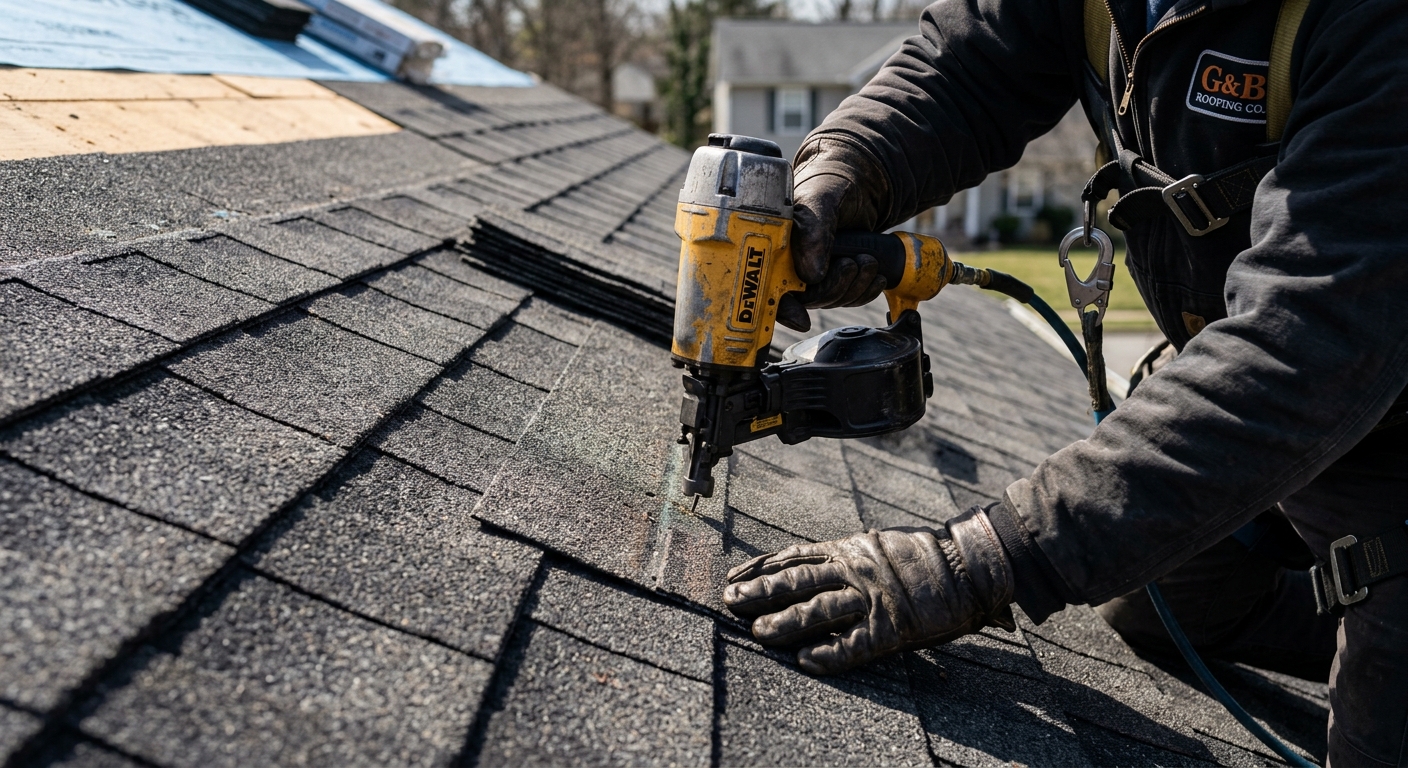
Roofing Replacement & Repair costs in Southampton — 2026
Southampton’s roofing market is shaped by the fact that 68.9% of homes here are single-family (U.S. Census Bureau, ACS 2024), with a high homeownership rate of 84.2%. These are houses owned by people who typically invest in long-term solutions rather than short-term patches. The price you’ll pay for a new roof in Southampton is also closely tied to our local housing stock. A large share of Franklin County houses date from the 1950–1980 period, meaning many roofs here are reaching the end of their original lifespan at the same time. If your neighbors are starting to replace their roofs, you’re likely facing the same timing and the same market forces.
What does it mean that most homes around here are single-layer asphalt tear-offs? For Southampton, it means roof scopes are often straightforward: one layer to remove, original sheathing underneath, and minimal surprises—until you run into a spot of rot or water damage, which is common on these 40–70 year old houses as the last of that era’s builder-grade roofs give out.
Here’s what you can expect to pay for roofing in Southampton in 2026:
| Material / Scope |
Lifespan |
Best for |
Price range (installed) |
| Asphalt shingles — architectural (30-yr) |
25–30 yrs |
Mid-range single-family replacements, curb appeal, insurance compliance |
$9,400–$20,000 |
| Asphalt shingles — impact-resistant (Class 4) |
30+ yrs |
Storm-exposed homes, insurance premium savings |
$15,500–$20,000 |
| Metal standing seam |
40–70 yrs |
Long-term owners, rural settings, snow management |
$22,500–$40,500 |
| Flat roof — TPO or EPDM |
15–25 yrs |
Low-slope additions, porch roofs, rowhouse backs |
$12,000–$23,500 |
| Roof repair — leak or isolated section |
n/a |
Targeted fixes, recent leaks, flashing issues |
$500–$1,900 |
Prices are estimates for a typical Southampton home and vary with roof size, pitch, decking condition and material selection.
Why gutters get replaced with the roof
In Southampton, replacing a roof without addressing the gutter system is leaving the job half-done. Gutters, downspouts, drip edges, and your grading all act together to move water away from your foundation. With the freeze-thaw cycles and moderate snowfall we get in south-central Pennsylvania, any failure in this water system – like a bent gutter or a poorly angling downspout – risks ice backup and leaks in winter, and soggy basements or rotted sills come spring. Older gutters often pull away from the fascia when the old roof is torn off or they’re clogged from years of shingle granules.
In a market like Southampton’s, many homes have the original 1950s–80s aluminum gutters, which are past their prime. If downspouts dump water right at your foundation (a common issue on older subdivisions here), you’re inviting trouble: surface water can seep into finished basements, ruining carpets and drywall. Most modern roof warranties require drainage to be up to their standards – so a neglected gutter system means you may not be covered if things go wrong.
Expect to pay $1,900–$3,800 for new seamless aluminum gutters and downspouts on a typical Southampton roof when done alongside a full replacement. Gutter guards, if you want them, add another $900–$1,600, but for low-tree lots it may not be needed.
TPO and EPDM on Southampton homes
Flat and low-slope roof sections are common on Southampton homes, especially on back additions or enclosed porches. These areas need a membrane roof – usually TPO or EPDM – because asphalt shingles simply don’t work below a 3-in-12 pitch. On a 2/12 or flatter roof, water can work backwards under the shingles and cause the plywood or planks beneath to rot. Ponding water in our climate, with all its freeze-thaw cycles, adds up to expensive repairs when a short-lived material is used on a flat section.
That’s why TPO and EPDM are specified for these spots: they’re seamless (or nearly so), handle standing water, and flex with temperature swings. Lifespan for a quality membrane roof is typically 15–25 years in Franklin County, versus the 25–30 year average for architectural shingles on a steep main roof. Membrane roof costs here run $12,000–$23,500 for a full replacement on a house-sized flat, but most jobs are partials (a porch or addition), so expect a midpoint if you’re just doing one section.
If a roofer quotes you regular shingles for a 2/12 pitch in Southampton, they’re telling you to expect leaks and headaches—they’re not up to local standards.
Why two Southampton roofing quotes can differ by 40%
In Southampton, homeowners are often surprised by how dramatically two quotes for the same roofing job can differ. This isn’t just about sales tactics—it’s specific local realities. Franklin County sits on the edge of the Harrisburg–Carlisle market. Travel from north of Chambersburg or rural zones south can bring trade surcharges, especially for small or scattered jobs. For a typical Southampton house built in 1965, you’re dealing with a “known” roof type: single-layer tear-off, original framing, and likely plywood sheathing. But the price can still swing by thousands of dollars depending on scope and small discoveries.
Our snow load rating of 30 PSF and the Cumberland Valley’s ridge-line winds mean that some roofers budget for extra-fasteners, heavier architectural shingles, or upgraded underlayment—none of which are “extras” in this area. Quotes can jump from $9,400 to $15,500 just on the choice of standard versus Class 4 impact-resistant shingles. Southampton’s housing is also reaching replacement all at once, so labor costs can spike in busy spring or autumn windows, especially if storm season has already strained crews.
| Factor |
Why it matters here |
Cost impact |
| Roof size in squares |
Each square is 100 sq ft of roof surface |
Primary multiplier |
| Pitch and access |
Steep pitches need harnesses and slow the crew |
+20–30% labor |
| Existing layers to tear off |
Two or more layers means full tear-off and disposal |
$500–$1,500 per layer |
| Decking condition |
Rot is found during tear-off, not before |
$75–$150 per sheet |
| Ice barrier at eaves |
Required where ice damming has a history |
$300–$800 |
| Material grade |
3-tab vs architectural vs Class 4 impact-resistant |
$500–$2,500 |
Material comparison for Southampton homeowners
Weather in Southampton is defined by a ground snow load of 30 pounds per square foot and a winter design temperature of 12 °F, so material choice for your next roof isn’t just an aesthetic worry—it’ll affect how your home handles snow and freeze-thaw cycles for decades. Asphalt architectural shingles dominate Franklin County because most homes, especially those built 1950–1980, were designed with stick framing and specified for shingles from the start. It fits the local construction and keeps replacement costs manageable.
If you just want it done right and affordably, asphalt architectural shingles work—and that’s why they’re the default here. They handle the weight of Cumberland Valley snows, look sharp up close, and run $9,400–$20,000 for a full replacement. If storm exposure is a particular concern because you sit on a windy ridge, Class 4 impact-resistant shingles add durability and reduce hail worries, but you’ll pay at the upper end, $15,500–$20,000. Metal is the high-ticket option at $22,500–$40,500 but practically sheds snow and can outlast everything—good for long-term ownership, but you won’t get it back at resale on a 1970s colonial unless you plan to stay put. Low-slope or flat sections get membrane (TPO or EPDM) because nothing else stands up to standing water and repeated winter freezes.
| Material |
Installed cost |
Lifespan |
Cold-climate performance |
Maintenance |
| Asphalt architectural |
$9,400–$20,000 |
25–30 yrs |
Good; handles snow load |
Minimal |
| Asphalt Class 4 impact-resistant |
$15,500–$20,000 |
30+ yrs |
Superior against hail and wind |
Minimal |
| Metal standing seam |
$22,500–$40,500 |
40–70 yrs |
Excellent; sheds snow fast |
Low |
| TPO / EPDM membrane |
$12,000–$23,500 |
15–25 yrs |
Best for flat or ponding-prone roofs |
Inspect after storms |
Roof age and construction era in Southampton
Much of Southampton’s housing was built during the postwar expansion, between 1950 and 1980, which matches the 43.3% of homes in the area that date from before 1980 (U.S. Census Bureau, ACS 2024). What does this mean for your roof? For one, roofs from this period are usually pitched at 4/12 or 6/12—a standard, workable slope for asphalt shingles, which remains the dominant choice here. Original roof decking from this era is usually 1/2" plywood rather than the planked lumber you’d find on older farmhouses, so repairs (when needed) are straightforward and easy to match.
Ice barrier wasn’t always mandated back in the 1950s–1970s, so some older roofs in Southampton lack this underlayment along the eaves. When tearing off an old roof today, you’re likely to find a single previous layer on most houses, with only limited spot repairs for rot or leaks where valleys or flashing have failed. This age wave is why so many Southampton neighbors are calling for quotes at the same time—everyone’s single original layer is reaching end of life together, creating a visible “replacement wave” and steady demand for local roofers.
Pennsylvania code and Franklin County permit rules for roofing
Roofing work in Southampton follows the Pennsylvania Uniform Construction Code (UCC), which is based on the International Residential Code. In Franklin County, permitting is enforced by municipalities directly—so in Chambersburg Borough, a building permit is required for any roof replacement involving structural sheathing or framing changes. For most direct shingle replacements in unincorporated Franklin County townships, a building permit is not typically needed unless there’s deck replacement or alteration.
Permits, where needed, are issued by your local municipal office (such as the Borough of Chambersburg Codes Enforcement Office) or, if a municipality has opted out, by the PA Department of Labor & Industry. For homeowner protection, Pennsylvania requires all roofing contractors performing work over $500 to have Home Improvement Contractor (HIC) registration, issued by the Pennsylvania Office of Attorney General. You can and should verify this registration at hic.attorneygeneral.gov before signing any contract. Written contracts are required under the Home Improvement Consumer Protection Act (HICPA), and you have three business days to cancel.
Workers’ compensation is mandatory for all roofing employers in Pennsylvania. You can verify your contractor’s coverage via the state’s WCAIS system (wcais.pa.gov). There is no trade-specific roofing license in Pennsylvania—registration and valid insurance are what matter here.
Frequently asked questions — roofing in Southampton
Will the crew damage my landscaping or driveway?
In Southampton, most roofers use protective tarps and lumber ramps to shield lawns and driveways. However, with so many homes dating from the 1950–1980 era, older landscaping beds can be vulnerable if not flagged in advance. On a full tear-off, expect that heavy dumpsters or shingle delivery trucks may scuff your drive or compress the grass along access routes. Choosing a contractor familiar with Southampton’s mix of mature plantings and narrow drives reduces the risk, but you should always ask how debris will be managed. If you’re paying the typical price of $15,500 for a roof replacement here, make sure protection and thorough cleanup are in writing. If you have a stamped or fragile driveway, discuss it directly—extra care or a driveway mat may be needed to avoid cracks or oil marks.
Is metal roofing noisy in rain?
South-central Pennsylvania’s frequent storms raise this concern often. Modern standing seam metal roofs installed in Southampton use solid deck underlayment and attic insulation, which muffle most noise. You’re not living in a barn—the difference is minimal on properly built homes, and the thumps you hear in unheated garages won’t carry inside your finished spaces. The typical installed price here is $22,500–$40,500, and at that cost, a quality contractor will ensure the roof isn’t “tinny.” If you have cathedral ceilings or an unfinished attic, it’s worth discussing insulation upgrades at the same time to deaden sound further and boost energy performance through our cold winters.
Will filing a roof claim raise my premium?
In Pennsylvania, insurance premium changes after a claim are at the discretion of the carrier, but it’s common to see increases after any claim—even for weather-related roof damage. If you’re considering filing after a storm in Southampton, weigh the size of your deductible and the repair estimate (for example, $1,200 for a typical leak repair) against the risk of a rate hike. Some carriers may not increase premiums for a single hail claim, but multiple claims in a short span almost always flag you as higher risk. Before calling your insurer, talk to your roofer about whether the cost of repair justifies a claim, or if paying out of pocket makes better long-term sense.
Do I need a permit to replace a roof in Southampton?
Permit rules in Franklin County depend on your exact municipality. In Chambersburg Borough, any roof replacement involving sheathing or framing changes requires a building permit; if you’re just swapping shingles on a sound deck in most unincorporated Southampton areas, you usually don’t need one. Always double-check with your town or township office before scheduling work. A reputable contractor will know the local requirement and help handle the process. Protect yourself by verifying Home Improvement Contractor (HIC) registration at hic.attorneygeneral.gov and workers’ comp coverage on wcais.pa.gov before signing a contract—this matters every bit as much as the permit itself. Labor for permits, if needed, is typically included in a replacement price of $9,400–$20,000.
How many quotes should I get for a roof in Southampton?
Three written quotes is a smart rule for Southampton homeowners. This is a market where costs can swing by several thousand dollars—quotes for the same asphalt roof can run from $9,400 to $15,500, depending on material selection, layers, and labor. Having at least three bids lets you spot outliers, pressure high bidders, and identify who’s actually familiar with the quirks of Franklin County homes—like the prevalence of single-layer tear-offs and older plywood decks. Don’t just take the lowest price; read the scope and check references from neighbors.
Why do roofs fail faster in south-central Pennsylvania?
Southampton and the wider Cumberland Valley see pronounced freeze-thaw cycling and moderate snowfall (30 PSF ground load), which stresses roofs in ways you wouldn’t see further south. Ice dams are a regular winter problem here. Older homes rarely had ice barrier installed under the shingles, so water backs up, trickles beneath, and leads to deck rot or leaks during spring melts. If your roof is nearing 25 years of age—or you spot attic staining after a snowy week—it’s not premature to consider a full replacement, which currently runs $9,400–$20,000 depending on material and size.
What does roof replacement cost per square in Southampton?
In Southampton, “per square” pricing (per 100 sq ft of roof) is a useful way to compare bids. For architectural asphalt shingles, the installed cost is usually $470–$650 per square. This accounts for labor, tear-off, disposal, underlayment, and new flashings on a typical 1,700 to 2,300 sq ft Franklin County home. Upgrades like Class 4 impact-resistant shingles or complex valley work push the square cost higher, sometimes up to $700 per square. Flat roof membrane work tends to price out a bit above that, but it’s always quoted separately because details and access matter more.
Is a metal roof worth the extra cost in Southampton?
Metal roofing—at $22,500–$40,500—is a premium investment. In Southampton, the benefit is real if you expect to own your home for 20+ years and don’t want to think about a second replacement. Metal sheds our ridge-funneled snow loads, resists wind uplift from Cumberland Valley gales, and makes ice dams a non-issue with the right details. But if you’re planning to sell within a decade, or your home is surrounded by mature trees (which can dent or scratch metal during storms), you may never recoup the premium over architectural shingles. For most homeowners here, the shingle option is a better cost-performance match and holds resale well.
How do I know if my Southampton roof needs replacing?
Most Southampton homes with original 1950–1980 roofs are at or beyond their intended lifespan. Look for curled or missing shingles, exposed nail heads, water stains on ceilings, or gritty shingles losing granules—signs the weather has finally worn them out. Our freeze-thaw cycles are rough on old roofs, especially where ice barrier is missing. If you see daylight in the attic or patch jobs that haven’t held, you’re probably looking at full replacement, not repair. A local contractor should walk your roof and attic before quoting; if their estimate is in the $9,400–$20,000 price band, it’s a likely full tear-off with new code-required details.