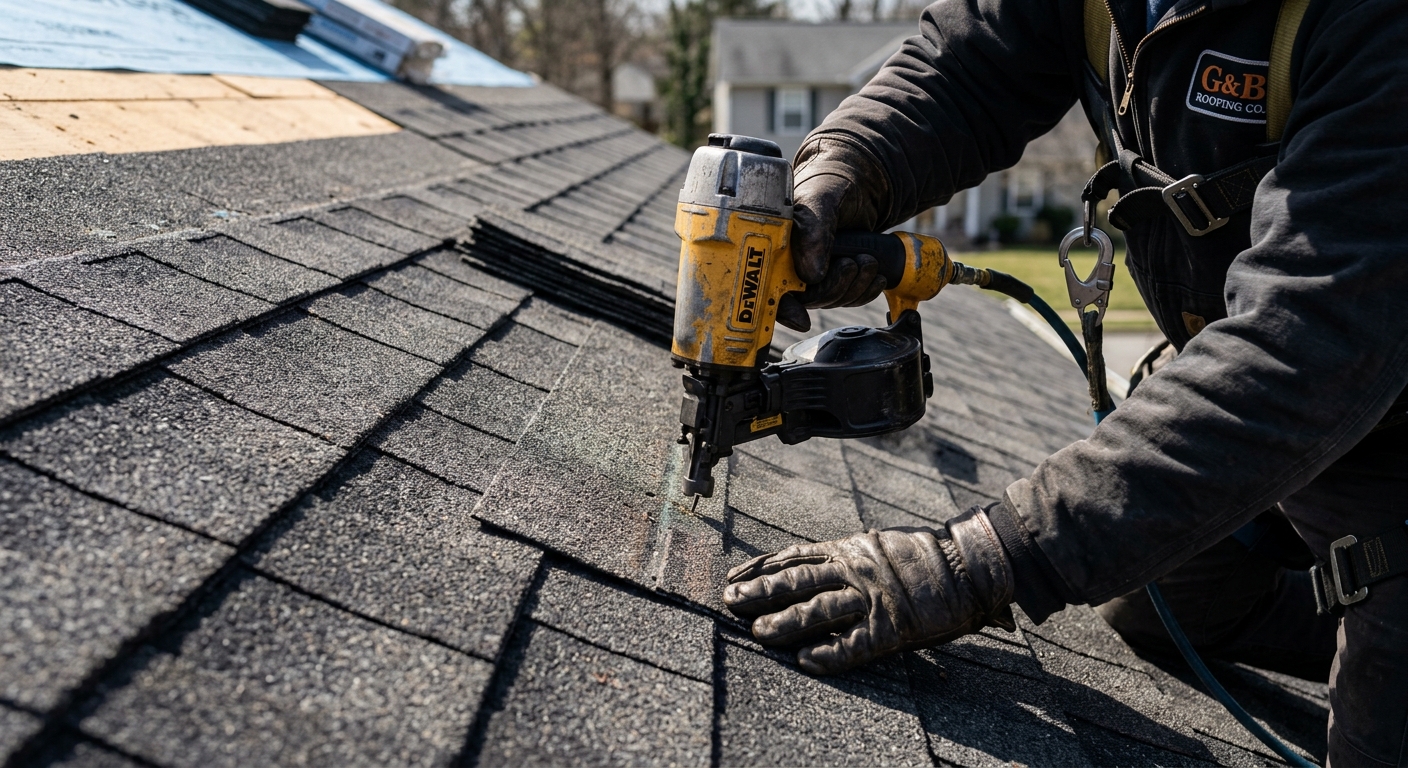
What roof replacement costs in Olyphant in 2026
Olyphant homeowners who are planning a roof replacement in 2026 are working in a market shaped by Lackawanna County’s housing stock and aging roofs. With 69.4% of homes built before 1980 and a homeownership rate near 70% (U.S. Census Bureau, ACS 2024), the demand for re-roofing here is constant—especially given the exposure to ridge-line winds and heavy winter snow loads in the Lackawanna Valley. In Olyphant, much like in Scranton and Old Forge, early-1900s wood-frame row and duplex homes are the rule, not the exception. This means roofers here often find underlying decking rot or complications hidden beneath layers of older roofing, which drives up the labor and materials needed on a typical job.
The most common replacement in Olyphant is still the architectural asphalt shingle, thanks to its effectiveness on older pitched roofs and broad availability through established Scranton-area contractors. Metal standing seam options are on the rise for homeowners seeking longevity, and flat roof membranes come into play for attached and row homes built during the early last century. The cost to fully replace a shingle roof here usually lands toward the middle of the price band, reflecting the typical size and structural issues found during tear-offs on this era of home.
| Material / Scope |
Lifespan |
Best for |
Price range (installed) |
| Asphalt shingles — architectural (30-yr) |
25–30 yrs |
Standard pitched roofs on single-family homes, older row homes |
$8,800–$18,500 |
| Asphalt shingles — impact-resistant (Class 4) |
30+ yrs |
Hilltop homes, areas with high wind |
$14,500–$18,500 |
| Metal standing seam |
40–70 yrs |
Long-term owners, low-slope and steep roofs |
$21,500–$38,000 |
| Flat roof — TPO or EPDM |
15–25 yrs |
Early-century rowhouses, commercial buildings |
$11,000–$22,000 |
| Roof repair — leak or isolated section |
n/a |
Patching leaks, flashing repairs, small storm damage |
$475–$1,750 |
Prices are estimates for a typical Olyphant home and vary with roof size, pitch, decking condition and material selection.
Storm damage and insurance claims in Olyphant
When Olyphant gets hit by high winds or winter storms, roof damage is common—especially in older homes near hilltops, where ridge-line gusts coming through the Lackawanna Valley put extra stress on shingles and flashing. If your roof is damaged in a storm, document everything before you clean up: take detailed photos of any missing shingles, hail impacts, or leaking areas from both inside and outside. Your insurance company will want this documentation for your claim file.
After you submit your claim, your insurer will send an adjuster to assess the extent of the storm damage. They’ll prepare a written scope of loss that details what will be covered, based on your policy—actual cash value (ACV), which deducts for the age of your roof, or replacement cost, which pays for new materials. Scrutinize this paperwork, as most Olyphant homes have older roofs, and depreciation can be steep. Don’t begin major repairs before your adjuster arrives unless you need emergency tarping to prevent further water intrusion.
The Home Improvement Consumer Protection Act requires a written contract for any insurance-related roofing work over $500, and you always have a three-business-day right to cancel. Waiving your insurance deductible is prohibited by state law: if a contractor offers to “eat your deductible,” walk away—they aren’t operating aboveboard and you could jeopardize your claim. Stick with local contractors who understand insurance work and can document their Home Improvement Contractor registration. This protects both your roof and your rights.
What moves the price of a roof in Olyphant
Prices for roof replacement in Olyphant can swing by thousands of dollars between seemingly similar homes, and it comes down to details hidden in the local housing stock. Early-1900s wood-frame homes, like those filling Scranton and Old Forge, often have two or more layers of old shingles and hidden decking rot—so the scope of work balloons once the tear-off starts. The cost to remove extra layers, including careful disposal, can run $500–$1,500 for each layer beyond the top. If decking is soft or shows mildew, plan on replacing sheets at $75–$150 per piece.
Labor rates also respond to site-specific factors in Lackawanna County, like roof pitch and cold-weather scheduling. Many Olyphant homes sit on smaller lots with tight alley access, requiring more manual labor and slowing down the job. A steeper roof pitch typical on older homes drives up labor by 20–30%. Severe winter exposure—remember that Olyphant faces snow loads of 40 psf and a frost depth of 36 inches—means contractors insist on full ice barrier at the eaves and valleys for $300–$800. Code and insurance may require these extra steps because ice dams and water leaks are a real risk here.
Material choice factors in, too. Most Olyphant roofs are replaced with architectural asphalt, but premium impact-rated shingles and standing seam metal cost more—and may be recommended for wind-exposed homes on hilltops like those in Archbald or near the edges of town. While an ordinary architectural shingle roof starts near $8,800, metal can more than double that, topping out above $38,000.
| Factor |
Why it matters here |
Cost impact |
| Roof size in squares |
Each square is 100 sq ft of roof surface |
primary multiplier |
| Pitch and access |
Steep pitches need harnesses and slow the crew |
+20–30% labour |
| Existing layers to tear off |
Two or more layers means full tear-off and disposal |
$500–$1,500 per layer |
| Decking condition |
Rot is found during tear-off, not before |
$75–$150 per sheet |
| Ice barrier at eaves |
Required where ice damming has a history |
$300–$800 |
| Material grade |
3-tab vs architectural vs Class 4 impact-resistant |
$500–$2,500 |
When to book roofing work in Olyphant
Timing matters for roofing projects in Olyphant. Here, the best months to replace a roof are late April through early November. That’s when temperatures allow shingles to bond properly and crews don’t lose days to snow, sleet, or sub-freezing mornings. If you try to schedule in December through March, you’ll be contending with cold snaps that halt work and prevent the use of self-sealing asphalt products.
Because Lackawanna County is part of the Scranton–Wilkes-Barre metro and saturated with roofing contractors, it’s possible to get bids quickly during off-peak months. However, from June to October, many crews are backlogged four to eight weeks thanks to higher demand and a rush of insurance claims after summer storms. Emergency repairs in February or March—not uncommon when ice dams sneak water into those older Olyphant attics—will cost more, as material handling and quick-response labor commands a premium.
If you have any flexibility, book your replacement for early fall. September is a sweet spot: materials bond, labor is available, and you’ll beat the first frost. Planning ahead prevents rushed decisions and typically delivers a better job for your money.
Pennsylvania code and Lackawanna County permit rules for roofing
Roofing work in Olyphant is governed by the Pennsylvania Uniform Construction Code (UCC), which is based on the International Residential Code (IRC). Enforcement is carried out by municipalities or, in towns that have opted out, by the Pennsylvania Department of Labor & Industry. In Lackawanna County’s cities—like Scranton—the City of Scranton Department of Licensing, Inspections & Permits handles permitting for roof work within city limits.
For Olyphant residents, a permit is typically required for any full tear-off and roof replacement on one- to four-family dwellings, including re-decking. If you are only repairing a small, like-for-like area of shingles (as in a leak patch), this is often done without a permit in Scranton and Dunmore, and municipal practice is similar throughout the valley.
Pennsylvania law requires all roofing contractors working on jobs over $500 to carry a Home Improvement Contractor (HIC) registration. You can look up your contractor's status at hic.attorneygeneral.gov. Workers' compensation coverage is mandatory for all employers and can be verified using the WCAIS database (wcais.pa.gov). For jobs on homes built before 1978, the federal EPA Lead Renovation, Repair and Painting (RRP) Rule applies, and you can verify a renovator’s certification at certifiedrenovatorsearch.epa.gov.
No separate roofing trade license, plumbing, electrical, or HVAC license is required at the state level—just HIC registration. You should always ask for proof of registration and insurance before signing a contract.
Why gutters get replaced with the roof
In Olyphant, gutters need to be thought of as part of the entire roof drainage system—especially on the older wood-frame row homes and duplexes that dominate the area. If your roof is being replaced, old gutters are often dented, rusty, or out of slope, so they don’t carry water far enough away from your foundation. Discharge that pools near your foundation can seep into basements, which is a frequent issue in the valley’s older houses.
Drip edge, installed at the same time as a new roof, is essential for channeling water into new gutters. If you upgrade one without the other, leaks at the eaves or improper drainage can void your roof warranty from some manufacturers. A full gutter replacement with a new roof—seamless aluminum K-style being most common—typically falls between $1,500–$3,500 for an average Olyphant home, depending on the number of stories, gutter length, and whether you add guards. This is a smaller investment compared to a re-roof, but it’s what prevents roof run-off from turning into foundation headaches.
How to compare roofing quotes in Olyphant
A good Olyphant roofing estimate breaks down every part of the job—nothing should be vague or lumped into a single sum. Start by checking the stated roof area in “squares” (one square = 100 sq ft), and look for the pitch. Both affect labor. Tear-off and dumpster charges should be itemized. Be sure underlayment and ice/water shield are listed by product type, not just “felt” or “membrane.”
Decking replacement is common in older Olyphant homes, so there should be a clear per-sheet price—as a future “if needed,” not lumped into the base cost. Flashing and vent boots, often a weak point in storm-prone areas, need to be singled out. Every quote should spell out warranty terms: how long the company stands behind their work (5, 10, or 15 years is typical), and separately, what comes from the shingle manufacturer. Payment schedules are revealing, too; deposits over 15% or large up-front cash demands are never good signs.
Be wary of estimates that list just a lump sum or omit squares, line items, or contingency prices. If something isn’t clear, press for an updated, detailed quote—good contractors don’t hide the numbers.
| Line item |
What to look for |
Red flag if… |
| Roof area |
Stated in squares, with pitch |
No measurement given |
| Tear-off and disposal |
Number of layers, dumpster included |
Bundled into one figure |
| Underlayment |
Product type and coverage |
Listed only as 'felt' |
| Ice and water shield |
Coverage height at eaves |
Omitted entirely |
| Decking |
Per-sheet contingency price |
No allowance at all |
| Warranty |
Workmanship years stated separately |
Only the shingle warranty |
| Payment |
Deposit under 15%, balance on completion |
Large upfront cash |
Frequently asked questions — roofing in Olyphant
Do I need to leave my house during a roof replacement?
For most Olyphant homes, you can stay in your house during a roof replacement. Crews work outside, and while it can get very noisy—especially on older wood-frame houses with minimal attic insulation—roofing jobs are generally completed in one to three days. Pets and small children might be stressed by the noise and vibration, so plan accordingly. If you're worried about mess or protecting belongings in the attic from dust, ask your contractor about tarping the space. Emergency repairs or heavy decking replacement jobs can stretch longer, but even then, temporary disruption is more likely than evacuation. On average, a full asphalt shingle roof replacement in Olyphant costs $8,800–$18,500, and nearly every project wraps up with the homeowner present.
Does Olyphant get enough hail to justify Class 4 shingles?
Olyphant doesn’t see hail at the frequency of the central U.S., but its hillside and valley location do bring strong wind-driven storms with occasional hail. For homeowners on exposed ridgelines or in parts of Archbald, Class 4 impact-resistant shingles can give peace of mind and may qualify for insurance discounts. They also stand up better to the freeze/thaw cycles common here. Class 4 shingles cost more upfront—between $14,500–$18,500 for a full roof—but could make sense if your roof is often hit by windblown debris or you’re worried about long-term shingle longevity.
Why is my Olyphant roofing quote higher than the online average?
Many online averages ignore the details that drive up costs in Olyphant: multiple roofing layers on older homes, unexpected decking rot, steep roof pitches, or extra labor for tight yards and alleys. These issues—very common in Lackawanna County’s century-old wood-frame housing—don’t appear in online calculators. Local rates reflect the need for ice barriers and proper ventilation after heavy winters. Where a basic shingle job might run $8,800–$14,500 elsewhere, Olyphant’s average cost skews toward the higher end because of these underlying repair and labor needs.
What are the signs of hail damage on a roof?
Olyphant roofs, especially asphalt shingles, can show hail damage as small, dark spots where granules are knocked away, exposing black mat beneath. You might see bruising, cracks, or dents in metal flashings and gutters. Look for granules collecting in downspouts after a storm. On older homes, these signs sometimes hide beneath accumulated grit. If your roof suffered recent hail and you’re considering a claim, remember that roof repairs in Olyphant usually start at $475 but can exceed $1,750 for complex leaks or additional flashing replacement.
Is metal roofing noisy in rain?
Today’s metal roofs in Olyphant—mainly standing seam—are installed over solid sheathing and often with underlayment that dampens noise. You’ll hear rain more on a metal roof than a heavily insulated shingle roof, but unless your attic is unfinished, the sound is usually soft. Older row homes might transmit more noise if attic insulation is lacking. Metal roofs here run $21,500–$38,000, but the premium buys longevity and better wind resistance, which is a plus for hilltop or exposed homes in the Lackawanna Valley.
Are there historic district rules affecting roofing in Olyphant?
There aren’t formal historic district rules affecting roofing in Olyphant under Pennsylvania state law or county policy. Most roofing work here follows the Pennsylvania Uniform Construction Code and local permitting for full tear-offs. However, if your property is in a part of Lackawanna County with a neighborhood association, check for local restrictions before starting. For homes built before 1978, always confirm your contractor’s EPA Lead RRP certification when doing demolition or sanding. Full shingle replacements typically cost $8,800–$18,500 regardless, but a reputable contractor will clarify code issues before you sign.
What should a roofing quote include in Olyphant?
A complete Olyphant roofing quote should include the roof size (in squares and pitch), details on tear-off and disposal, product brand and type for underlayment and shingles, and a breakdown of flashing, vent boots, and decking costs per sheet as a contingency. It should state how much ice barrier will be installed at the eaves. You’ll want to see warranty terms split between workmanship (from the installer) and the manufacturer. Payment schedule should be a small deposit—usually under 15%—with the balance due at completion. For a standard asphalt shingle roof, expect a final figure in the $8,800–$18,500 range, with all terms spelled out line-by-line.
Is a metal roof worth the extra cost in Olyphant?
Metal roofs are significantly more expensive than shingles in Olyphant—installed costs can be as high as $38,000. Still, if you plan to stay in your home long-term, the 40–70 year lifespan, resistance to wind-driven storms, and minimal maintenance can make the extra investment worthwhile. Metal is especially well-suited for exposed valley and hilltop homes, which see more severe weather. For owners concerned about winter ice, metal sheds snow much faster than shingles—reducing long-term risk of ice dams that are common here.
Does homeowner's insurance cover roof replacement in Olyphant?
Homeowner’s insurance in Olyphant usually covers roof replacement only for sudden damage—like hail, wind, or falling tree limbs. If your roof is simply old or worn out, coverage won’t apply. After a wind or hail storm, insurance will often cover repairs or full replacement, but only up to the Actual Cash Value unless you purchased Replacement Cost coverage. Document everything before you clean up or repair, and expect your adjuster to inspect the roof personally. Repair costs here begin at $475–$1,750 for local leak work, while full replacement runs much higher—and you’re responsible for paying your deductible out of pocket. Contractors can’t legally waive your deductible, per Pennsylvania law.