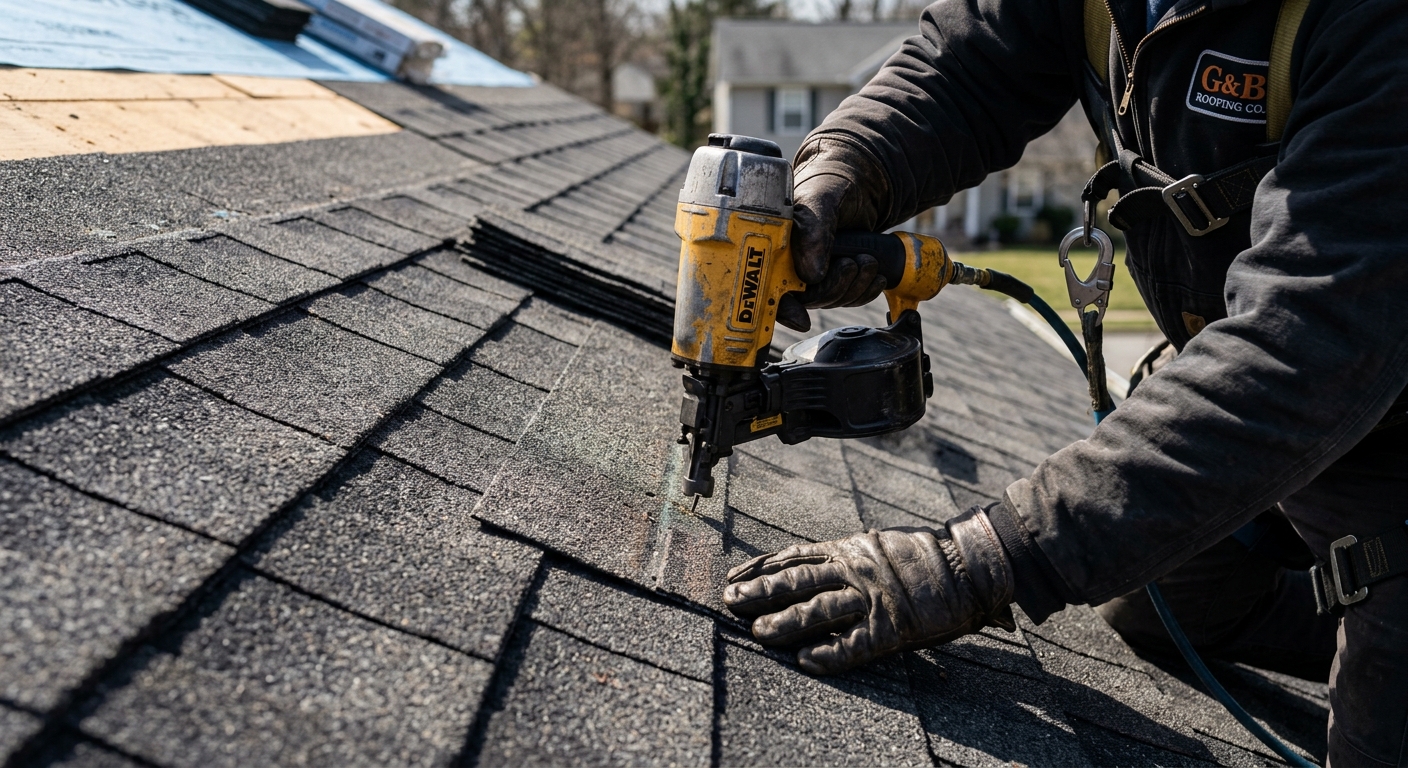
What roof replacement costs in Southampton in 2026
In Southampton, Cumberland County, the roofing market is shaped by practical realities: about 72.6% of properties are owner-occupied, and many homes are part of the post-1950 suburban wave that still defines neighborhoods around Hampden and Silver Spring Townships (U.S. Census Bureau, ACS 2024). This era of construction delivered large tracts of mid-century and later houses finished with asphalt shingles—now all marching through reliable re-roof cycles about every 25–30 years. If you own one of Southampton’s typical single-family homes, odds are you’re facing a replacement every generation, with three in 10 homes here built before 1980. That means large volumes of nearly identical asphalt re-roofs every year, making prices highly dependent on material and labor competition among regional contractors.
The constant churn in those suburban tracts means that roof replacements here follow predictable patterns: crews are geared for asphalt tear-offs, supply yards stay stocked locally, and most roofs are walkable with standard pitches. For owners of older stock or homes on the ridgeline, higher wind exposure and occasional custom work tip some projects into pricier categories—especially if you select thicker shingles or premium metals. Here’s what Southampton homeowners can expect to pay in 2026 for typical roof work:
| Material / Scope |
Lifespan |
Best for |
Price range (installed) |
| Asphalt shingles — architectural (30-yr) |
25–30 yrs |
Standard steep-slope, most homes in Southampton |
$9,700–$20,500 |
| Asphalt shingles — impact-resistant (Class 4) |
30+ yrs |
Wind-prone ridges, storm-exposed locations |
$16,000–$20,500 |
| Metal standing seam |
40–70 yrs |
Low maintenance, longevity, snow shedding |
$23,500–$41,500 |
| Flat roof — TPO or EPDM |
15–25 yrs |
Flat or very low-pitch porches, additions, garages |
$12,000–$24,500 |
| Roof repair — leak or isolated section |
n/a |
Single leak, flashing failure, or minor fix |
$500–$1,950 |
Prices are estimates for a typical Southampton home and vary with roof size, pitch, decking condition and material selection.
Permits and code requirements in Southampton
Roofing work in Southampton falls under the Pennsylvania Uniform Construction Code (UCC), which is based on the International Residential Code (IRC). For a full roof replacement or significant structural repairs, you will need a permit—routine shingle-over or minor repairs usually do not unless specified by your local municipality. The authority to issue or enforce permits here depends on where you live: Carlisle has the Borough of Carlisle Codes Department handling enforcement, while the townships around Southampton each have their own municipal code offices. If your property is in a township that has opted out of enforcement, code matters may be handled directly by the PA Department of Labor & Industry.
Choosing a contractor? Pennsylvania requires Home Improvement Contractor (HIC) registration for any roofing contract over $500. You can verify a roofer’s registration at hic.attorneygeneral.gov. Don’t just take their word—checking the registry helps weed out the out-of-town operators who flood the market after storms.
Every employer in Pennsylvania is mandated to carry workers’ compensation insurance for their crews, which you can verify via the WCAIS system at wcais.pa.gov. Take the five minutes to check registration and insurance before you sign—this insulates you from personal liability if a worker is injured on your job.
Work on homes built before 1978 (about a third here) must comply with the federal EPA Lead RRP Rule, so ask contractors if they are EPA certified. For roofing, touches to painted surfaces may trigger this requirement.
Choosing a roofing material for Southampton's climate
Southampton’s cold winters (with a design minimum of 12°F) and frequent freeze-thaw cycles make roofing material choices more than just budget decisions—they’re about real performance under our local loads. The ground snow load here is 30 psf, so any system installed should handle those conditions without risk of overload or structural sag. Asphalt architectural shingles are the workhorse on most homes because they balance cost, lifespan, and easy replacement, fitting the tract-built, moderate-pitch roofs so common in this part of Cumberland County. Heavier Class 4 impact-resistant shingles command a premium but make sense if you’re perched on a ridgeline battered by wind-blown debris, or want extra durability against occasional hail.
Metal standing seam roofs outperform everything for snow shedding and wind resistance—something to consider if your home is sited on an exposed farmstead or new ridge-top development. The upfront outlay ($23,500–$41,500) typically only pencils out if you plan to stay for decades or want a set-it-and-forget-it solution, since the resale payoff is less here than in markets with higher-end custom homes.
Flat roof membranes like TPO or EPDM aren’t a luxury—they’re a necessity on the many low-pitch garage or porch roofs in Southampton. These systems shrug off ponding but do need a full replacement when their seams wear out, with prices in the $12,000–$24,500 range.
| Material |
Installed cost |
Lifespan |
Cold-climate performance |
Maintenance |
| Asphalt architectural |
$9,700–$20,500 |
25–30 yrs |
Reliable for typical snow loads |
Gutter cleaning; inspect after heavy wind |
| Asphalt Class 4 impact-resistant |
$16,000–$20,500 |
30+ yrs |
Better for hail/wind-exposed sites |
Minimal if installed right |
| Metal standing seam |
$23,500–$41,500 |
40–70 yrs |
Sheds snow, resists ice, tightest seams |
Inspect fasteners; clear gutters |
| TPO / EPDM membrane |
$12,000–$24,500 |
15–25 yrs |
Handles ponding and freeze-thaw |
Check seams after snow/ice events |
Snow load, ice dams and wind in Southampton
In Southampton, ridge-line winds coming off the Cumberland Valley can peel up shingles or metal panels if the edge details aren’t installed right—especially on exposed farmsteads or newer ridge developments. It’s common here to see only a handful of torn shingles after a March gale or a complex leak cropping up at an eave that never seemed to have an issue before. That’s because the local ground snow load of 30 psf, combined with our freeze-thaw cycling, triggers a specific problem: water melts on an upper roof in the midday sun, then freezes at the cold eaves at night, building up ice dams. When ice dams form, water backs up under shingles where there’s no self-adhered underlayment, and the next thaw dumps water into attic insulation and ceiling drywall. A single ice-dam leak can add up to $500–$1,950 in urgent patching—or drive the replacement cost for older double-layered systems into the $9,700–$20,500 bracket.
Our region’s wind doesn’t just flap shingles; it can tear tabs clean off on older strip shingles, which may be hidden from the ground but rot the decking below. Hail, when it comes, bruises granules and cracks the fiberglass mat—damage you won’t see except as “shiner” spots that only show up a few months later. Left unchecked, minor wind or hail hits can mean sudden leaks during the next freeze, compounding repair bills and driving emergency labor demand in high season.
The underlayment and edge metal matter here: skipping ice-and-water shield over unheated eaves or not locking in metal edges are false economies that show up fast during our January thaws.
Patching vs full replacement in Southampton
In Southampton, whether you should patch or replace all comes down to age, prior repairs, and the location of the damage. Repair makes sense if your shingle roof is less than 15 years old and you have just one isolated leak—usually from a popped nail or flashing gone bad. Once a roof gets past the 20-year mark, especially for asphalt systems from the 1970s and 80s common in our stock, new leaks tend to multiply in quick succession. The math is simple: two to three rounds of leak repairs at $1,200 each can quickly surpass a full new roof at $16,000, especially if decking has started to soften between rafters.
If you’re facing storm damage—say, after spring wind snaps a ridge or hail pops up across your field of view—document everything with photos and file a claim before authorizing major work. Ongoing ponding or blistering on flat roofs, which are common on additions and garages here, generally calls for full membrane replacement; patch kits just don’t hold up over our winters. And if you discover an active leak as we head into January, don’t wait out the season—an emergency temporary fix at $1,950 buys you time to schedule replacement in the warm months before further interior damage ramps up the bill.
| Situation |
Recommendation |
Typical cost |
Reasoning |
| Under 15 years, one isolated leak |
Repair |
$500–$1,950 |
Flashing/vent or nail pop; rest of roof serviceable |
| 15–25 years, several leak points |
Replace |
$9,700–$20,500 |
End-of-life; repairs become band-aids not solutions |
| 25+ years, any active leak |
Replace now |
$9,700–$20,500 |
Multiple layers likely; shingles brittle; patching is wasted money |
| Storm damage, wind or hail |
Document, claim, replace |
$9,700–$20,500 |
Insurance covers labor & materials at today's rates |
| Flat roof ponding or blistering |
Replace membrane |
$12,000–$24,500 |
Seam and surface failures don't patch reliably here |
| Active leak entering winter |
Emergency repair, schedule replacement |
$500–$1,950 |
Temporary fix to prevent further damage until spring |
Timing a roof replacement in Southampton
Roofing in Southampton follows the south-central Pennsylvania climate calendar. The best months to schedule a full replacement are late spring (April–June) and early fall (September–October). Shingle adhesives need daytime temperatures above 40°F to seal properly, so trying to reroof in the dead of winter risks shingle blow-offs and warranty issues. By late June, regional contractors are stacked up with projects due to the concentrated booking pattern in this saturated Harrisburg–Carlisle metro. Wait times stretch, and costs inch up as the labor pool gets pinched by demand.
If you need an emergency fix in February, you’ll pay more for temp crews willing to brave icy conditions and short daylight—expect a bill in the $500–$1,950 range for tarping and temporary repairs. Planning in advance for a September job means better crew availability, more reliable installation conditions, and, often, a more competitive price, especially for the dominant asphalt roof replacements in Southampton’s subdivisions. In short: unless you’re blown off the house by a March wind, target the shoulder seasons for the best value and outcome.
Roof age and construction era in Southampton
Much of the housing in Southampton echoes the construction waves of post-1950 suburban development that swept through Hampden Township and Silver Spring Township. Only about 30.5% of homes were built before 1980 (U.S. Census Bureau, ACS 2024), so most local roofs sit atop moderate-pitch truss framing topped with OSB or plywood decking—rarely the skip-sheathing or board stock you’ll find in older Pennsylvania towns.
This means most Southampton homes are experiencing their first or second roof cycle right now. If your subdivision went up in the late 1990s or early 2000s, chances are your original roof has reached the 25–30 year lifespan of standard architectural shingles. At this stage, expect to see single-layer tear-offs, but with increasing odds of edge rot where gutter overflows or past ice dams have wicked under the eaves. Most of these homes did not have self-adhered ice barrier at install, unless re-roofed in the last 15 years—something to address on replacement here in this freeze-thaw zone. Double layering is possible but less common than in older boroughs; attic ventilation and decking nailing patterns are remarkably uniform thanks to stricter code and tract contractors of that era.
For the relatively rare pre-1980 home, plan on more surprises: plank sheathing, layered shingles, and the possible absence of any modern underlayment. Either way, a local contractor familiar with Southampton’s stock will know how to spot trouble before it spikes your project cost.
Frequently asked questions — roofing in Southampton
What happens if rotted decking is found after tear-off?
If your contractor uncovers rotted or soft decking during a roof replacement, they’re required by the Pennsylvania Uniform Construction Code (UCC) to replace it before installing new roofing material. In Southampton, most homes built after 1950 have OSB or plywood decking, which can rot around eaves from past leaks or ice damming. Replacing these sections is not included in your roofing bid unless specifically listed, and it typically adds between $500–$1,950 depending on the extent. The right approach is to approve replacement by the sheet rather than open-ended hourly work. Ask your roofer to document the damaged areas—they’ll often show photos of the deck before replacing it. Making the fix now, instead of covering up rot, means your new roof will last as designed and keeps you in compliance with local code authorities in Cumberland County.
What is the best roofing material for Southampton's climate?
For most Southampton homes, architectural asphalt shingles are the best balance of cost and performance—they’re proven for the 30 psf ground snow load and our frequent freeze-thaw cycles. Shingles in the $9,700–$20,500 range are the default for typical construction from the post-1950 housing wave. Metal standing seam is the top performer for snow and wind shedding—essential if you live on an exposed ridge or want zero maintenance for decades—but the price premium ($23,500–$41,500) only makes sense if you plan to stay put long term. Flat membrane systems are the right call for porch or garage roofs with little pitch. Your material pick should reflect your home’s age, location, and how long you want to avoid the next roof cycle.
Why do roofs fail faster in south-central Pennsylvania?
Roofs in Southampton and the rest of Cumberland County age faster mainly due to our pronounced freeze-thaw cycling and strong winds funneled along the Cumberland Valley. Even if shingles are rated for 30 years, repeated icing at the eaves and sudden temperature swings crack sealants and let water infiltrate underneath. Over time, granule loss and popped nails create leaks, particularly on homes without ice barrier—common here in older subdivisions. Sudden spring storms and ridge-line gusts can rip tabs free far before the material’s full lifespan. The upshot: a roof nearing its 25–30 year mark is likely entering the failure stage, and delaying full replacement can mean repeated repairs in the $1,200 range each time wind or water opens up a new spot on your Southampton home.
Is a metal roof worth the extra cost in Southampton?
For most Southampton properties, a metal standing seam roof only pencils out if you plan to stay in the house for decades or have a roofline that sheds snow and resists wind damage. While metal systems run $23,500–$41,500 compared to architectural shingles at $9,700–$20,500, they offer a lifespan up to 70 years and nearly zero maintenance besides basic gutter care. If your home is sited on an exposed ridge or you’ve had repeated shingle failures from wind, metal brings peace of mind that you cannot get from asphalt. For most buyers, though, the higher upfront investment isn’t recouped on resale given the average home values in Southampton. If you’ll be there for the long stretch, metal pays for itself. Otherwise, stick with the dominant architectural shingle.
How do I know if my Southampton roof needs replacing?
Check your attic and ceilings for damp spots or staining after heavy rain, especially near the eaves and around vent pipes—those are red flags for roof leaks common here. Outside, missing or curled shingles and granules piling up in your gutters suggest your asphalt roof is at end of life, which, for Southampton’s housing stock, happens around the 25–30 year mark. If you’re finding new leaks each season, patching at $500–$1,950 per repair quickly becomes a bad investment compared to a full replacement. If your roof is original to a 1990s or early 2000s build, it’s probably due whether you see clear signs or not. An honest contractor can walk the roof and attic and show their findings—don’t just guess from the street.
Do I need a permit to replace a roof in Southampton?
Yes, a permit is required for a full roof replacement in Southampton if you are doing more than a cosmetic shingle-over, since this work falls under the Pennsylvania Uniform Construction Code (UCC). The specific office issuing your permit depends on your locale: in Carlisle, it’s the Borough of Carlisle Codes Department; in surrounding townships, their municipal code offices take charge. In areas where the municipality opted out, the PA Department of Labor & Industry enforces permitting. Simple repairs usually don’t need a permit. Make sure your contract is written and compliant with the Home Improvement Consumer Protection Act for any work over $500—it protects both you and the contractor for the duration of the project.
Do I need my own inspection before the adjuster visits?
It's smart for Southampton homeowners to have a reputable local roofer inspect and document damage before your insurance adjuster arrives, especially after a storm. Contractors familiar with Cumberland County roofing can spot wind-lifted tabs, hidden hail bruising, or failing flashing—finding issues adjusters sometimes miss in a quick walkaround. A written report or photographic evidence from a contractor (sometimes for a modest service call, often $500–$1,950 for complex issues) strengthens your claim and prevents missed repairs that drag out your recovery. Even so, you aren't legally required to provide your own inspection in Pennsylvania—just know that it's the best way to advocate for your home and keep the adjuster honest.
Does roof pitch affect the price in Southampton?
Yes, roof pitch can affect both the labor cost and material waste for a Southampton replacement. Moderate pitches (4/12 or 6/12) typical of Southampton’s late 20th-century homes are straightforward for crews, keeping prices near the market median of $16,000 for asphalt. Steep roofs require added safety gear, more laborers, and sometimes extra material due to cut waste—expect to land at the upper edge of the $20,500 band for architectural shingles. Flat roofs aren't necessarily cheaper; their membrane systems in the $12,000–$24,500 range require skilled labor and specialty products for long-term durability. When comparing quotes, be sure your contractor specifies how the pitch factors into their price.
How much deposit should I pay a roofer upfront?
In Pennsylvania, including Southampton, the Home Improvement Consumer Protection Act limits how much a contractor can require as a deposit: no more than 1/3 of the total contract price or $1,000, whichever is less, before work starts. For a standard roof replacement at $16,000, you'd pay no more than $1,000 up front, with the rest due as work progresses or upon completion. Be wary of anyone demanding a larger deposit—it's a red flag and may be illegal under state law. Reputable Cumberland County contractors will clearly spell out these terms and accept staged payments based on milestones, not pressure tactics.