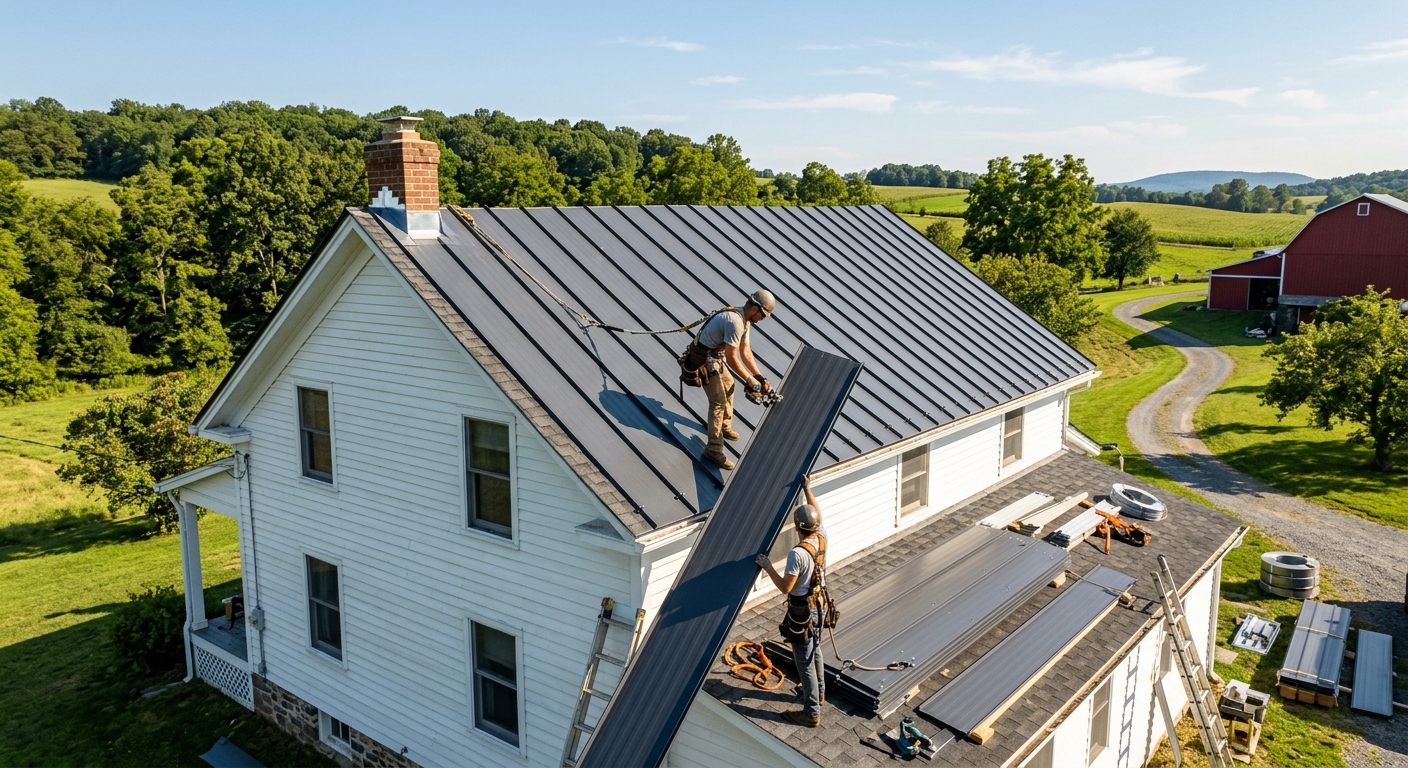
Roofing Replacement & Repair costs in Stowe — 2026
If you own a home in Stowe, roofing replacement and repair isn’t just a matter of routine upkeep—it’s a direct outcome of the area’s age and housing stock. Stowe's 6,384 residents live mostly in homes built before 1980, meaning roof repairs tend to be more extensive because older construction often hides underlying deck issues (U.S. Census Bureau, ACS 2024). Since nearly 90% of Stowe homes predate modern underlayment and venting requirements, full tear-offs and sometimes unforeseen deck repairs are common during reroofing. This isn't like a newer suburb where a roof swap is straightforward—historic framing and multiple shingle layers here often mean surprises and higher costs.
When you budget for a new roof or substantial repairs in Stowe, understand that Allegheny County’s housing wave means you may be taking off two or more old shingle layers before new material goes down. That adds labor, disposal, and frequently requires replacing rotted wood decking that wasn’t built for today’s heavier architectural shingles. Nearly half of local households own single-family homes, and most have some age on them—two big reasons why prices tend to the higher end of the spectrum when compared to other regions with newer stock. The table below breaks down realistic ranges for roof work around Stowe, based on material and scope.
| Material / Scope |
Lifespan |
Best for |
Price range (installed) |
| Asphalt shingles — architectural (30-yr) |
25–30 yrs |
Western PA homes needing durability and value |
$8,900–$19,000 |
| Asphalt shingles — impact-resistant (Class 4) |
30+ yrs |
Long-term owners, storm-prone locations |
$14,500–$19,000 |
| Metal standing seam |
40–70 yrs |
Pitched roofs, high snow loads, longevity |
$21,500–$38,500 |
| Flat roof — TPO or EPDM |
15–25 yrs |
Low-slope porches, additions, garages |
$11,500–$22,500 |
| Roof repair — leak or isolated section |
n/a |
Small areas, flashing repairs, stopgap fixes |
$475–$1,800 |
Prices are estimates for a typical Stowe home and vary with roof size, pitch, decking condition and material selection.
What moves the price of a roof in Stowe
Stowe sits within the Greater Pittsburgh roofing market, so homeowners get the benefit of abundant suppliers and competing crews. This doesn’t mean you’ll see uniform quotes, though. What drives the final price here are factors tied directly to the area’s aging homes and western Pennsylvania’s unpredictable weather. If your Stowe home is one of the 62.4% single-family units built pre-1980, you’re likely looking at a full tear-off—including an extra layer or two of shingles, which can push costs up by $500–$1,500 per layer. Realistically, many jobs involve not just shingle removal but significant wood deck repairs when 80-year-old boards reveal their age.
The freeze-thaw cycles, 30-pound snow loads, and storm exposure courtesy of Ohio Valley weather also matter. Roofs here need winter resilience, which often means upgraded underlayment and ice barrier at the eaves—costing another $300–$800 but helping prevent leaks from ice dams. The pitch and accessibility of your roof can tack on 20–30% to labor if the house sits high on a hillside or has steep gables. Material choice is the last big decider: architectural shingles are the norm, but Class 4 impact-rated versions cost more, as do metal systems for long-term investment.
| Factor |
Why it matters here |
Cost impact |
| Roof size in squares |
Each square is 100 sq ft of roof surface |
Primary multiplier |
| Pitch and access |
Steep pitches need harnesses and slow the crew |
+20–30% labour |
| Existing layers to tear off |
Two or more layers means full tear-off and disposal |
$500–$1,500 per layer |
| Decking condition |
Rot is found during tear-off, not before |
$75–$150 per sheet |
| Ice barrier at eaves |
Required where ice damming has a history |
$300–$800 |
| Material grade |
3-tab vs architectural vs Class 4 impact-resistant |
$500–$2,500 |
Roof age and construction era in Stowe
If you’re living in Stowe, there’s a very good chance your home is a product of the boom years between 1900 and 1950. With nearly 90% of housing built before 1980 (U.S. Census Bureau, ACS 2024), you’ll almost always be dealing with roofs that have seen layer after layer of shingles, rather than a straightforward single-layer strip-off. It’s not uncommon, especially in the older homes, to pull back the old roofing and find true board (plank) decking rather than plywood or OSB. That means repairs often go beyond just surface material: some of these original planks just weren’t meant to hold architectural shingles or absorb the load from modern snow events.
During the original construction era, there wasn’t any requirement for ice-and-water shield at the eaves, and attic venting was more of an afterthought. For you, that means ice damming and condensation can cause problems hidden under those shingles until the next tear-off, leading to more involved—and costly—repairs. And because so much of Stowe’s housing is long past its first roof, there’s a high chance you’ll find two or even three shingle layers going back through the decades, along with outdated flashing or fails in chimney work. It’s the kind of reality where the first glance from the street often conceals deeper surprises that need to be handled case by case.
Timing a roof replacement in Stowe
In Stowe, the best window for roofing is usually late spring through early fall. Shingle manufacturers want temperatures above 40°F for proper sealing, so March and November are always a gamble. Peak months for roofing crews are June through September, when the weather’s most reliable and almost every roofing company in the saturated Greater Pittsburgh market is booked out two to six weeks depending on the scale. If you call after Labor Day, you'll still get good install conditions, but the rush is on—schedule early if you want a September finish.
Heavy snow and frequent freeze-thaw cycles make winter work slow and expensive here. An emergency tarp in February may cost more than a planned replacement in mid-September, both because crews work slower and because good roofers are in short supply when leaks pop up after a snowstorm. Summer sees the tightest scheduling, but hurried work isn’t common, thanks to the seasoned roofing crews that dominate Allegheny County. If your roof problem isn’t actively leaking, waiting until late season (October) might shave a little off your price, but don’t expect steep discounts; labor and disposal costs are steady all year, and unpredictable Western Pa weather can always throw a wrench in the calendar.
Choosing a roofing material for Stowe's climate
For homes in Stowe, the main roofing choice comes down to how well each material stands up to heavy freeze-thaw, snow load, and storm exposure. Asphalt architectural shingles dominate Allegheny County for a reason: they’re less expensive up front, stand up decently to the region’s 30 pounds/sq ft snow load, and look right on the area’s steep, older rooflines. Metal standing seam roofs are unmatched for snow-shedding and lifespan, but the installed cost—$21,500–$38,500—puts them out of reach for most average Stowe households, especially if resale within ten years is likely.
Membrane roofs (TPO or EPDM) are reserved for the flat and low-slope porches, additions, or garages you see throughout the neighborhood—not for steep main houses. If you’re considering Class 4 impact-resistant shingles, know they make sense if you’ve seen hail losses on your block, otherwise the price premium isn’t justified in a standard replacement. The reason asphalt architectural shingles are so dominant is balance: affordable, quick to install, and reliable for 25–30 years on roofs sized and pitched like those found in Stowe. Unless you have serious ice damming or storm risk, stick with a quality architectural shingle and save your money for better attic ventilation or gutter upgrades.
| Material |
Installed cost |
Lifespan |
Cold-climate performance |
Maintenance |
| Asphalt architectural |
$8,900–$19,000 |
25–30 yrs |
Good for pitched roofs, handles snow loads, may develop ice dams if not vented |
Inspect/clean every 1–2 yrs, minor repairs cheap |
| Asphalt Class 4 impact-resistant |
$14,500–$19,000 |
30+ yrs |
Better hail impact, similar winter handling but higher upfront cost |
Low; periodic inspection, lasts longer through storms |
| Metal standing seam |
$21,500–$38,500 |
40–70 yrs |
Excellent snow shedding, resists ice and wind, rarely fails in cold |
Very low; occasional fastener check |
| TPO / EPDM membrane |
$11,500–$22,500 |
15–25 yrs |
Handles freeze-thaw if installed well, not meant for steep pitches |
Regular inspection for punctures or seam separation |
Permits and code requirements in Stowe
Residential roofing in Stowe follows the Pennsylvania Uniform Construction Code (UCC), which is based on the International Residential Code. Permit requirements are enforced by municipalities or by the Pennsylvania Department of Labor & Industry if a municipality has opted out. In practice, this means that in Pittsburgh and surrounding Allegheny County communities, a building permit is required when replacing more than 50% of a roof’s total area. If you are only repairing a few shingles under a minimal area, you typically do not need a permit in Pittsburgh.
To confirm your contractor is properly registered, use the Home Improvement Contractor (HIC) registration lookup provided by the Pennsylvania Office of Attorney General at hic.attorneygeneral.gov. Every roofing contract over $500 requires this registration, along with a written contract and a three-business-day right of cancellation. Workers’ compensation coverage is mandatory for employers and can be verified through WCAIS at wcais.pa.gov. Always ask for proof—don’t accept a certificate that can’t be matched with a registry record. There is no Pennsylvania roofing-specific trade license beyond this HIC registration; if a contractor claims more, check their paperwork.
Roofing warranties in Stowe: what's actually covered
There are two warranties at play in any Stowe roofing project: the manufacturer’s warranty and the contractor’s workmanship warranty. A manufacturer warranty covers you for material defects—think premature shingle failure, not installation mistakes. This warranty is typically prorated, so coverage decreases the older your roof gets, and it often requires online or mail-in registration with the shingle maker within a set time after installation.
Workmanship warranties are offered by your roofer and only protect against installation errors. The fine print matters here: a promise of 25 years from a two-year-old company may sound good, but you’re better off with 10 years from a business that’s done roofs locally for decades and will still be around to honor claims. Most warranties can transfer to a new homeowner if you sell, but there’s usually a transfer window and small fee. Avoid voiding your warranties by making sure your attic is adequately vented, and never layer new shingles over old—both are common grounds for denial. Always ask for both warranty documents in writing before you sign, and register your roof with the manufacturer if required.
Frequently asked questions — roofing in Stowe
What if my insurer denies my roof claim?
Insurance companies in Pennsylvania often deny roof claims if they find the damage is from wear and tear rather than a sudden event. In Stowe, many roofs are older and repairs are more complicated, which gives adjusters ample reasons to argue “maintenance” rather than storm damage. If you’re stuck with a denied claim, first check if the denial letter gives a clear reason. If you’re not confident interpreting it, ask your roofing contractor to review it—they’ve seen these decisions before. If it truly isn’t covered, ask for a repair quote: many leak repairs around here can be handled for $475–$1,800, a fraction of full replacement. If you suspect the adjuster missed something, you can request a reinspection or get a public adjuster involved, but don’t expect an old, brittle shingle roof to be paid out unless there’s recent and visible storm impact.
Should I use a local roofer or a national company?
Stowe is part of the greater Pittsburgh market where you can find both long-standing local roofers and out-of-state nationals. Local contractors know the quirks of our hilly lots, clay soil, and what old homes here tend to hide under the shingles. National firms may have more formal processes, but you usually pay more for overhead without getting more knowledgeable labor for Stowe’s construction era. When you need a roof repair—say, a leak fix for $475–$1,800—turnaround and trust matter. A company with an actual presence in Allegheny County is more likely to return your call next year. Always make sure whichever company you choose is properly registered through hic.attorneygeneral.gov and carries workers’ comp, as required in Pennsylvania.
What does roof replacement cost per square in Stowe?
In Stowe, you can expect an architectural asphalt shingle replacement on an old house to price out between $445–$635 per square (100 square feet), depending on how many existing layers need removed and the steepness of the roof. This is right in line with the county range of $8,900–$19,000 for most pitched roof homes. Extras like wood decking repair and ice barrier will push you toward the high end. Metal roofs land higher, usually over $1,050 per square. Always ask your Stowe roofer for a breakdown in writing, and if you get a lowball quote, look for missing line items before signing.
Why do roofs fail faster in southwestern Pennsylvania?
Our region’s weather is tough on roofs: Allegheny County gets strong wind from Ohio Valley storm tracks and frequent freeze-thaw cycles, not to mention old houses with layered shingles and minimal attic venting. Ice dams and fast temperature swings can cause leaks even if the surface shingles look okay. In Stowe, most homes were built between 1900 and 1950, so older materials and building practices play a part. If yours is losing shingles or showing leaks after 15–20 years, know that even a solid architectural shingle roof runs $8,900–$19,000 here because each replacement uncovers hidden deck or flashing problems from decades of patching and storms.
What are the signs of hail damage on a roof?
Hail damage in Stowe usually shows up as small, circular dents or bruises in shingles—sometimes with granules knocked off, exposing black substrate. On old, brittle shingles, hail can produce cracks or holes that leak during the next storm. After a big Ohio Valley storm, always check gutters and downspouts for heavy granule washout, and look for dimpled soft metal on roof vents or flashing. If you see this sort of damage, it’s worth having a roofer out for an inspection—sometimes a targeted repair in the $475–$1,800 range is all you need to prevent leaks, though widespread shingle failure might justify a replacement claim.
What underlayment should be used on a Stowe roof?
The gold standard for Allegheny County is a synthetic felt underlayment, with an ice-and-water barrier at all eaves prone to ice damming—a smart move given our snow load and freeze-thaw cycles. Older Stowe homes that originally had only tar paper should upgrade to current best practice. In valleys and around chimneys, a peel-and-stick membrane provides added protection from wind-driven rain and snow melt. Quality underlayment may cost more up front, but it backs up your shingle investment; most new roofs in the $8,900–$19,000 range include at least partial ice barrier as standard. Ask your roofer to specify both underlayment type and placement on their proposal, so there’s no ambiguity.
Do I need to leave my house during a roof replacement?
In most cases, you can stay in your Stowe home while your roof is being replaced. The main inconveniences are noise, vibration, and possible debris near entrances. If you’re getting a full replacement—especially a metal system in the $21,500–$38,500 range—expect more activity and longer duration compared to a shingle job. Sensitive family members or pets may be stressed by the commotion, so planning a day out during tear-off might help. Crews in Allegheny County typically do a thorough sweep for nails and materials at the end of each workday, but check side yards and driveways before letting kids or pets outside. For single-day repairs, disruption is minimal and there’s usually no reason to vacate.
How much does a flat roof replacement cost in Stowe?
For Stowe homeowners with a flat porch or low-slope addition, replacement with TPO or EPDM membrane typically runs $11,500–$22,500. The age of local homes means these roofs often have multiple previous coatings, so be ready for additional labor if the crew needs to remove several old layers or repair ponded areas. Membranes hold up well in our freeze-thaw climate if properly installed—especially key on older wood decks that may have seen decades of patching. Always request a detailed estimate that includes insulation, flashing replacement, and deck repair line items, since these often become relevant as work progresses in Stowe’s older housing stock.
How do I confirm a roofer carries workers' compensation?
In Pennsylvania, all employers must carry workers’ compensation coverage—this absolutely applies to roofing contractors working in Stowe or anywhere in Allegheny County. The best verification is to ask for a certificate of insurance and then cross-check the business name at WCAIS: wcais.pa.gov. Never accept a certificate at face value if the business name or policy number doesn’t match what’s in WCAIS. Hiring a roofer without workers’ comp exposes you to risk if a crew member is hurt on your property, so don’t skip the extra few minutes to verify. This is especially worth confirming on larger projects like a full shingle roof in the $8,900–$19,000 band, where several workers may be present for days at a time.