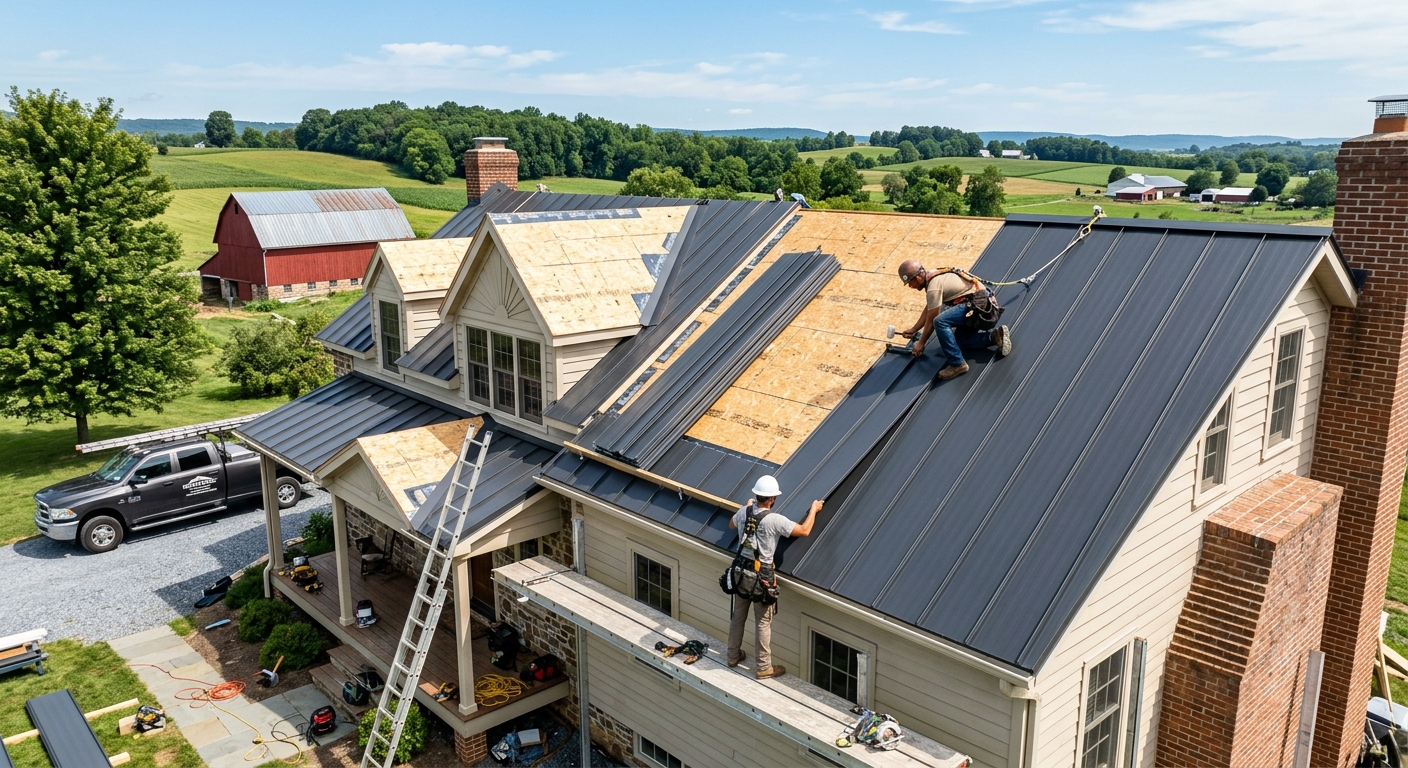
West Whiteland roofing prices by material and scope — 2026
In West Whiteland, nearly 70% of households own their homes and many of those roofs are from the housing boom that filled West Goshen and Uwchlan with subdivisions in the 1970s through the 1990s. This means a huge population of roofs now entering their replacement years, especially asphalt architectural shingles that dominate HOA standards and tract developments here. The median household income is high for the region, but that also comes with expectations for quality and long-lived roof systems—especially as many buyers expect 30 years or more from a new roof in this market.
Large, uniform neighborhoods built in the last century produce predictable roof sizes and pitches. When these 35–50 year-old homes in West Whiteland turn over or show their age, it’s rare that a patch job is enough; full tear-offs and deck assessments are common, especially given repeated ridge-line wind events that strike the South Valley Hills. The scale of these subdivisions also means local pricing is highly competitive - it's a saturated contractor market centered around West Chester. Below are 2026 price bands for commonly installed systems. These reflect the going rate for a typical architectural re-roof or metal upgrade in West Whiteland Township and the neighborhoods east and west.
| Material / Scope |
Lifespan |
Best for |
Price range (installed) |
| Asphalt shingles — architectural (30-yr) |
25–30 yrs |
Standard for West Whiteland suburban homes |
$11,000–$23,500 |
| Asphalt shingles — impact-resistant (Class 4) |
30+ yrs |
Areas frequently hit by wind/hail events |
$18,000–$23,500 |
| Metal standing seam |
40–70 yrs |
Premium, longest lifespan, low pitch porches |
$27,000–$48,000 |
| Flat roof — TPO or EPDM |
15–25 yrs |
Rowhouse/porch/addition low-slope sections |
$14,000–$28,000 |
| Roof repair — leak or isolated section |
n/a |
Small, recent damage; isolated leaks |
$600–$2,200 |
Prices are estimates for a typical West Whiteland home and vary with roof size, pitch, decking condition and material selection.
Snow load, ice dams and wind in West Whiteland
Ridge-line wind events and moderate freeze-thaw cycles make roof protection in West Whiteland different from what you’d see even one county north. The ground snow load here is set at 30 psf and, while not in the snow belt, accumulating snow followed by coastal storm remnants means there’s real risk for ice dams, especially on homes with complex eaves and shaded roof lines.
Ice dams form when interior heat melts snow higher up, then runoff refreezes at the colder eave. Without an ice and water shield, melt can back up under shingles and leak inside. A few thousand spent on proper underlayment during a full roof job ($11,000–$23,500) is far less than the compounded cost of interior water damage and repeat repair calls. West Whiteland homes with shallow eaves are especially vulnerable; local code requires ice barrier protection here for a reason.
Wind-driven rain along the Chester Valley and exposed hills often works past basic flashing. These storm bursts, especially in March and June, bruise shingles, displace ridge caps, and sometimes peel up whole sections. Shingle bruising from hail won’t always show a visible hole, but it destroys the granule surface and leads to leaks—sometimes only apparent months later. Many local repairs fall into the $600–$2,200 band, but after a big wind or hail event, the entire roof may hit replacement territory.
Neighboring counties have heavier snow or different exposure, but in West Whiteland, the combination of modest snow load, freeze cycles, and periodic wind is what punishes aging shingles and makes proper installation, plus ice dam prevention, a real value for money.
Why gutters get replaced with the roof
In West Whiteland, replacing just the roof but not the gutters is a shortcut that can trigger new problems and void warranties. Gutters, downspouts, drip edges, and proper yard grading all work together as a single water control system. When a new roof is installed but old, leaky gutters are left in place, runoff can discharge right beside the foundation. In West Whiteland’s clay-heavy soil, this often leads to wet basements—especially where original downspout extensions are missing or gutters slope the wrong way.
Most manufacturers’ warranties (and some contractors’ 5–10 year labor coverage) call out adequate drainage as a requirement for coverage to apply. Roofers will often recommend new gutters alongside a shingle or metal roof replacement, especially if the originals are the undersized 4-inch variety common in houses from the 1980s and 1990s subdivisions. Replacing them as a package typically runs $2,800–$5,500 for seamless aluminum with leaf guards, if done at the same time as the roof tear-off. The cost is higher if the gutter job is scheduled separately, since access and disposal are less efficient.
If your gutters are dented, sagging, or leaking at the seams, a new roof is the ideal time to fix drainage before water becomes a recurring foundation or siding problem.
Pennsylvania code and Chester County permit rules for roofing
Roofing work in West Whiteland falls under the Pennsylvania Uniform Construction Code (UCC), anchored in the International Residential Code, with enforcement handled at the municipal level across Chester County. In West Chester Borough, a building permit is triggered by a full roof replacement that involves any structural deck repair. Like-for-like shingle repairs under one roofing square can usually be performed without a permit. Outside the borough, each township runs its own permit office, so you’ll want to call your local municipal office before work begins.
Contractors working on roofing in West Whiteland are required by state law to hold a Home Improvement Contractor (HIC) registration for projects over $500. Homeowners can (and should) verify this registration at hic.attorneygeneral.gov before signing a contract. For employer verification of workers’ compensation insurance, WCAIS (wcais.pa.gov) is the state’s check-point. Pennsylvania does not issue a trade license for roofers—HIC registration is all that’s required.
Under the Home Improvement Consumer Protection Act (HICPA), any job over $500 must come with a written contract and gives you a three business-day right of cancellation. Pennsylvania law specifically prohibits waiving of insurance deductibles—if a contractor offers to “cover your deductible”, that’s a red flag.
Flat roof sections: the part most quotes get wrong
Many West Whiteland homes have flat or very low-sloped roof areas, often from additions, porches, or rear sections of subdivision houses. These can’t be properly roofed with regular asphalt shingles; when contractors try, water quickly runs sideways under the tabs, leading to leaks, rot, and membrane failure. Flat sections need a true membrane system—TPO or EPDM—that’s heat-welded or glued down, not nailed like shingles.
The biggest mistake seen in West Whiteland is quoting shingles on low-slope roofs (2/12 pitch or less). It’s a shortcut to an early leak and signals a contractor isn’t following even basic standards. A quality membrane install costs $14,000–$28,000 in this area, depending on size—but you buy peace of mind, as a 20-year membrane tolerates ponding and backups a typical shingle roof never will. This is especially important after freeze-thaw cycles that cause ponding and lead to blistering or “alligatoring” of old coatings.
If your quote lumps a flat porch or addition in with the rest of your pitched asphalt replacement, ask what membrane is included and confirm someone plans to detail the edges, drains, and terminations—not just throw more shingles at a flat problem.
When a West Whiteland roof is worth repairing — and when it isn't
If your roof in West Whiteland is under 15 years old and suffers a single, isolated leak—maybe a slipped shingle in a corner or a nail pop over a bathroom fan vent—paying $600–$2,200 for a local repair is often the smart move. But roofs in the area’s typical subdivisions from the 1970s to 1990s are now well past 25 years, which means the fiberglass mat has often gone brittle, the sealants are at end-of-life, and new leaks will keep forming. In these cases, putting money into more repairs chases diminishing returns.
Here's a clear dollar example: A homeowner with a 28-year-old roof spent $1,200 each spring for three years patching spots after wind storms. That adds up to $3,600, still with an aged, leak-prone roof—and that’s a quarter of a full shingle replacement ($11,000–$23,500). Once a roof is past ~20–25 years and you see shingle loss, granule shedding, or recurring leaks, full replacement is the only way out of the cycle.
Persistent ponding on a flat roof is also a replacement scenario: repairs may slow leaks, but the underlying membrane is already compromised. Emergency tarping—at the lower end of the repair price range—is a stopgap, not a cure, especially before West Whiteland’s winter freeze arrives.
| Situation |
Recommendation |
Typical cost |
Reasoning |
| Under 15 years, one isolated leak |
Repair |
$600–$2,200 |
Roof is in its main service window; spot leak is fixable |
| 15–25 years, several leak points |
Replace |
$11,000–$23,500 |
New leaks signal end-of-life for system |
| 25+ years, any active leak |
Replace now |
$11,000–$23,500 |
Patchwork repairs will not last, additional damage likely |
| Storm damage, wind or hail |
Document, claim, replace |
$11,000–$23,500 |
Insurance may cover; full replacement often required |
| Flat roof ponding or blistering |
Replace membrane |
$14,000–$28,000 |
Repair won't address core issues; water will return |
| Active leak entering winter |
Emergency repair, schedule replacement |
$600–$2,200 |
Prevent interior damage until full replacement possible |
What a proper West Whiteland roofing quote contains
A well-written roofing estimate in West Whiteland should state the roof area in squares (100 square feet each) and specify the actual pitch. Tear-off and disposal should list the number of layers coming off and whether a dumpster is included. Underlayment and ice & water shield must be called out by brand or rating, plus the eave coverage height, not just as “felt”. If damaged plywood deck is a possibility, there should be a clear per-sheet contingency price—not an open promise. All new flashing, vent boots, and ridge vents should be stated. The quote should spell out how many years of labor warranty you get (separate from the shingle warranty), and any payment schedule should require only a deposit under 15%, with final payment on completion, never in cash.
A vague estimate—one that gives just a lump sum or “30 square re-roof”—hides what you’re buying, and can later be padded with extras. If the square count or product types aren’t on paper, you can’t compare bids apples to apples. Below is what a real Chester County professional quote should show, and exactly what to avoid.
| Line item |
What to look for |
Red flag if… |
| Roof area |
stated in squares, with pitch |
no measurement given |
| Tear-off and disposal |
number of layers, dumpster included |
bundled into one figure |
| Underlayment |
product type and coverage |
listed only as 'felt' |
| Ice and water shield |
coverage height at eaves |
omitted entirely |
| Decking |
per-sheet contingency price |
no allowance at all |
| Warranty |
workmanship years stated separately |
only the shingle warranty |
| Payment |
deposit under 15%, balance on completion |
large upfront cash |
Frequently asked questions — roofing in West Whiteland
Do I need a permit to replace a roof in West Whiteland?
In West Whiteland, any full roof replacement that involves structural deck repairs will typically require a building permit, specifically in West Chester Borough as enforced by their codes department. Small roofing repairs—like for like shingle patches under one square—are most often completed without a permit. However, if your project is more than a basic patch, always check with your municipal office before beginning. Permit requirements can change at the township level, even within Chester County. For a full tear-off and install, plan in advance: the permit process can add a week or more but ensures work is inspected to Pennsylvania Uniform Construction Code standards. Most complete shingle jobs in this area are in the $11,000–$23,500 range, and having the right permits in place protects your investment and guarantees project documentation—a must if you ever go to sell.
Are impact-resistant shingles worth it in West Whiteland?
Impact-resistant (Class 4) shingles cost more upfront—typically $18,000–$23,500 for a full replacement in West Whiteland. They’re designed to stand up better to wind and hail, which is relevant given periodic severe wind events along the South Valley Hills. That said, insurance discounts for Class 4 shingles are modest in this market, so the payback mostly comes in durability and fewer repairs over time, rather than lower premiums. If your house is exposed to open fields or at the ridge line where wind seems to always find you, the extra cost can be justified. For subdivisions with good tree cover and less direct hail risk, stick with architectural shingles unless your HOA requires otherwise.
How do I file a storm damage roof claim in Pennsylvania?
After a storm hits West Whiteland, first document the visible damage—missing shingles, bruised metal, or ceiling stains. Take photos and make a list before cleaning up. Then call your insurance company to open a claim. Have a professional roofer—preferably one familiar with Chester County insurance norms—inspect your roof and make a detailed report for your adjuster. Never allow anyone to start repairs or sign a contract until your adjuster has visited; under Pennsylvania’s Home Improvement Consumer Protection Act, you cannot legally waive your deductible. Most storm roof replacements here (from wind or hail) run $11,000–$23,500. Choosing a contractor with valid HIC registration and workers’ comp coverage helps ensure insurance payouts aren’t held up by red tape.
Does attic ventilation matter in West Whiteland's climate?
Yes—attic ventilation is crucial in West Whiteland, where humid summers combine with winter freeze-thaw cycles to stress roofing systems. Without continuous ridge and soffit venting, moisture from everyday living (showers, laundry, cooking) gets trapped, raising attic temperatures and accelerating shingle aging. In winter, blocked vents can contribute to ice damming, causing water to back up under shingles and potentially requiring a costly repair in the $600–$2,200 band or a full replacement in older roofs. Most West Whiteland houses built after 1980 have at least basic ventilation, but upgrades are common when re-roofing, especially to meet current code and manufacturer warranty requirements.
Is a sagging roof line an emergency?
A noticeably sagging roof line should not be ignored in West Whiteland, especially on the 1970s to 1990s homes with original plywood that may be past its best years. Sagging can mean rotten decking, failed rafters, or long-term moisture problems—and could quickly turn into a safety issue if load-bearing structures are compromised. The price for structural repair and full replacement is generally in the $11,000–$23,500 range, but if just the decking needs reinforcement, you might be at the lower end. While it's not a 911 call, it is something you want inspected and addressed before the next heavy snowfall or windstorm, to avoid catastrophic damage.
Does roof pitch affect the price in West Whiteland?
Absolutely. Steeper pitches—common in parts of West Whiteland’s subdivisions—require more labor, extra safety gear, and often increase material waste due to off-cuts. A 10/12 pitch doubles the time versus a 4/12. Because most houses here are “walkable” pitches (between 4/12 and 7/12), you’ll see typical roof replacement costs between $11,000–$23,500. If your home is one of the few with a steep roof or complex dormers, expect estimates to edge toward the top of the band. Flatter roofs (below 3/12) must use a membrane system; using shingles on such a slope is a red flag about a contractor’s standards.
Are storm-chasing roofers a problem in West Whiteland?
After big wind or hail events in Chester County, “storm-chasers”—out-of-town crews that follow insurance work—do make the rounds in West Whiteland. They often offer to waive your insurance deductible (which is illegal in Pennsylvania) and may pressure you to sign contracts quickly. Unlike local contractors, they may have no intention of doing warranty work if issues arise a year later. Remember, roof jobs in this township generally fall in the $11,000–$23,500 range, whether you use local or out-of-town companies, so chasing a bargain comes with real service risks. Always verify HIC registration and workers’ comp insurance to avoid fly-by-night operations.
How far ahead should I book a roofer in West Whiteland?
For most of the year, reputable local roofers in West Whiteland are scheduling full replacements 3–6 weeks out, especially during peak spring and fall months when demand is highest. Emergency repairs can often be handled within a few days—these are typically in the $600–$2,200 range. If you have an urgent leak in winter or after a storm, most established companies will do temporary tarping to prevent damage but expect full replacements to be delayed until weather and supply lines allow. The earlier you book, the better the chance of securing your preferred timing, especially if you want gutter work or a full membrane job done together.
How much does it cost to repair a roof leak in West Whiteland?
The typical cost to repair a single roof leak in West Whiteland runs from $600–$2,200, depending on access, flashing, and the age of shingle. Most repairs near vent boots or in an isolated valley are quick, but multiple leaks or hidden rot can push the upper end. It’s worth noting that many homes here have aging asphalt systems—if your repair estimate is above $1,500 and your roof is 20+ years old, you should ask for a replacement estimate as well. Repeat repair charges quickly overtake the cost of full replacement.