Roofing Replacement & Repair costs in Lehighton — 2026
Lehighton is a market where most roofs have already been replaced more than once, and homeowners deal with systems built under several generations of code. With 94.1% of local homes built before 1980 and a homeownership rate of 52.4% (U.S. Census Bureau, ACS 2024), much of your neighborhood faces the overlapping challenges of old decking, multiple shingle layers, and mid-century add-ons. The typical postwar single-story in Lehighton and Palmerton often hides a low-slope rear addition—not something you can ignore, because standard asphalt shingle installs don’t reliably protect these low pitches. These additions require either a membrane solution or custom flashing details, which affects both the total scope and the price to do it right.
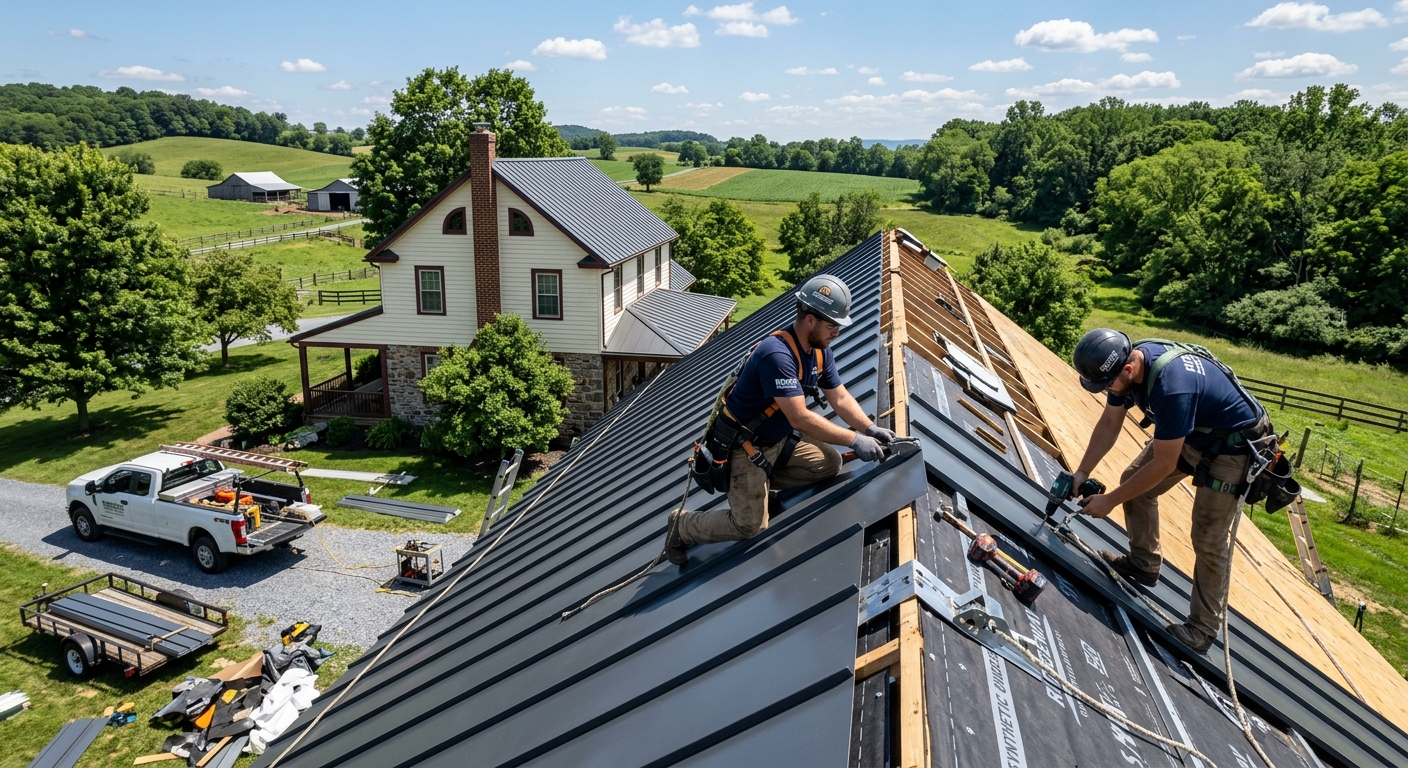
Asphalt shingles are still the material of choice across Carbon County, mostly replacing original slate on homes in Palmerton or Jim Thorpe. But metal and membrane roofs are increasingly used for sections prone to leaks—especially those low-slope rear add-ons. Travel surcharges from specialty crews are routine, since Lehighton sits in a rural county bracketed by the Lehigh Valley and the Poconos.
| Material / Scope |
Lifespan |
Best for |
Price range (installed) |
| Asphalt shingles — architectural (30-yr) |
25–30 yrs |
Most homes; standard replacement |
$8,800–$18,500 |
| Asphalt shingles — impact-resistant (Class 4) |
30+ yrs |
Ridge-line/wind exposure |
$14,500–$18,500 |
| Metal standing seam |
40–70 yrs |
Historic homes, long-term solution |
$21,500–$38,000 |
| Flat roof — TPO or EPDM |
15–25 yrs |
Low-slope rear additions |
$11,000–$22,000 |
| Roof repair — leak or isolated section |
n/a |
Spot leaks or small sections |
$475–$1,750 |
Prices are estimates for a typical Lehighton home and vary with roof size, pitch, decking condition and material selection.
Lehighton homes and their roof lines
Most Lehighton homes were built in the rush of postwar construction from 1945–1970, with over 94% of residential structures standing since before 1980 (U.S. Census Bureau, ACS 2024). Almost every neighborhood here features single-story bungalows or Cape Cods with add-ons tacked to the rear. These low-slope extensions aren’t just visually different—they often have shallower pitches and minimal—or absent—eaves. That means water travels more slowly off the roof, and snow from the typical 40 psf ground load lingers, raising the risk of ice dams and leaks where the main roof meets the addition.
The original roof decks in this era were built with 1x plank or even skip sheathing, rarely with plywood. In practice, that often translates to soft decking that may sag under layers of shingles. Many Lehighton homes have at least two layers of asphalt, sometimes right over slate remnants. Most were installed before ice and water barrier became code, so bare felt may be the only underlayment at the eaves. Flashing details can be all over the map: solid copper on the original roof, aluminum on a later patch, and sometimes roof cement as the only line of defense on a modified addition. When meeting with a contractor, always ask about decking condition, ice barrier, and transition details between old and new roofs—these can’t be assumed sound just because the outer shingles look intact.
Gutters, drainage and roof longevity in Lehighton
A roof in Lehighton doesn’t work on its own—gutters, downspouts, and landscape grading protect your foundation and extend the life of your roof system. With so many additions and pitch changes, it’s easy for water to collect in the wrong spot. Gutters clogged or pitched wrong will dump water next to your foundation, which in turn causes basement leaks in the old stone or block walls that are typical in our region. During a roof replacement, if the gutters are rusted, bent, or undersized, it’s wise to address them in the same project. Some manufacturer warranties require upgraded drainage to remain in effect, especially for long-life shingle or metal roofs.
Drip edge matters here, too—it’s not a cosmetic detail. It channels water away from the fascia, protecting both your soffits and siding. Grade the soil away from your foundation, and confirm that every downspout terminates at least five feet from the house. Expect full gutter replacement to add $1,300–$3,000 to a typical roof job, depending on home size, material (aluminum or steel), and the number of stories. Dollar for dollar, catching drainage problems now saves you much more in the long run, especially if you’re in a spot with intermittent basement water or see ice damming each winter along the eaves.
Permits and code requirements in Lehighton
Roofing projects in Lehighton fall under the Pennsylvania Uniform Construction Code (UCC), which is based on the International Residential Code. Here, not every roofing job will require a permit. In Lehighton Borough, a building permit is needed when a full roof replacement involves repairs to the structural deck beneath the shingles. If your project is limited to a minor roof leak patch—such as repairing a single square of shingles in Jim Thorpe—no permit is typically necessary.
The Lehighton Borough Zoning & Code Enforcement Office issues permits within borough limits; surrounding townships handle their own approvals. Before you sign, verify that your contractor holds a Home Improvement Contractor (HIC) registration from the Pennsylvania Office of Attorney General for any contract over $500. You can check their current status at hic.attorneygeneral.gov. For insurance, workers' compensation coverage is mandatory in Pennsylvania, and you can confirm this directly using the WCAIS database (wcais.pa.gov). If your home was built before 1978, the federal EPA Lead Renovation, Repair and Painting Rule applies. You can verify contractor certification at certifiedrenovatorsearch.epa.gov.
It’s worth noting that in this state, there is no specific roofing trade license—just the HIC registration. For the homeowner, that makes vetting paperwork and proof of insurance even more critical before starting any roof work.
What gets discovered after tear-off in Lehighton
Few roof replacements in Lehighton are truly “straightforward.” Once the old layers come off, contractors commonly find issues that weren’t visible at the initial estimate. On pre-1980s homes, rotted or badly spaced plank decking is frequent; saggy or punky wood around chimneys, valleys, or low-slope additions is the rule rather than the exception. Budget for at least $75–$110 per sheet of replaced decking—most bids will have a set rate per 4x8 OSB or plywood panel, plus dump charges.
Attic ventilation is another surprise that hits the bill and the warranty. More than just keeping energy bills in check, in our cold climate, poor ventilation lets heat escape through the roof, melting snow from below. This refreezes at the eaves, causing ice dams—one of the primary reasons for premature roof failure in Carbon County. Correcting ventilation at the time of replacement (ridge vent, soffit venting, or both) adds $350–$1,500.
Flashing is a wildcard on older homes: real copper might be salvageable, but most crews will swap out soft metal, worn step flashing, and rusted counterflashing. Wall and chimney flashings typically run $325–$1,250 extra, depending on how many transitions there are and whether stucco cutting or brickwork is required. Old vent boots almost always get replaced ($45–$110 each) and missing drip edge should be called out ($150–$400 for an average home). A proper tear-off bid should spell out all of these, with per-item contingencies in writing.
What a proper Lehighton roofing quote contains
Reading a Lehighton roofing estimate means reading what’s actually being done—otherwise, you risk being surprised on both price and warranty coverage. First, look for the roof’s square count (that’s 100 square feet per “square”) and the roof pitch. If these aren’t listed, the estimate isn’t tied to your actual home. Tear-off and disposal costs should detail how many layers will be removed and should specify if a dumpster is included. Underlayment should be named by product (like synthetic, 30# felt, or ice/water shield), not just called “felt.”
Decking is always a wild card on our old homes: a good quote prices replacement per sheet and lists the current deck type—plank, plywood, or OSB. Flashing work, vent boots, and ridge/hip ventilation should get their own line items. Warranties come in two flavors: the manufacturer’s shingle warranty and the contractor’s workmanship warranty. These should be listed separately. Finally, payment: Pennsylvania’s rules are strict—no more than a 15% deposit, with the balance due only upon completion. Quotes that ask for most of the money up front or that don’t break these details out just aren’t trustworthy.
| Line item |
What to look for |
Red flag if… |
| Roof area |
stated in squares, with pitch |
no measurement given |
| Tear-off and disposal |
number of layers, dumpster included |
bundled into one figure |
| Underlayment |
product type and coverage |
listed only as 'felt' |
| Ice and water shield |
coverage height at eaves |
omitted entirely |
| Decking |
per-sheet contingency price |
no allowance at all |
| Warranty |
workmanship years stated separately |
only the shingle warranty |
| Payment |
deposit under 15%, balance on completion |
large upfront cash |
When to book roofing work in Lehighton
Lehighton’s roofing calendar is built around its northeast Pennsylvania climate. With a winter design temperature of 4 °F and ground snow loads of 40 psf, shingle installation is only reliable from mid-April through early November. Crews work from the first warm days in April but book solid fast—especially August through October as homeowners rush repairs before winter. September is the sweet spot: shingles seal well, it’s drier, and scheduling is possible without rush fees. Crew availability tightens in the rural pockets of Carbon County, so lead times of 3–6 weeks are normal outside the densest part of the Lehigh Valley. Expect travel surcharges in the thinner market here.
If you need a full replacement or new roof, avoid mid-winter unless water is already coming in. Emergency tarping or mid-February repair can cost more than a routine fall replacement—partly due to labor, partly because weather limits what can be done in a day. Planning ahead matters. Booking a replacement for September or early October minimizes both weather risk and premium pricing for last-minute work.
Frequently asked questions — roofing in Lehighton
What's the cheapest way to replace a roof in Lehighton?
For most Lehighton homes, the lowest-cost roof replacement means sticking with architectural asphalt shingles and re-roofing only over sound decking. Don’t be tempted by cut-rate installs that ignore underlying rot or fail to address low-slope additions—those corners get you leaks and denied warranties. A straightforward shingle roof replacement in town will typically run between $8,800–$18,500, with the most savings on smaller homes if the decking and flashing are solid and gutters aren’t due for replacement. Avoid "storm chaser" outfits that offer rock-bottom prices but cut corners on prep and refuse to itemize the bid. Also, Pennsylvania requires a written contract for projects over $500, so any handshake deal or "cash price" with no contract is a bad sign, even if the estimate looks cheap. It’s money lost if you have to pay someone else to repair their shortcuts.
Are impact-resistant shingles worth it in Lehighton?
Impact-resistant (Class 4) shingles cost more up front, typically around $14,500–$18,500 for an average Lehighton roof, but they can be a smart investment on homes exposed to Broad Mountain’s ridge-line winds or in neighborhoods with a lot of tree cover. In western Carbon County, shingle failures from wind uplift are a known issue on older roofs, especially after severe storms. These shingles can help prevent storm damage, reduce long-term repair bills, and sometimes even decrease insurance premiums (check with your carrier). On a standard in-town roof without big tree hazards or wind exposure, you can skip the upgrade and stick to architectural shingles. But for homes with repeated wind tear-offs or after a history of storm claims, Class 4 pays for itself over the roof life.
Do I need a permit to replace a roof in Lehighton?
In Lehighton Borough, a permit is required if the shingle replacement involves repairs to structural decking beneath the roof. This is enforced by the Lehighton Borough Zoning & Code Enforcement Office under the Pennsylvania Uniform Construction Code (UCC). Minor repairs, like patching a small leak or replacing a single square of shingles, generally don’t require a permit—especially in Jim Thorpe, where this is common. For a full roof replacement—which typically costs $8,800–$18,500 with architectural shingles—permits aren’t optional if deck repair is part of the job. Always ask the contractor to show you the approved permit paperwork before work begins, and never sign a contract without the contractor’s HIC registration number on it, which you can verify at hic.attorneygeneral.gov.
Will the crew damage my landscaping or driveway?
A professional roofing crew in Lehighton should always take steps to protect your property, but there are risks. Dumpsters for shingle and decking tear-off can dent asphalt driveways, especially if they’re older or were patched versus freshly paved. Many crews use plywood runners to prevent damage. Landscaping along the dripline can be trampled or hit with falling shingles, so reputable crews tarp over gardens and flower beds, and clean up every nail before leaving. For a typical job in the $8,800–$18,500 range, pre-job walk-throughs, tarps, and magnet sweeps should all be included at no cost. Ask before work starts what steps will be taken—if the answer is “Don’t worry, we never have problems,” you should worry. Make sure these protections are written into the estimate, not just promised verbally.
Can I inspect my own roof safely?
While you can stand on the ground or use binoculars to spot missing shingles or see if gutters are backed up, walking your own roof in Lehighton isn’t recommended for most homeowners—especially given steep pitches, old decking, and frequent moss in shaded areas. Many homes here built before 1980 have soft spots where rot has crept in undetected, so putting weight on those can cause both injury and a larger repair bill. Professional inspections as part of a repair or estimate (usually in the $475–$1,750 range for a repair visit) include a walk-around, attic check, and sometimes drone photos to show you details without risk. Save yourself the hospital bill and possible additional roof damage—leave on-roof inspections to professionals.
Why do roofs fail faster in northeastern Pennsylvania?
Roofs here age faster than the shingle wrapper claims due to our specific climate: high snow loads (40 psf), long winters with frequent freeze/thaw cycles, and severe ice-dam exposure. These conditions attack roof edges and any weak spots in flashing or underlayment. The postwar homes of Lehighton usually lack the modern ice and water barrier that prevents water from sneaking under shingles during a thaw, so leaks start earlier than in more temperate counties. Investing in a robust underlayment and correcting attic ventilation—at a cost of $350–$1,500—helps combat these local risks. No manufacturer warranty will cover leaks from ice dams if the roof isn’t brought up to local standards during replacement.
How many quotes should I get for a roof in Lehighton?
It’s wise to get at least three written quotes from HIC registered contractors serving Carbon County. This rural market sits between metro Lehigh Valley and the Poconos, so pricing, scope, and charge for travel can vary significantly. Comparative quotes for a typical Lehighton home—say, $8,800–$18,500 for an asphalt replacement—should each spell out square count, tear-off, underlayment type, and both labor and material warranties. Don’t just grab the lowest price; look at what’s included, what’s left as a contingency, and how much deck or flashing replacement is priced in. If one bid is much lower than the others, scrutinize it for missing items—you usually pay for it one way or another.
How much does it cost to repair a roof leak in Lehighton?
A typical roof repair for a leak or small damaged section in Lehighton runs between $475–$1,750, depending on how soon you call after the problem starts and whether you catch it before rotten deck or insulation damage sets in. Quick repairs might mean just replacing shingles and resealing flashing; larger jobs may call for new vent boots, cap nails, or even partial membrane installs if you have a low-slope rear addition. During storm season, or if water is actively entering the living space, emergency repairs may be toward the high end of this range. Either way, it’s far cheaper than letting water damage progress to interior drywall, mold, or foundation problems.
What if my insurer denies my roof claim?
If your insurer denies your roof claim in Pennsylvania, the best first step is to get a detailed written estimate from a contractor who understands the local code and typical roof conditions in Lehighton. Insurers may deny claims if they decide the leak is from “age and wear,” or if maintenance is deemed lacking. Sometimes they require evidence that the damage was storm-related—especially if you’re in an area exposed to Broad Mountain winds. Documentation helps: drone photos, an itemized estimate, and a clear date of loss make your appeal stronger. If repair costs fall in the range of $475–$1,750 per leak repair, many homeowners handle it out of pocket for speed. For large structural damage or large claims, consider working with a public adjuster. Do not agree to “free roof” offers or any deal that waives your deductible—this is prohibited under Pennsylvania law and risks further issues.