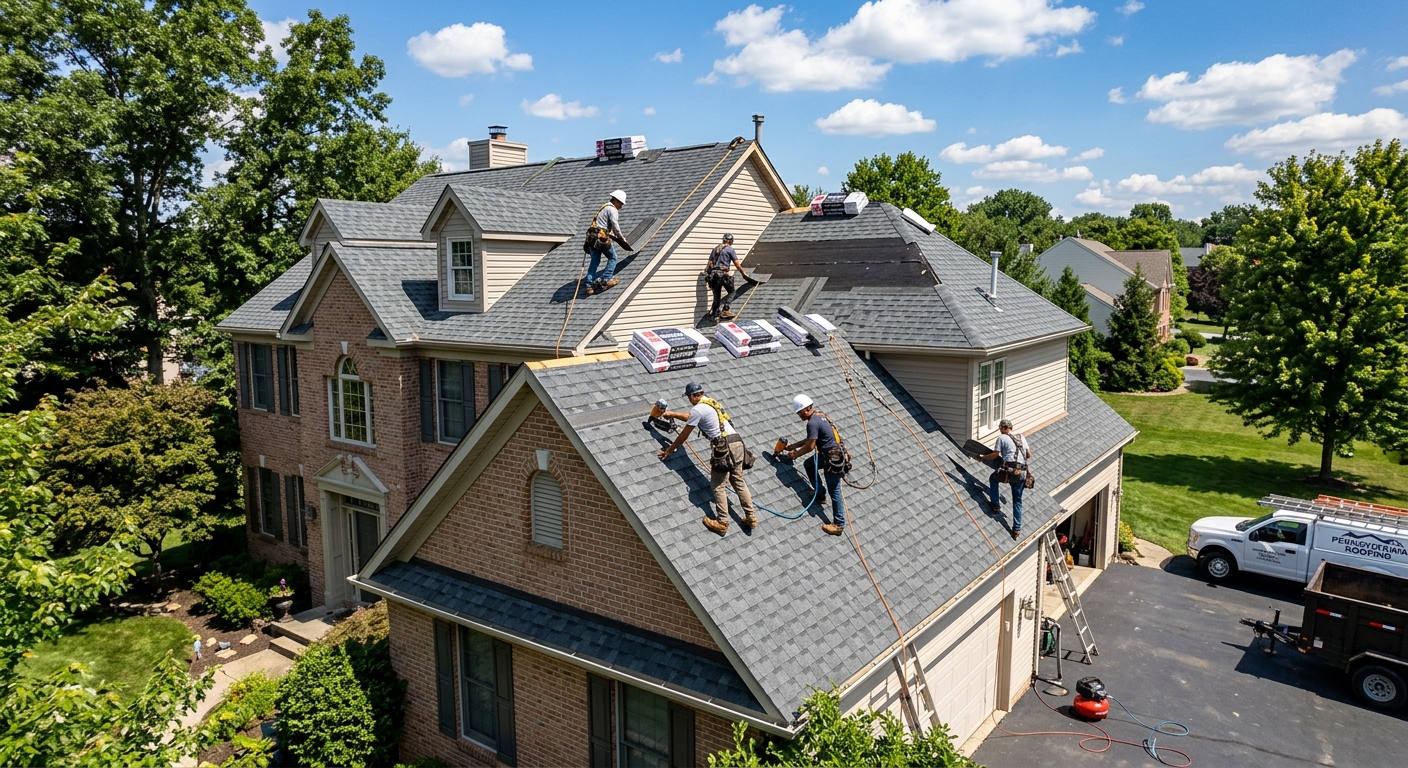
Roofing Replacement & Repair costs in Warren — 2026
Warren homeowners face unique roofing challenges that can make costs here higher than folks in the rest of northwestern Pennsylvania might expect. With a population of just 9,353 and 58.2% homeownership (U.S. Census Bureau, ACS 2024), contractors often travel from Erie or Jamestown—so travel surcharges, not just material, factor into job pricing. Nearly all of Warren’s single-family homes were built before 1980, with a huge number dating to 1900–1940. In practical terms, this means that when we tear off the old shingles, we frequently find two or three layers, not just one. Removing these extra layers—often necessary by code and for shingle warranties—adds labor and landfill charges, bumping up the price.
On older Warren homes, decking is commonly original boards, not newer plywood or OSB, and hidden rot is common, especially after decades of patch repairs. These factors can make an “average” roof job here more involved (and more expensive) than in a newer market. Architectural asphalt shingles dominate for cost, but some homeowners turn to Class 4 impact-resistant shingles or standing seam metal for security against our frequent heavy snows and wind events thanks to our proximity to the Chautauqua Ridge. If your roof is low-slope (often found over porches and additions), TPO or EPDM membranes enter the conversation.
| Material / Scope |
Lifespan |
Best for |
Price range (installed) |
| Asphalt shingles — architectural (30-yr) |
25–30 yrs |
Most Warren homes; affordable tear-off/replacement |
$8,500–$18,000 |
| Asphalt shingles — impact-resistant (Class 4) |
30+ yrs |
Steep, exposed, or wind-prone roofs |
$14,000–$18,000 |
| Metal standing seam |
40–70 yrs |
Maximum snow-shedding, longevity |
$20,500–$36,500 |
| Flat roof — TPO or EPDM |
15–25 yrs |
Low-slope porches, additions, garages |
$10,500–$21,500 |
| Roof repair — leak or isolated section |
n/a |
Small leaks, missing shingles, flashing fixes |
$450–$1,700 |
Prices are estimates for a typical Warren home and vary with roof size, pitch, decking condition and material selection.
What insurance covers on a Warren roof
In Warren, roof storm claims are common, especially given our exposure to wind along the Chautauqua Ridge. If you suspect storm damage, always take clear photos of shingles, flashing, and attic staining before cleanup—to document condition for your insurer. Call your carrier to open a claim, but don’t authorize repairs (beyond emergency tarping) until you have a written scope of loss. Most policies pay “actual cash value” (depreciated) up front, then release “replacement cost” only after your contractor documents completion with photos and receipts. Expect an adjuster to inspect—sometimes walking the roof, sometimes using drone shots. Do not accept a repair scope from a contractor alone without insurer approval.
Pennsylvania’s Home Improvement Consumer Protection Act (HICPA) applies: for jobs over $500, a written contract is required, and you have a 3-business-day right of cancellation. Be wary of any contractor—local or out-of-county—offering to “cover your deductible.” Waiving a homeowner’s deductible is prohibited under state law, a red flag for insurance fraud. Insurers in Warren know the local housing stock is old and many roofs have multiple layers; they will only pay for code-required work and documented storm-caused damage. If your loss is not sudden (e.g., chronic leaks from an old ridge cap), expect pushback. Get every commitment in writing, and never pay your deductible to anyone but your insurance company or a contractor you’ve independently verified.
Decking, ventilation and flashing — the hidden roof costs
Many Warren roof replacements go over budget after tear-off reveals rotten roof decking. Homes from 1900–1940 almost always have plank sheathing, which is prone to rot around chimneys, valleys, and eaves—especially where leaks or ice dams have festered. Replacing rotted deck boards typically adds $550–$1,200 per section, depending on wood cost and square footage.
Attic ventilation is critical here in Warren’s ice-prone climate. Without adequate intake and ridge venting, warm attic air melts snow, refreezing at the eaves to cause ice dams, shingle damage, leaks, and premature failure. Adding a modern ridge vent or additional soffit vents during roof work runs $500–$1,500 for most homes—a lot less than repairing major interior water damage down the line.
Flashing issues add up fast. Chimney, wall step, and valley flashing replacement—especially on steep roof lines—can cost an extra $650–$1,400. Vent boot and drip edge upgrades (now code-required on most replacements) usually add $350–$900. Don’t skip these items—improper flashing is responsible for a big share of chronic leaks in prewar Warren homes, where original lead or steel flashing has rusted away. Budget for these contingencies if your roof is showing its age.
Warren homes and their roof lines
With over 92% of homes built before 1980 in Warren County (U.S. Census Bureau, ACS 2024), you’re typically looking at steep-pitched, gabled roofs atop board (not plywood) decking. Houses from the 1900–1940 wave feature plank roof decks wide enough to let daylight through, and those gaps are often where leaks and rot start after decades of patch repairs.
Local code didn’t require ice and water barrier until very recently, so most older roof jobs were completed with basic felt underlayment only. That’s why attic leaks and interior ceiling stains are so common in Warren after a harsh winter. Tear-offs nearly always reveal at least two layers—sometimes three—of shingles, as generations of owners simply overlaid the old roof. Each additional layer means more labor, higher landfill fees, and a greater chance some decking underneath is shot from trapped moisture.
For most Warren roofs, expect a job to mean complete tear-off down to the wood, inspection for rot, and replacing flashing and ventilation. Many homes have complex intersections—dormers, porches, turrets—which make for tricky flashing and a higher chance of leaks if not handled right. If you own a “newer” home from the late ’70s or early ’80s, you may have OSB or plywood, and your decking is more likely to pass inspection, but virtually all older homes will need attention to wood and fastener upgrades to meet today’s shingle warranties.
Pennsylvania code and Warren County permit rules for roofing
Roofing projects in Warren fall under the Pennsylvania Uniform Construction Code (UCC), based on the International Residential Code, with enforcement by either the City of Warren Codes & Permits Office or separate township offices in rural areas. In the City of Warren, you’ll need a building permit if you’re replacing structural roof decking or switching material types (for example, going from shingle to metal). For minor shingle repairs under one roofing square in rural townships (like Sugar Grove), permits are rarely required—though best practice is to check with your township before starting work.
Pennsylvania does not issue a trade license for roofers, but state law requires Home Improvement Contractor (HIC) registration for jobs over $500. Verify a roofer’s HIC number on hic.attorneygeneral.gov. Also, workers’ compensation is mandatory for any roofing company with employees—check coverage via the WCAIS system at wcais.pa.gov. Every roof contract over $500 must be in writing, per the Home Improvement Consumer Protection Act, and you get a three-day right to cancel. Be sure to verify these credentials before you sign a contract—especially with out-of-county firms who may be less familiar with Warren’s enforcement quirks.
Material comparison for Warren homeowners
Northwestern Pennsylvania’s 45 psf ground snow load and 5 °F winter design temperature put unique stresses on Warren roofs. Asphalt architectural shingles, the local staple, keep upfront costs predictable ($8,500–$18,000), but shed snow less efficiently than metal, making them a solid but not premium pick for most homes. Steep, simple roof lines handle snow with less trouble, which contributes to why three-tab and architectural shingles became the norm here—they’re light, easy to install, and forgiving for older framing.
Metal standing seam roofs excel in Warren’s conditions by actively shedding lake-effect snow and resisting ice damming, but the installed price ($20,500–$36,500) is often a deal-breaker—especially given our modest median household income. Unless you plan to stay for several decades, the jump to metal isn’t always worth it. On flat or low-slope roofs—common on porches and additions—TPO and EPDM membranes ($10,500–$21,500) win for keeping water out where shingles would fail, but need careful install and more frequent replacement. Class 4 asphalt shingles, at the upper end of the asphalt range ($14,000–$18,000), are worth considering only where hail or wind exposure justify extra cost—otherwise their ROI here is marginal.
| Material |
Installed cost |
Lifespan |
Cold-climate performance |
Maintenance |
| Asphalt architectural |
$8,500–$18,000 |
25–30 yrs |
Good for steep slopes; moderate snow shedding |
Periodic shingle and flashing checks |
| Asphalt Class 4 impact-resistant |
$14,000–$18,000 |
30+ yrs |
Resists wind and hail; improved winter durability |
As above; fewer repairs from storm damage |
| Metal standing seam |
$20,500–$36,500 |
40–70 yrs |
Superior snow and ice shedding; suitable for steep/complex roofs |
Minimal—check fasteners and flashing every few years |
| TPO / EPDM membrane |
$10,500–$21,500 |
15–25 yrs |
Best for flat/low slope; handles ponding if installed properly |
Regular seam/edge inspections; quick patching for punctures |
Water management on a Warren roof
In Warren’s old housing stock, replacing your roof but leaving leaky, undersized, or badly pitched gutters is a recipe for water in the basement—especially when snow melts rapidly come spring. Gutters channel runoff from steep, gabled roof lines away from your home; if downspouts dump water a foot from your foundation, you’ll see seepage and staining downstairs no matter how new the shingles above. Most modern roof warranties require that water be properly managed—clogged or missing gutters void coverage if water damage starts at the eaves.
Replacing gutters—aluminum, with new hangers and downspouts—typically runs $1,600–$3,800 alongside a new roof, depending on house size and number of stories. Drip edge (now required by code) adds a first line of defense at the fascia and keeps the sheathing from wicking water. If you’re already investing in a new roof, not addressing drainage is a false economy; the savings disappear fast if water works its way below grade or backs up under your new shingles.
Frequently asked questions — roofing in Warren
What are the signs of hail damage on a roof?
Hail damage on Warren roofs usually appears as random, circular bruises or granule loss on shingles—sometimes exposing the black substrate beneath. You might see cracked, split, or even missing tabs on older three-tab roofs. On metal, look for fresh dents, especially on soft ridge caps and flashing. After a storm passes over the Chautauqua Ridge, walk your property and check for shingle granules in downspouts, as that often signals impact. If you see torn bits or shallow pockmarks, document them with photos and contact a roofing contractor registered with the PA Attorney General. Don’t rush: insurance claims over $450–$1,700 repairs are routine here; that sum can secure a thorough, documented evaluation and keep your claim moving.
What causes ice dams on Warren roofs?
Ice dams in Warren are a direct result of our long, cold winters and heavy lake-effect snow. Poor attic insulation or ventilation allows warm household air to migrate upward, melting the bottom of the snowpack. Water trickles down above the eaves and freezes at the edge—where the roof is colder—forming a dam. Meltwater then backs up under the shingles, leaking into attics and walls. Most houses in town, built before modern codes, lack proper ridge venting and have minimal insulation over the top plate. Expecting a new roof alone to solve ice dams is wishful thinking. A typical corrective attic vent and ice barrier upgrade can add $500–$1,500 to your project but will prevent leaks that otherwise rot out the original plank decking in a hurry.
How far ahead should I book a roofer in Warren?
In Warren, roofing contractors book up quickly between April and October—especially with so much travel required from Erie or Jamestown. If you want a spring or early summer install, call three to four months in advance. Emergency storm repairs might be handled in days, but for full replacements in the $8,500–$18,000 range, expect to be on a waiting list during peak months. Fewer local crews and older homes needing more labor means you can’t just call and expect same-day service. If a roofer says they’re available tomorrow with a crew standing by, that’s a red flag—most legitimate contractors here are booked well into the season.
How much deposit should I pay a roofer upfront?
Pennsylvania law, through the Home Improvement Consumer Protection Act, limits upfront deposits to one-third of the contract price—for all jobs over $500. For a standard Warren roof replacement at $8,500–$18,000, you’d expect a deposit of about $2,800–$6,000, with the balance due after final inspection. Never pay a roofer in full before the work is completed, and always get a detailed written contract. If a contractor asks for more than the statutory limit, walk away. Also—if your job is small (e.g., a repair under $1,700), deposits may not be required at all unless special-order materials are involved.
Will filing a roof claim raise my premium?
Insurers in Warren—and across Pennsylvania—may raise premiums after a claim, especially if it’s for “preventable” maintenance (age-related, not storm-related). Storm losses—like those causing $450–$1,700 in shingle or flashing repairs—are less likely to count against you than “wear and tear” claims. Filing many small claims, or one large claim after you let the roof go for too long, could mean higher rates or even non-renewal. Before filing, consult both your agent and your roofer. Sometimes paying out of pocket keeps your record clean, unless a significant event clearly triggered the damage.
What's the cheapest way to replace a roof in Warren?
For Warren homeowners on a tight budget, the most affordable approach is a full tear-off and replacement with architectural asphalt shingles, in the $8,500–$18,000 range. Never be talked into “roof-overs” on old homes—adding a new layer over two or three old ones may violate code and will always shorten the new roof’s life. Strip down to the decking, replace only damaged wood, and keep your venting and flashing simple but up to code. Spending a small amount extra on ice barrier and proper drip edge protection will pay off with fewer leaks. If your home needs isolated repair only, a targeted repair in the $450–$1,700 range can buy time.
Is metal roofing noisy in rain?
Modern standing seam metal roofs in Warren are installed over solid decking and a heavy underlayment, so the old stories about deafening rain rarely hold true. If you’ve lived in an older farmhouse with barn tin nailed over open rafters, you remember the drumbeat—today’s systems aren’t like that. Over original plank decks, the sound is somewhat louder than with asphalt, but rarely intrusive; most homeowners notice a soft patter rather than clattering. For a standard Warren install in the $20,500–$36,500 range, you’ll hear less indoor noise than your grandparents did, unless you’re finishing an uninsulated attic or porch.
Is a metal roof worth the extra cost in Warren?
For most Warren homeowners, a metal standing seam roof offers excellent snow-shedding—valuable in our high snow load zone—but the price tag ($20,500–$36,500) is double or more an architectural shingle install. Metal is worth it if you plan to stay 25+ years, live on a heavily wooded lot (resistant to branch damage), or have a steep, complex roofline prone to snow buildup. If you’re selling, or have simple roof geometry with no history of snow damming, metal is hard to justify cost-wise. Asphalt remains dominant here for good reason: it’s reliable, looks right on old architecture, and is much friendlier to Warren budgets.
Do I need a permit to replace a roof in Warren?
Yes—if you’re in the City of Warren, replacing structural decking or switching roofing material types usually requires a building permit under the Uniform Construction Code. For basic shingle repairs of less than one square in rural townships like Sugar Grove, a permit may not be required, but always confirm with your local code office before starting work. Permits are issued by either the City of Warren Codes & Permits Office or township authorities. Any contractor doing a roof replacement worth more than $500 must be registered as a Home Improvement Contractor with the state—verify at hic.attorneygeneral.gov—and carry workers’ compensation coverage, which you can check through WCAIS. Always protect yourself by confirming these essentials before any work starts.