Palmyra roofing prices by material and scope — 2026
In Palmyra, roofing costs are closely tied to the realities of local housing and construction. With a median household income of $65,743 and just over half the residents owning their homes, choices around roofing are practical and cost-driven. The area’s housing stock is dominated by postwar builds, with nearly 80% of homes built before 1980 (U.S. Census Bureau, ACS 2024). These older homes frequently need full roof replacements rather than simple repairs, especially where attic ventilation has never been upgraded.
Between 1945 and 1975, Lebanon saw a significant suburban housing boom. That’s why you’ll find so many 25–40-year-old asphalt shingle systems in Palmyra reaching the end of their service lives. These homes often weren’t built with modern attic ventilation, so replacements tend to uncover rot at the eaves or problems with trapped moisture — pushing jobs beyond just surface shingle swaps. As a result, most local roofs are architectural asphalt shingle, but you’ll see growing interest in metal roofing on “forever homes” and TPO/EPDM on low-slope additions.
| Material / Scope |
Lifespan |
Best for |
Price range (installed) |
| Asphalt shingles — architectural (30-yr) |
25–30 yrs |
Typical Palmyra home; cost-effective; rebuilds after 30–40 yrs |
$9,000–$19,000 |
| Asphalt shingles — impact-resistant (Class 4) |
30+ yrs |
Upland & ridge exposure; hail-prone areas; insurance discounts |
$14,500–$19,000 |
| Metal standing seam |
40–70 yrs |
High-value, long-term ownership; low maintenance |
$22,000–$39,000 |
| Flat roof — TPO or EPDM |
15–25 yrs |
Low-slope additions; porches; commercial/multifamily |
$11,500–$23,000 |
| Roof repair — leak or isolated section |
n/a |
Active leaks, wind/torn shingles, minor storm damage |
$475–$1,800 |
Prices are estimates for a typical Palmyra home and vary with roof size, pitch, decking condition and material selection.
Permits and code requirements in Palmyra
In Palmyra, roofing work falls under the Pennsylvania Uniform Construction Code (UCC), which is based on the International Residential Code (IRC). For projects within Palmyra borough, you’ll need a permit if your roof replacement involves replacing structural decking or altering any truss work. Cosmetic work, like reroofing over sound decking or minor shingle repair under one square (about 100 square feet), typically does not require a permit in the surrounding Lebanon County townships. Municipalities operate their own code offices, so requirements shift from Lebanon city (the county seat) to surrounding areas — always check before signing a contract.
If you’re hiring a contractor, they must carry a Home Improvement Contractor (HIC) registration from the Pennsylvania Office of Attorney General for any job over $500. You can — and should — verify the HIC registration at hic.attorneygeneral.gov. State law also requires written contracts for such work and grants you a three business-day right to cancel. Every employer must carry workers' compensation insurance, regardless of company size. You can check their coverage status using the state WCAIS system at wcais.pa.gov. These protections make it difficult for out-of-town or uninsured roofers to slip through, but it’s always worth verifying directly. Permits and code inspections are never wasted steps in Lebanon County, especially on older homes where hidden structural issues are common.
Why two Palmyra roofing quotes can differ by 40%
It is common for two Palmyra homeowners with seemingly similar roofs to get dramatically different bids—sometimes off by 40% or more. This comes down to specifics locked in by Lebanon County’s building history and the realities of our local climate. If you’re looking at a bid for architectural asphalt shingles between $9,000–$19,000, the higher end doesn’t mean you’re being gouged. For homes dating to the postwar surge, unseen damage is routine. Rot under old 1x decking from decades of poor ventilation can require intensive repairs, which drive up material and labor costs.
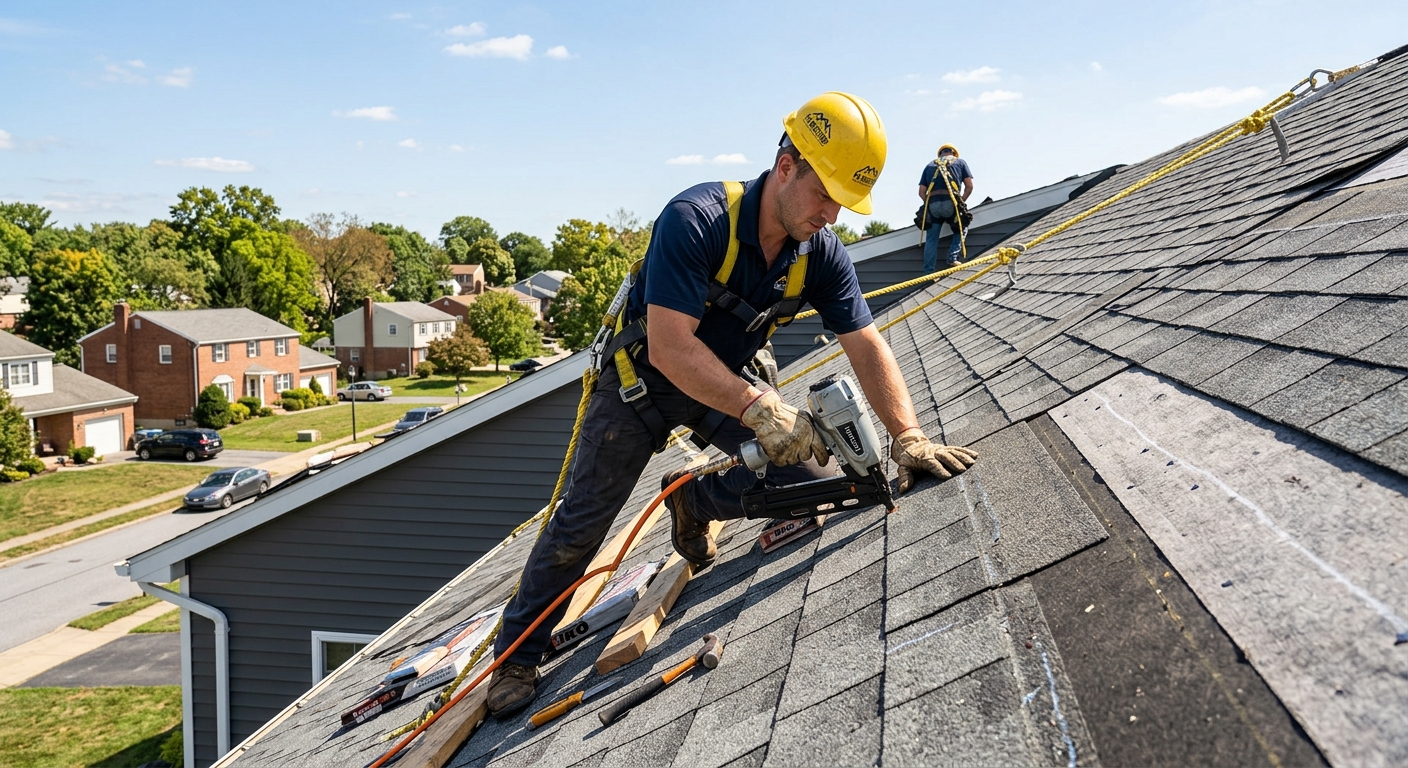
Palmyra roofs battle a 30 psf ground snow load and frequent freeze-thaw cycles. Homes built without proper ice barriers and ventilation are more likely to have winter leaks or sudden decking collapse, demanding full replacement. Ridge-line wind events common in the South Mountain and Cornwall uplands can shift shingle choices; impact-resistant materials cost more up front but pay off in performance. Tear-off costs, especially if previous contractors have layered new shingles over old, further magnify price differences. Quotes also jump when steep gables or tight access points require extra safety gear, slowing the crew’s pace and driving up labor—sometimes by 20–30%.
| Factor |
Why it matters here |
Cost impact |
| Roof size in squares |
Each square is 100 sq ft of roof surface—a typical Palmyra ranch is 20 squares, but Victorians double that |
Primary multiplier |
| Pitch and access |
Steep pitches need harnesses and slow the crew—common on older homes |
+20–30% labour |
| Existing layers to tear off |
Multiple layers mean a full tear-off and more landfill cost; common on homes roofed in the 1970s–'90s boom |
$500–$1,500 per layer |
| Decking condition |
Rot is found during tear-off, not before; attic ventilation upgrades usually required |
$75–$150 per sheet |
| Ice barrier at eaves |
Required where ice damming is likely; south slopes and valleys especially |
$300–$800 |
| Material grade |
Class 4 shingles are preferred on exposed ridges; basic 3-tab used on sheds |
$500–$2,500 |
Timing a roof replacement in Palmyra
Palmyra’s roofing season runs from late March through mid-November. Asphalt shingles require daytime highs of at least 45–50 °F for the adhesive strips to seal properly; that’s why most full replacements aim for spring, summer, or early fall. In our area, freeze-thaw cycles accelerate roof wear, and crews can’t safely work on slick pitches in winter. The best window—both for pricing and scheduling—is September into early October, when weather is dry and the backlog from summer storms has eased. If you wait until November, cold snaps push shingle installs into risk territory unless you get a warm streak.
Emergency repairs in February, after an ice or wind event, cost more and often only get you a temporary patch until conditions improve. Because Lebanon County is a moderate suburban market, reputable roofers book up weeks in advance during peak season, but it’s not impossible to find an opening on shorter notice than in the Harrisburg suburbs. Planning ahead, even by a few months, gives you stronger negotiating power and a less stressed crew. Unscheduled jobs during bad weather not only cost more, but the finished roof is more likely to develop early-life issues.
Workmanship vs manufacturer warranty
There are two warranties on every new Palmyra roof, and it pays to keep them straight. The manufacturer’s warranty covers the roofing materials—primarily defects in shingles, panels, or membrane. These warranties often stretch 20–30 years but are typically prorated (meaning you get less as the roof ages), and only apply if materials are installed to exact standards. If venting is insufficient or shingles are laid over existing layers, your claim can be denied. Manufacturer warranties usually have 30–60 day registration windows—miss this deadline, and you have no coverage.
The workmanship warranty, provided by the installer, backs the quality of the labor. This is what covers leaks at flashings, poor alignment, or fastener errors—everything the crew could have prevented. The value of this warranty depends on the roofer’s longevity: a 25-year paper promise from a two-year-old company is worth less than ten years from a business with a track record. Some are transferable once at resale; some aren’t. Always ask in writing. If your warranty requires “adequate” attic ventilation or drainage upgrades and they aren’t performed, expect zero support for later issues. Reading the fine print and getting copies of all registrations is the only way to be sure.
Storm damage and insurance claims in Palmyra
After a hail or windstorm in Palmyra, take clear photos of all damage before any temporary repairs. Insurance companies require documentation, so don’t remove debris until you’ve finished recording the loss. Next, request a written scope of loss from your insurer after the adjuster’s visit. Understand your coverage: actual cash value (ACV) reflects depreciation, while replacement cost coverage pays for new materials minus your deductible. For a typical roof, replacement cost coverage makes a big difference—it could mean the insurer pays toward a $14,500–$19,000 asphalt system instead of ACV, which might leave you covering thousands out of pocket.
Be wary of “storm chaser” contractors who promise to waive your deductible. Under the Pennsylvania Home Improvement Consumer Protection Act (HICPA), waiving an insurance deductible is prohibited—this is a red flag, as it encourages fraud and can void your claim. Always demand a written contract and remember your three business-day right to cancel. The market here is close-knit enough that reputable roofers operate above board, but you still need to insist on proof of Home Improvement Contractor (HIC) registration and workers’ compensation insurance before signing. Insurance adjusters in Lebanon County are familiar with local wind and snow patterns, so don’t accept a lowball offer without a fair review of all roof slopes, especially those facing ridge-lines or upland exposures.
Water management on a Palmyra roof
On Palmyra roofs, effective water management is more than just slapping up a row of gutters. The system starts with well-installed drip edge, runs down robust gutters, and finishes well away from the foundation. Replacing a roof without addressing poorly graded soil or old, undersized gutters is a half-finished job—meltwater and heavy summer downpours will find their way into your basement otherwise. Discharge that empties next to the house creates chronic soggy spots, risking structural and mold issues.
Roofing manufacturers often tie material warranties to functional drainage. If your gutters are clogged or underequipped, the resulting ice dams and fascia rot can void both material and workmanship coverage. In Lebanon County, gutter replacement alongside a reroof typically falls between $1,800–$3,200 for standard aluminum with guards, depending on roofline and lot layout. If you’re going to the trouble of a full roof replacement, fold gutter work in. It protects your investment and finishes the job as it should be done the first time.
Frequently asked questions — roofing in Palmyra
Should I use a local roofer or a national company?
Local roofers in Palmyra bring two advantages: familiarity with Lebanon County’s housing quirks and personal accountability. Many homes here were built before 1980, and a seasoned local contractor will know how to handle original decking, attic ventilation problems, and the freeze-thaw cycles our area faces. National franchises sometimes send rotating crews or offer generic install practices, which may miss local building code points or disclosure requirements under the Pennsylvania Uniform Construction Code. Local firms know how to pull permits when structural decking is involved and are less likely to disappear when warranty work comes due. Also, the Home Improvement Contractor (HIC) registration is Pennsylvania-specific—if a company can’t show you their registration or proof of workers’ compensation in WCAIS, steer clear. If a quote for a new architectural shingle roof is in the $9,000–$19,000 range, you deserve a contractor with a local track record and real references, not just a sales team.
How do I know if my Palmyra roof needs replacing?
The signs in Palmyra are often pretty clear. Most local housing was roofed at least once after the 1970s—and asphalt shingles here rarely last past 25–30 years, especially on homes built without modern ventilation. Look for brittle, curling, or cracked shingles; granule loss in gutters; exposed or rotten wood near eaves; and leaks after freeze-thaw events or heavy summer storms. Water stains in upstairs rooms or musty attic air are both telltale. If you’ve got leakage or more than a few missing shingles, a thorough inspection is warranted. In this area, isolated repairs fall in the $475–$1,800 range, but widespread age or deterioration calls for replacement at $9,000–$19,000. Peace of mind and resale value usually tip the scales.
What is the difference between replacement cost and actual cash value?
Palmyra homeowners need to pay attention at claim time: “replacement cost” means your insurer will pay the price for new materials and labor—minus your deductible—to restore the roof to as-new condition, which, for a typical asphalt system, is $14,500–$19,000. “Actual cash value” deducts for depreciation, so if your 20-year-old shingles are shot, you might only get a fraction of what a new roof costs. Given the age profile of Palmyra roofs, ACV rarely covers everything needed for code compliance, like new decking or ventilation upgrades. If you want to avoid a costly surprise, review your policy carefully. In many cases here, opting for replacement cost is worth the slightly higher premium, especially with the 30 psf snow load our roofs face.
What is the difference between TPO and EPDM?
TPO (thermoplastic polyolefin) and EPDM (ethylene propylene diene monomer) are both flat roof membranes common on Palmyra additions, porches, and multifamily buildings. In Lebanon County, TPO is white and reflective, a better option if your roof faces south or you want to keep attic temperatures down; it also seams together with heat, creating a crisp, uniform seal. EPDM is a black rubber that’s long-proven and flexible, excelling on irregular or older decks, which are common here due to our housing age. TPO can cost a bit more up front but lasts 15–25 years; both fall in the $11,500–$23,000 range for full replacement. Choose EPDM for complex shapes, TPO for energy efficiency and bright roofs.
Why do roofs fail faster in south-central Pennsylvania?
South-central Pennsylvania—including Palmyra—sees pronounced freeze-thaw cycles, a 30 psf ground snow load, and moderate but regular wind exposure from the South Mountain ridge. These factors are tough on roofing: seams expand and contract, ice dams back up under shingles, and summer heats bake asphalt softer than in milder regions. Many Palmyra homes also still rely on under-ventilated attics thanks to construction standards from the 1945–1975 boom. The result is premature aging, rot, or sudden leaks in roof valleys and along eaves. It’s not uncommon for a roof you’d expect to last 30 years to need replacement after 20, especially without upgrades. Thus, regular inspections and setting aside a budget of $9,000–$19,000 for eventual reroofing is simply prudent here.
Will the crew damage my landscaping or driveway?
Good crews in Palmyra take property protection seriously, but roofing is dusty, heavy work. Expect some lawn or shrub impact—especially when large sections of shingle and debris are thrown off two-story homes built before 1980. Mature landscaping can usually be protected with tarps and barriers, but give the crew a heads-up if you have prized beds or fragile statuary. Most reputable Lebanon County roofers bring their own dump trailers; avoid those wanting to park a container on a paved drive if it isn’t absolutely necessary. Any contract should specify how cleanup and property protection are managed. Given roofing jobs here run $9,000–$19,000 and up, it’s reasonable to expect best practices, but always walk the property with the foreman before work starts.
How do I confirm a roofer carries workers' compensation?
In Pennsylvania, every employer is required to carry workers’ compensation insurance—there are no exceptions in this trade, and Lebanon County enforces this strictly. Before starting any work on your Palmyra roof, ask the contractor for a copy of their policy. You can cross-verify coverage status through the state’s WCAIS database at wcais.pa.gov. Never take a verbal assurance, as uninsured crews put you at financial risk if an accident occurs. If your quote—say, for a standard architectural shingle roof—seems low at $9,000 or less, check twice; legitimate operations bake the cost of coverage into their price, and anyone cutting corners here isn’t saving you money safely.
Why is my Palmyra roofing quote higher than the online average?
Online averages tend to ignore local realities: nearly 80% of Palmyra homes predate 1980, so roofers expect rot in decking, multiple previous shingle layers, and ventilation deficits. Our regional snow load (30 psf) translates into stricter underlayment and ice barrier needs—costs national calculators simply skip. The average U.S. roof might get new shingles for $8,000, but here, most jobs run between $9,000–$19,000. Removing layers, replacing sheathing, and adding code-minimum eave guards are built into every legitimate quote in Lebanon County. Don’t compare apples to oranges—or ignore labor, disposal, and permit realities particular to this state and market.
How much does it cost to repair a roof leak in Palmyra?
Small leak repairs in Palmyra—think missing shingles, flashing fixes, or a patch around a stack pipe—typically run $475–$1,800. The lower end covers basic asphalt shingles, while a large area or harder-to-access spots edge toward the upper bound. For homes built before 1980, what starts as a leak can sometimes reveal rot or attic moisture problems that warrant a closer look. If a contractor immediately recommends full replacement after a trivial leak, get a second opinion—Palmyra's reputable roofers will diagnose and patch as needed, saving replacement for when widespread failure is actually present. Remember, minor work under one square of roof often doesn’t require a permit here, but anything larger does.