Roofing Replacement & Repair costs in Richland — 2026
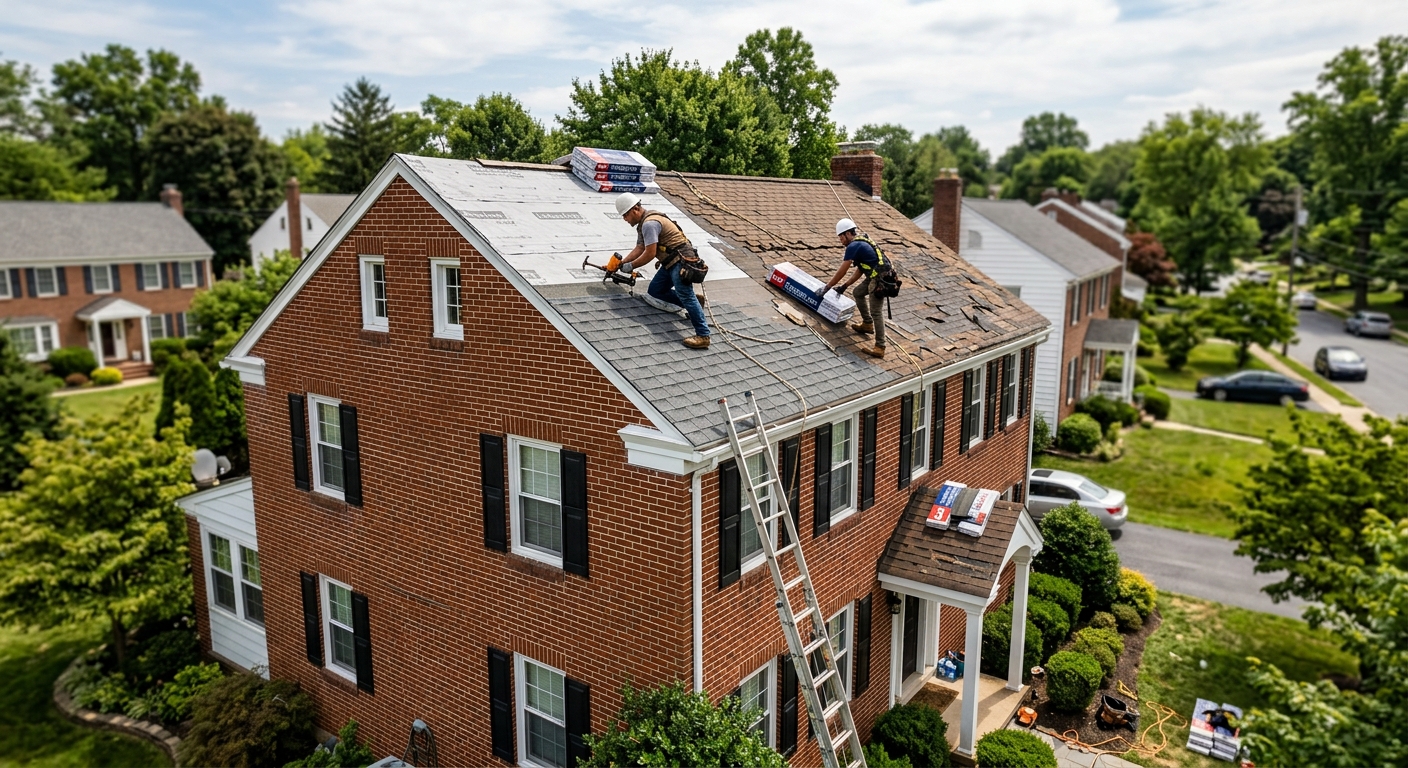
Richland homeowners see a wide range of roofing costs shaped by the specifics of Cambria County’s neighborhoods. Richland’s high homeownership rate and a large share of single-family homes means most roofing work involves detached houses rather than duplexes or mixed buildings. Much of the area’s roofing market is driven not just by age, but by structure: with over 62% of homes built before 1980 (U.S. Census Bureau, ACS 2024), many Richland roofs are built on pre-World War II mill-era wood framing. This matters, because those older timbers often require full tear-offs instead of quick layovers—rot and decades-old fasteners being common. When shingles come off, finding bad decking is more the rule than the exception, adding cost and time to most replacements. Ridge-line winds along the Laurel Highlands mean even a relatively new shingle roof can require emergency patching, especially on older, steeper roofs.
| Material / Scope |
Lifespan |
Best for |
Price range (installed) |
| Asphalt shingles — architectural (30-yr) |
25–30 yrs |
Most homes, reliable cost, handle snow loads |
$9,000–$19,000 |
| Asphalt shingles — impact-resistant (Class 4) |
30+ yrs |
Steep roofs, areas exposed to ridge-line wind |
$14,500–$19,000 |
| Metal standing seam |
40–70 yrs |
Low-maintenance, shed snow, long-term investment |
$22,000–$39,000 |
| Flat roof — TPO or EPDM |
15–25 yrs |
Porches, additions, low-slope sections |
$11,500–$23,000 |
| Roof repair — leak or isolated section |
n/a |
Small leaks, wind or storm patching |
$475–$1,800 |
Prices are estimates for a typical Richland home and vary with roof size, pitch, decking condition and material selection.
How to compare roofing quotes in Richland
In Richland, a proper roofing quote lets you see exactly what’s included—without this, you’re throwing darts at prices you can’t compare. Any home, but especially one built on those old mill-era frames, has surprises, and an honest contractor will spell out what’s measured and what’s assumed. Look for the roof size stated as “squares” (100 square feet per), pitch listed clearly, and number of tear-off layers. Your quote should break out tear-off and disposal (don’t let dumpster fees sneak up), name the underlayment material, and call out ice shield coverage up from the eaves—mandatory given our winter design temp of 2 °F. Decking replacement is a wildcard, so make sure you see a per-sheet price, not a lump sum. Flashing, vent boots, and ridge vents need to be named and counted. Warranties? They come in two flavors: shingle (from the manufacturer) and workmanship (from the installer), and both need to be listed separately. Finally, no one in Cambria County gets a big upfront deposit; a fair payment schedule is a small deposit and remainder on completion. If your “quote” groups everything in a single sum or skips any of these, you’re not choosing apples to apples—you’re risking unpleasant extras on the final bill.
| Line item |
What to look for |
Red flag if… |
| Roof area |
stated in squares, with pitch |
no measurement given |
| Tear-off and disposal |
number of layers, dumpster included |
bundled into one figure |
| Underlayment |
product type and coverage |
listed only as 'felt' |
| Ice and water shield |
coverage height at eaves |
omitted entirely |
| Decking |
per-sheet contingency price |
no allowance at all |
| Warranty |
workmanship years stated separately |
only the shingle warranty |
| Payment |
deposit under 15%, balance on completion |
large upfront cash |
Asphalt, metal or membrane — what suits a Richland roof
Richland roofs see ground snow loads up to 40 pounds per square foot and can face winter lows near 2 °F—so cold weather and snow are not minor concerns. Asphalt shingles, especially the architectural type, are the staple here because they balance cost ($9,000–$19,000) with solid performance against snow and ridge winds along the Laurel Highlands. Their wide use isn’t just habit: tearing off and reroofing older mill-town homes, which make up much of Cambria County's stock, is straightforward and cost-effective with asphalt. Metal standing seam is a step up: it sheds snow the best, shrugs off ice, and lasts decades longer than shingle, but that benefit comes at a much steeper price ($22,000–$39,000) —often hard to justify unless you plan to stay in the home long-term or want lower maintenance. Membranes like TPO or EPDM are strictly for low-slope or flat areas; they’re unbeatable for porch roofs or small additions but not for steep main roofs. If someone tries selling you TPO for a pitched roof, walk away. Asphalt wins in Richland for total value, with metal as a premium choice for those able and willing to invest.
| Material |
Installed cost |
Lifespan |
Cold-climate performance |
Maintenance |
| Asphalt architectural |
$9,000–$19,000 |
25–30 yrs |
Handles 40 psf snow, needs ice barrier at eaves |
Periodic shingle/fascia check, easy repairs |
| Asphalt Class 4 impact-resistant |
$14,500–$19,000 |
30+ yrs |
Extra wind/hail protection, still must seal |
Low, occasional shingle checks |
| Metal standing seam |
$22,000–$39,000 |
40–70 yrs |
Sheds snow, no shingle edge ice dams |
Minimal, clear valleys and ice in spring |
| TPO / EPDM membrane |
$11,500–$23,000 |
15–25 yrs |
Resists ponding, best for low-slope/flat roofs |
Annual seam check, patch as needed |
Timing a roof replacement in Richland
Richland’s roofing season runs from mid-April through late October—the warm months are when shingles properly seal and crews can safely work at height. When lows sink towards 2 °F in winter, shingle adhesives don’t bond and roofers can’t scrape off old layers without risking slips or breakage. That means if you’re thinking of a roof replacement after Halloween, prices go up and your options shrink fast. Emergencies in February, for example, almost always cost more and require temporary fixes or tarping until weather allows full repair. Scheduling in late spring or early fall is the sweet spot: contractors aren’t yet swamped with hail or wind claims, and you’ll have your pick of crews and materials. Given that Cambria County is a moderate-density market—with contractors serving both Johnstown metro and rural townships—lead times can jump from two weeks in May to over a month during heavy storm season or when older roofs start failing en masse. The earlier you book, the less you’ll worry about losing your slot to a neighbor’s sudden leak.
What gets discovered after tear-off in Richland
On Richland’s older homes, what’s under the shingles is often worse than what’s on top. Once the old roof comes off, the two most common discoveries are rotted decking ($90–$180 per sheet to replace) and missing or blocked attic ventilation. In a climate with extended cold snaps and snow loads, poor ventilation isn’t just a comfort issue—it causes ice damming, which leads to leaks and, often, premature shingle failure. If your deck’s rot has gone hidden for years, a full tear-off could mean adding thousands to your project total, especially when 1930s and 40s plank decking is involved. Chimney and wall flashings, usually original on mill-era houses, almost always require new metal ($600–$1,200) to bring the installation up to code. Plumbers’ vent boots dry out and split every twenty years or so; replacements run $90–$250 each. Drip edge and ridge vent aren't guaranteed on older roofs—adding these typically adds $400–$900 to the tab but sharply improves life expectancy. Expect that even a careful quote will leave some unknowns open until the first tear-off day, especially for homes that haven’t seen the roof deck since the Carter administration.
Pennsylvania code and Cambria County permit rules for roofing
Pennsylvania follows the Uniform Construction Code (UCC), based on the International Residential Code, with enforcement by the PA Department of Labor & Industry or by local municipalities—whichever your township uses. In Johnstown, a building permit is required for structural roof replacement or when replacing the entire roof deck. However, for typical like-for-like asphalt shingle replacements (no deck or structure changes), most boroughs and neighboring townships handle them without a building permit. If your project goes beyond shingle swap—think deck replacement or structural repairs—you’ll need to pull a permit through your municipal code office. Contractors must have a Home Improvement Contractor (HIC) registration from the Pennsylvania Office of Attorney General for jobs over $500; you can verify this at hic.attorneygeneral.gov. All employers must carry workers’ compensation insurance, which you can verify through the WCAIS system at wcais.pa.gov. Pennsylvania law requires a written contract for all work over $500 and gives you a three-day right of cancellation.
Filing a roof claim after a Pennsylvania storm
After a big wind or hail event in Richland, snap clear photos of roof, gutters, and attic damage before moving any debris. File your claim with your insurer and demand a written scope of loss (breakdown of what’s covered). Pennsylvania claims are paid out on “actual cash value” (depreciated) at first, then a second check for “replacement cost” after work is completed—save all invoices and photos to speed this up. Your insurance adjuster will likely visit in person, especially if the area saw ridge-line winds or other widespread damage. Be wary of storm chasers pushing you to sign “assignment of benefits” documents; under Pennsylvania’s Home Improvement Consumer Protection Act, you have a three-day right of cancellation on contracts over $500, and any offer to “waive your deductible” is illegal—a sign that someone’s trying to pad costs elsewhere or cut corners. Always insist the roofer spells out the full cost: in this area, legitimate emergency repairs commonly range from $475–$1,800 for patching, with full replacements falling within published price bands. Insist on a written contract and never pay your deductible to the contractor—it’s not just the law, it protects you both from fraud and claim denials.
Frequently asked questions — roofing in Richland
How much snow load can a Richland roof handle?
In Richland, residential roofs are designed for a ground snow load of 40 pounds per square foot—a higher standard than many parts of Pennsylvania. This is largely due to North-Central Pennsylvania's climate, where long winters mean heavy accumulations are common. If your home was built before the codes were standardized, there's a real chance your roof is underbuilt by today's standards, especially with the large stock of pre-1980 mill-era framing. If you’re planning a roof replacement, quality asphalt shingles and proper deck repairs in the typical $9,000–$19,000 range will ensure your new roof meets today’s strength requirements. It’s one reason local contractors always check the roof framing before bidding—nobody wants to find out the hard way that older rafters aren’t up to code.
How far ahead should I book a roofer in Richland?
In a moderate-density market like Richland, contractors typically book out two to four weeks during spring and fall, which are the prime months for replacements. That lead time can be much longer if a major windstorm hits or if you wait until the heart of summer, when every local outfit is catching up with hail and storm repairs. Emergency winter repairs (which might cost $475–$1,800) can be squeezed in quickly, but you’ll pay a premium for both labor and materials. If you want your pick of contractors and don’t want to wait until next season, reach out as soon as you know the roof needs attention—those pre-1980 homes in Richland aren’t getting any younger.
How do I know if my Richland roof needs replacing?
Signs a Richland roof is due include missing shingles after a ridge wind event, curling or cracked tabs, and visible daylight in the attic. Water stains on sloped ceilings or at chimney/wall joints are also giveaways—common on older homes with original flashing. Remember, much of the area’s housing stock is pre-1980, so even if your asphalt shingles look good, the deck or underlayment beneath may be failing. If an isolated leak can’t be fixed for $475–$1,800, or if repairs become frequent, a full replacement in the $9,000–$19,000 range is often more cost-effective and will get your home up to current code for snow and ventilation requirements.
What's the cheapest way to replace a roof in Richland?
For Richland’s typical home, a straightforward architectural asphalt shingle replacement is the most budget-friendly choice, with installs ranging from $9,000–$19,000. The price stays on the low end when decking is sound and there’s only one roof layer to tear off. Trying to save by choosing three-tab shingles or skipping critical details (like ice shield or proper flashing) is a false economy in this climate, where heavy snow, wind, and freeze-thaw cycles expose those shortcuts. Ask for a clear quote with all line-items listed—as required by state law—so you aren’t surprised by extras once the old roof comes off.
Do I need a permit to replace a roof in Richland?
For most like-for-like asphalt shingle replacements in Richland and neighboring townships, a building permit isn’t typically required, as long as the work doesn’t involve structural changes to the roof deck. However, if your project will replace rotten decking, alter framing, or meet structural requirements for snow load, you’ll likely need a permit from your municipality’s code enforcement. In Johnstown, for example, permits are always required for deck or structural jobs. Be sure your contractor has a valid Home Improvement Contractor (HIC) registration, which you can verify at hic.attorneygeneral.gov. It’s your protection under Pennsylvania consumer law.
What should a roofing quote include in Richland?
A good Richland roofing quote should state roof area measured in “squares” and include the pitch/steepness, line out the cost to tear-off (with number of roof layers), and spell out the brand of underlayment and ice barrier used. There should be a per-sheet cost allowance for bad decking, plus named quantities for any flashing, drip edge, and ventilation upgrades. Warranties ought to be split out—workmanship versus manufacturer—so you know what’s covered by who. Payment terms should call for less than 15% deposit up front. For a typical replacement, expect a documented total between $9,000–$19,000. A lump sum with no itemization is a red flag in Cambria County.
What is the difference between TPO and EPDM?
Both TPO and EPDM are synthetic membranes used to waterproof flat or low-slope roofs, common on Richland porches and additions. TPO (thermoplastic polyolefin) is white and reflects sun, which slightly reduces heat gain, but needs to be heat-welded, making installation trickier in cold weather. EPDM (ethylene propylene diene monomer) is black, flexible, and easier to patch, but absorbs more solar heat. Either system installed here will typically last 15–25 years and costs $11,500–$23,000 for most flat roofs. Your best choice comes down to color preference and whether winter installation may be needed—most Richland jobs use what can install tightest for the season.
How do I file a storm damage roof claim in Pennsylvania?
After a storm in Richland, photograph all visible roof, siding, and gutter damage before starting cleanup. Contact your insurer and wait for the adjuster’s written scope of loss before authorizing repairs. Remember, Pennsylvania law prohibits a contractor from waiving or covering your deductible—a common scam in the wake of a big event. You’ll likely receive an initial “actual cash value“ payment, then the rest (replacement cost) after repairs, so keep all invoices. Emergency repairs here typically run $475–$1,800 and should be well-documented for reimbursement. Insist on a written contract as required by the Home Improvement Consumer Protection Act.
Why is my Richland roofing quote higher than the online average?
Online averages often ignore local realities. Richland’s housing stock skews older, with many homes needing a full tear-off and at least some deck repair before new shingles can go on. If your quote includes extra contingency for rotted sheathing, new ventilation, and flashing—very common here—it’ll run above “average” internet numbers, which are often based on newer, simpler roofs. Local material and disposal costs also run higher after heavy storm seasons. For a well-documented roofing replacement, expect to see totals in the $9,000–$19,000 range for asphalt, with metal or complex membrane jobs even higher. These prices reflect the true cost of doing it right for Cambria County conditions.