Roofing Replacement & Repair costs in Upper Allen — 2026
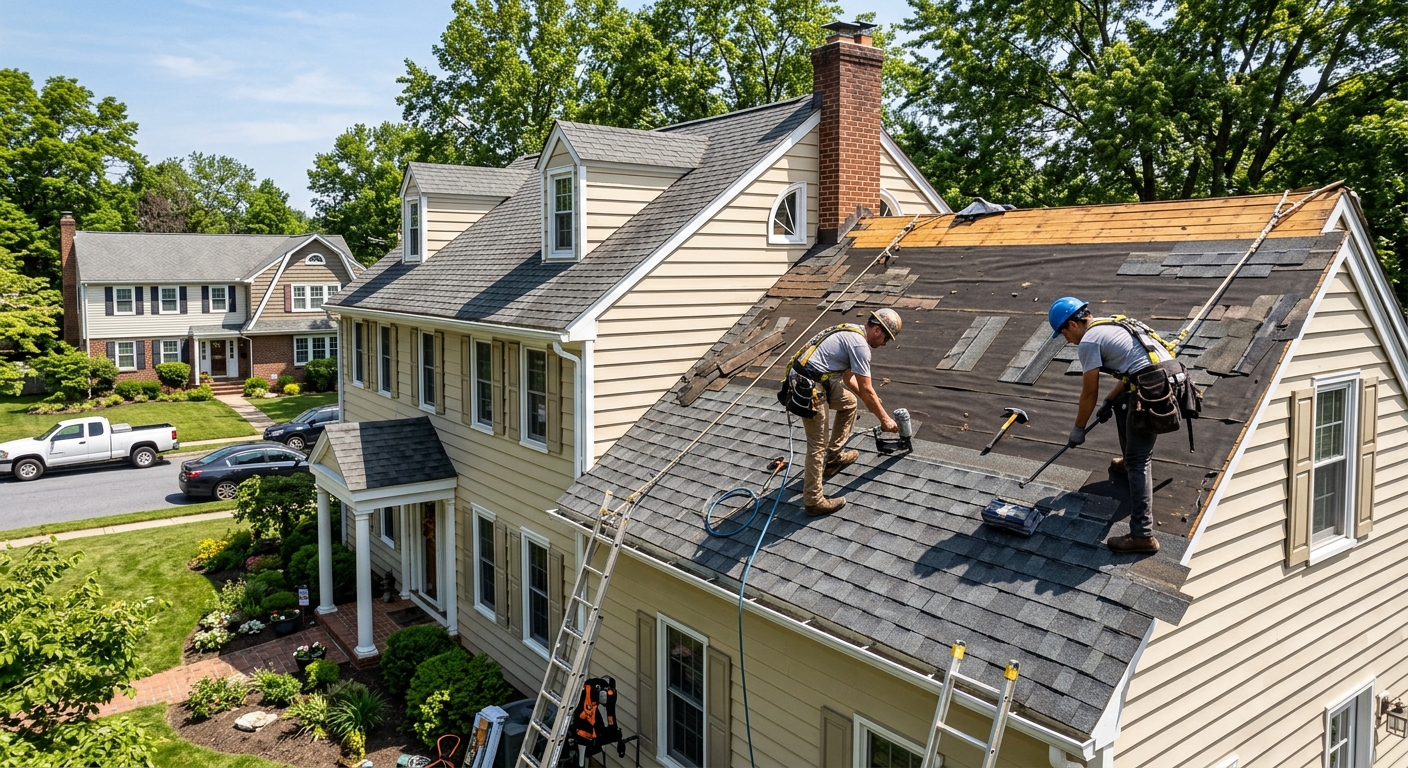
Upper Allen’s housing landscape is driven by high homeownership and a significant share of homes built before 1980 (U.S. Census Bureau, ACS 2024). This means many owners are living in properties cycling into the reroof window for the first or second time. With 75.4% of households owning their homes, most buyers are directly managing roof replacement or getting quotes themselves rather than relying on landlords. In Upper Allen, asphalt shingle roofs are king due to a wave of post-1950 suburbs stretching from Hampden through Silver Spring; these subdivisions were built to spec with composite roofs that now reach end-of-life simultaneously every 25–30 years. This leads to predictable market cycles: crews move block to block, often stripping and reroofing entire neighborhoods within a few seasons.
While large roofs on single-family homes are typical, ridge-line winds and periodic heavy snow from Cumberland Valley’s weather mean options like impact-resistant shingles or even metal get real consideration here. Roofers familiar with Upper Allen know the most common jobs: tearing off aging asphalt, chasing leaks after a hard freeze-thaw, and replacing flat membrane sections on additions or garages. The table below breaks down what you can expect to pay, depending on the specific material and repair scope for your Upper Allen home:
| Material / Scope |
Lifespan |
Best for |
Price range (installed) |
| Asphalt shingles — architectural (30-yr) |
25–30 yrs |
Standard sloped suburban homes; cost-effective replacement in tract neighborhoods |
$9,900–$21,000 |
| Asphalt shingles — impact-resistant (Class 4) |
30+ yrs |
Exposed roofs, especially on cul-de-sacs or ridge-top sites |
$16,000–$21,000 |
| Metal standing seam |
40–70 yrs |
Long-term solution for high-wind exposures, historic farmsteads |
$24,000–$43,000 |
| Flat roof — TPO or EPDM |
15–25 yrs |
Low-slope additions, garages, porch roofs throughout Upper Allen |
$12,500–$25,000 |
| Roof repair — leak or isolated section |
n/a |
Targeted fixes—flashing, isolated valley leaks, pipe boots |
$500–$2,000 |
Prices are estimates for a typical Upper Allen home and vary with roof size, pitch, decking condition and material selection.
Material comparison for Upper Allen homeowners
Upper Allen’s climate—ground snow loads of 30 psf and winter lows dropping to 12 °F—puts particular demands on any roofing material. In this environment, asphalt architectural shingles hold their own against snow and ice but are chosen for affordability and fast installation times. Most existing Upper Allen homes have these, a legacy of post-1950 construction where builders in tract developments prioritized cost and reliability. Asphalt is hard to beat for value, but its performance under repeated freeze-thaw means 25–30 years is realistic for a full replacement, not the “lifetime” some brochures claim.
Metal standing seam does a better job at shedding snow—valuable for ridge-top homes exposed to wind or for those wanting to push replacement decades down the road—but at $24,000–$43,000, it isn’t a must-have for most Upper Allen properties. Flat membrane systems like TPO or EPDM are strictly for low-slope sections; they’re not appropriate for a full sloped-roof home but are often needed on garages or porch additions.
Impact-resistant (Class 4) shingles cost more up front, but for roofs battered by winds along the Cumberland Valley, the slightly higher initial cost of $16,000–$21,000 saves money if you’ve ever had shingle blow-off. Unless your home is unusually exposed, architectural asphalt wins on price and suffices for the weather here. Metal is a longevity upgrade, but not a cost-effective one unless you plan to stay in the home for decades or have repeated storm issues.
| Material |
Installed cost |
Lifespan |
Cold-climate performance |
Maintenance |
| Asphalt architectural |
$9,900–$21,000 |
25–30 yrs |
Reliable under moderate snow load; vulnerable to ice dams |
Inspect after freeze-thaw; replace sealant at penetrations |
| Asphalt Class 4 impact-resistant |
$16,000–$21,000 |
30+ yrs |
Withstands wind and hail better than standard shingles |
Similar to architectural; slightly better shingle retention |
| Metal standing seam |
$24,000–$43,000 |
40–70 yrs |
Sheds snow quickly; resists wind and ice |
Occasional fastener and seal check, especially after storms |
| TPO / EPDM membrane |
$12,500–$25,000 |
15–25 yrs |
Handles pooled water, vulnerable at seams in snow/ice |
Annual seam inspection, debris removal |
Why two Upper Allen roofing quotes can differ by 40%
When you’re collecting quotes for a new roof in Upper Allen, don’t be surprised if one contractor comes in thousands higher or lower than the next. The main reason is the local housing mix: since nearly 54% of the properties are single-family homes built in postwar booms, roof sizes vary widely—even within the same subdivision. Some built in the 1960s have sprawling, low-pitch ranch footprints, while newer two-stories push the envelope on both height and complexity. For homeowners, that means two houses on the same block might get wildly different quotes just because of size or pitch.
The region’s freeze-thaw cycles and 30 psf snow load add complexity, forcing roofers to bid extra for ice barrier, attic ventilation improvements, and upgraded flashing. If your last roof was installed over old decking, it’s not unusual to need several sheets of new plywood at $75–$150 per sheet, discovered only when the old roof comes off. Multi-layer tear-offs, seen in homes with untended 1980s roofs, add another $500–$1,500 to the quote. Meanwhile, wind exposure along Cumberland Valley’s ridges gives a solid incentive to upgrade to impact-resistant shingles, which jumps the overall material cost by $500–$2,500 per job. A standard architectural shingle job might total $16,000, but move up one grade or add two layers of demo and the number climbs fast.
| Factor |
Why it matters here |
Cost impact |
| Roof size in squares |
Each square is 100 sq ft of roof surface—a typical Upper Allen home has 20–35 squares |
Primary multiplier |
| Pitch and access |
Steep pitches need harnesses and slow the crew, especially on postwar split-levels and two-stories |
+20–30% labor |
| Existing layers to tear off |
Two or more layers common in homes reroofed in the late ‘90s |
$500–$1,500 per layer |
| Decking condition |
Rot is found during tear-off, not before; prevalent under valleys and low-slope porch additions |
$75–$150 per sheet |
| Ice barrier at eaves |
Required where ice damming has a history—common in older, poorly vented attics |
$300–$800 |
| Material grade |
3-tab vs architectural vs Class 4 impact-resistant; upgrades more frequent on exposed properties |
$500–$2,500 |
Roofing permits in Upper Allen: what you need before work starts
In Upper Allen, roofing work is regulated under the Pennsylvania Uniform Construction Code (UCC), which is administered by the Pennsylvania Department of Labor & Industry and enforced directly by the township’s municipal code office. A permit is typically required for full roof replacements or structural changes, but simple shingle overlays or minor repairs are often exempt. It’s up to the municipal code office to set the threshold, but any job that involves decking replacement or changes to the roof's structure will trigger a permit requirement.
Before signing any contract for a roofing job over $500, Pennsylvania law requires the contractor to hold a current Home Improvement Contractor (HIC) registration from the Pennsylvania Office of Attorney General. You should verify this at hic.attorneygeneral.gov. Written contracts are mandatory for these jobs. Pennsylvania also requires all roofing contractors who employ workers to carry workers’ compensation insurance—homeowners can check this coverage using the WCAIS system at wcais.pa.gov before work begins.
Unlike some trades, there’s no specific roofing license in Pennsylvania—HIC registration is the key credential. For any home built before 1978, make sure your contractor is Lead RRP certified, which you can check at certifiedrenovatorsearch.epa.gov. These extra steps mean less risk for the homeowner and a legal job from start to finish.
Decking, ventilation and flashing — the hidden roof costs
In Upper Allen, the biggest surprises on a roofing job turn up after tear-off. Rotted decking is common in homes built pre-1980, especially where ice dams forced water under shingles. Each 4'x8' sheet of decking replaced costs $75–$150, and a handful of sheets is not unusual on a re-roof in this area. Poor attic ventilation—seen in mid-century tracts—can drive ice damming, which in our 12 °F winters is a real threat, not just an energy bill issue. Correcting venting or adding a ridge vent typically runs $350–$950 but prevents early shingle failure and ensures your warranty stays valid.
Flashing around chimneys and sidewalls is a chronic leak spot. New step or counterflashings commonly add $300–$700 if deteriorated, especially if the last job just caulked over old metal. Pipe vent boots and attic fans are another couple of hundred dollars each. Local code now requires continuous drip edge along all eaves and rakes, usually built in but absent from old roofs—budget $300–$600 on most homes.
The bottom line: the cheapest quote often skips these extras, but in Cumberland County’s freeze-thaw climate, cutting corners invites leaks, mold and warranty problems just two or three winters down the road.
Water management on a Upper Allen roof
Roofing and gutters are a single system in Upper Allen, not separate jobs. Our freeze-thaw cycles and periodic heavy rain mean that new shingles without proper gutters quickly lead to washed-out flower beds, waterlogged siding, or worse—a damp basement. The right gutter solution in this area includes seamless aluminum or steel, configured to handle Cumberland County’s roof sizes and snowmelt runoff. Gutter replacement typically adds $2,000–$3,800 to a roofing job, depending on linear footage and options like guards or oversized downspouts.
Drip edge flashed behind the gutters is now code-required here, preventing water from sneaking into the fascia and rotting your substructure. Downspouts must discharge at least 4–6 feet from the foundation—if your current setup drops water right at the wall, you risk basement leaks and will see it called out on a buyers’ inspection. Skimping on gutters or reusing old ones may void some manufacturer’s warranties, so do the replacement as part of the roof for best long-term results.
When to book roofing work in Upper Allen
Upper Allen’s roofing season tracks closely with regional weather patterns. The best time to replace a roof here is from late April through early November, when daytime highs let shingles seal and crews can safely work at a fast pace. September is typically the smoothest month to schedule installation: materials are in stock at regional suppliers, crew calendars are less impacted by summer backlog, and stable weather reduces surprises. The market here is crowded because Cumberland County is in the Harrisburg–Carlisle metro—competition is fierce but lead times in peak months can be weeks out.
Crews will do emergency repairs year-round, but expect to pay a premium if your job can’t wait until spring. Emergency February tarping or a cold-weather shingle job comes at a premium rate, often swelling the tab by as much as 20%. Materials can’t always be sealed or flashed properly in the cold—the job will get stabilized, but the pretty finish work waits until a thaw. If you plan ahead, book your replacement for late summer or early fall. Last-minute shoppers in June and July often find crews booked solid across the township.
Frequently asked questions — roofing in Upper Allen
How many quotes should I get for a roof in Upper Allen?
Given Upper Allen’s active roofing market and range of material options, you should get at least three written quotes from fully registered contractors. The price for an architectural asphalt shingle replacement typically sits around $16,000, but you might see competitor pricing swing as much as 40%, especially for larger homes or unusual pitches. Make sure every quote is based on an in-person inspection—phone estimates in this area leave too much open, especially with hidden decking or attic venting issues common in older houses. Ask each contractor for their Home Improvement Contractor (HIC) registration number, verify it at hic.attorneygeneral.gov, and check on their workers’ compensation through WCAIS. If a quote comes in far below the others, scrutinize the scope and ask what’s missing (flashing? drip edge? tear-off and disposal?).
How long does a roof replacement take in Upper Allen?
Most single-family homes in Upper Allen, especially the mid-century ranches and Colonials, will see a full roof replacement take between two to four days in good weather. Unplanned problems—rotted decking or surprise layers beneath—can add a day. Flat membrane replacements (TPO/EPDM), which typically run $12,500–$25,000, might finish faster on small additions but slower if multiple trades (gutters, skylights) are involved. Peak season (late summer and early fall) means crews are running at full capacity, so even small jobs can face a wait. Emergency repairs or winter work can drag out due to limited working hours—tarping can be done same day, but full shingle installation might pause for weather windows.
Why do roofs fail faster in south-central Pennsylvania?
The freeze-thaw cycles and moderate but persistent snowload here in Cumberland County do roofs no favors. Shingles and flashings take a beating as temperatures whip between thaw and freeze, driving moisture beneath any weakness and setting up leaks or rotted decking below. Even impact-resistant shingles ($16,000–$21,000 for a new install) can age rapidly without proper attic ventilation or drip edge. Roofs in Upper Allen that were installed decades ago to spec often lack today’s ice barriers and venting code standards, so failures crop up at 20–25 years, not the brochure’s promises. Main culprit: ice damming and flashing rot, not hail.
How much does a flat roof replacement cost in Upper Allen?
Flat roof membrane replacement (TPO or EPDM) on a typical Upper Allen garage, porch, or addition will run between $12,500–$25,000 installed. Most homes in this area don’t use membrane roofing on their main structure, but many will have a flat roof over an addition or patio enclosure built during the 1970s and 80s. Pricing depends on access, decking issues, and details like parapet flashing. Budget for the higher end of the range if you expect multiple layers of old roofing or if you’ve had stubborn leaks that have compromised insulation or framing below.
How do I know if my Upper Allen roof needs replacing?
The clear signs in Upper Allen are curling or missing shingles, granule loss in the gutters, stained ceilings (from attic leaks), and daylight visible through the decking in your attic space. Homes built before 1980 are especially likely to have ventilation or flashing issues that have quietly rotted out the roof deck beneath. If your last replacement was over 25 years ago, a new roof is likely due—especially factoring in storm exposure and wind uplift risk. Repairing a section can run $500–$2,000, but if you’re seeing leaks in multiple spots, full replacement may be cheaper in the long run. Have a contractor check attic venting and inspect for hidden damage.
Does roof pitch affect the price in Upper Allen?
Yes, very much. Many homes in Upper Allen, especially in post-1950 subdivisions, have moderate to steep pitches. Steep roof angles mean roofers must use harnesses and move carefully, reducing the number of squares (100 sq ft) installed per day and increasing labor costs by as much as 20–30%. That’s a real impact when typical architectural asphalt jobs are $9,900–$21,000. If your house is a two-story Colonial with high gables, expect pricing toward the upper end of the band—this increase is entirely due to extra crew time and risk.
How do I file a storm damage roof claim in Pennsylvania?
If your Upper Allen home suffers wind or hail damage, start by documenting the problem with photos—missing shingles, dented vents, damaged gutters. Call your insurance company and ask about claim reporting procedures. Schedule a licensed roofer to inspect and write a detailed report and estimate; make sure their contract meets Home Improvement Consumer Protection Act (HICPA) rules, including the 3-day cancellation period. Insurers often require you to pay your deductible—waiving this is prohibited in Pennsylvania. A typical storm repair falls in the $500–$2,000 range, but large-scale replacements due to claim-approved windstorm or tree strikes are much higher. Only use a registered contractor for insurance work—verify with the Attorney General’s HIC registry and WCAIS for up-to-date insurance.
Can I install new shingles over old ones in Pennsylvania?
Pennsylvania code (the UCC) allows one layer of shingles to be installed over an existing single layer—but it’s not always a good idea in Upper Allen. Many homes here already have two layers, especially those built before 1980, which means full tear-off is required. Overlay jobs are cheaper up front—cutting maybe 15% off a standard roof price—but you risk trapping rot, making local attic ventilation and hidden decking issues worse. If a contractor suggests installing over old shingles, compare their quote ($9,900–$21,000 range) with a full tear-off, and make sure to check if local code or current conditions allow it before proceeding.
Are impact-resistant shingles worth it in Upper Allen?
Impact-resistant (Class 4) shingles run toward the higher end of the asphalt price range—$16,000–$21,000—but can be money well spent for roofs exposed to wind along Cumberland Valley’s ridges or on lots with few trees for shelter. Standard architectural shingles do the job for most relatively protected homes, but if you’ve lost shingles after past storms, the extra upfront cost may mean fewer repairs and longer lifespan. The added protection pays off especially if you plan to keep the home another 15–20 years, or if your insurance company offers incentives for Class 4 coverage in this region.