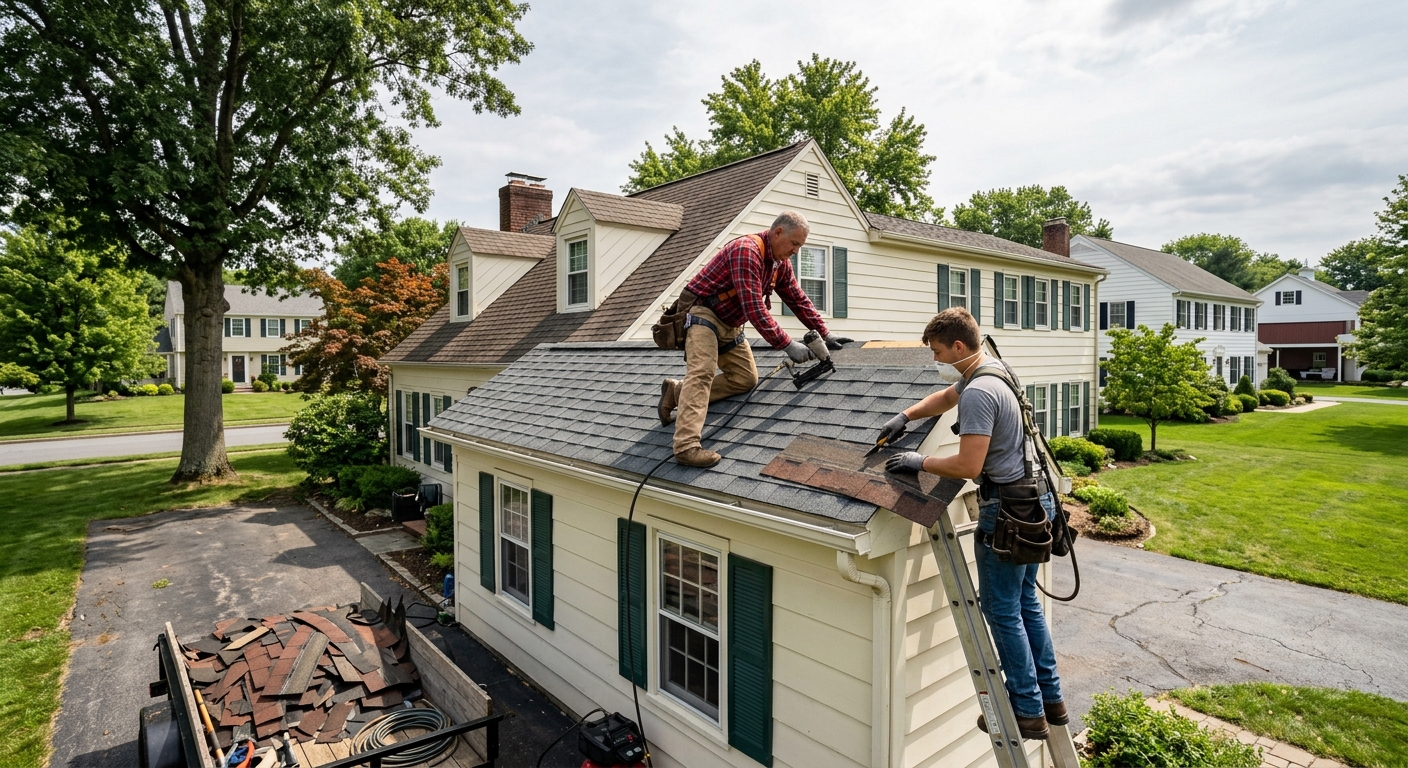
Roofing Replacement & Repair costs in Uniontown — 2026
Uniontown’s combination of older housing and the region's climate means most roof replacements involve more labor and possible hidden repairs than a newer-suburb job. Nearly 92% of homes around Uniontown and Connellsville were built before 1980 (U.S. Census Bureau, ACS 2024), which means a typical roofing project often uncovers deck rot or failing underlayment from decades of freeze-thaw. Age isn’t just a number here—older frame houses built between 1900–1940 make up a large share of what’s on the market, so tear-off and spot deck replacement are routine parts of a roofer’s work in town. Most roofers budget for at least some roof deck repair and proper disposal of three or more layers, since roofs that old are rarely a single easy tear-off.
Uniontown’s median household income is lower than many surrounding areas, which leads to a practical focus on shingle systems that last but don’t break the bank. Asphalt shingles remain the norm for local suppliers and contractors; they balance upfront cost and long-term performance, especially when many homeowner budgets won’t stretch to premium metal. In smaller towns and rural edges, expect to pay a travel surcharge from urban contractors, especially for single repairs outside major roads.
| Material / Scope |
Lifespan |
Best for |
Price range (installed) |
| Asphalt shingles — architectural (30-yr) |
25–30 yrs |
Average Uniontown home, budget-conscious, typical pitch |
$8,300–$17,500 |
| Asphalt shingles — impact-resistant (Class 4) |
30+ yrs |
Uplift risk (ridge-line wind in townships) |
$13,500–$17,500 |
| Metal standing seam |
40–70 yrs |
Long life, snow and wind prone sites outside city core |
$20,000–$36,000 |
| Flat roof — TPO or EPDM |
15–25 yrs |
Low-slope sections, porches, garages, mixed-use buildings |
$10,500–$21,000 |
| Roof repair — leak or isolated section |
n/a |
Quick response, spot patch, budget fix |
$425–$1,650 |
Prices are estimates for a typical Uniontown home and vary with roof size, pitch, decking condition and material selection.
Asphalt, metal or membrane — what suits a Uniontown roof
In Uniontown, material choice comes down to matching the roof’s pitch, the snow and freeze-thaw risks, and the realities of local supply. Our ground snow load sits at 30 psf and winter design temperatures drop to 8 °F, so roofs must handle ice build-up and occasional snow weight—not just rain. Metal standing seam finds a niche on steeper roofs or rural homes backing onto the Laurel Highlands, thanks to its ability to shed heavy snow before it forms an ice dam. However, the upfront cost of $20,000–$36,000 puts metal out of reach for many; the value is greatest on structurally-sound, high-exposure homes expecting decades of use, not quick flips or small bungalows.
Asphalt shingles dominate Uniontown-area housing—this isn’t only about cost. Local suppliers like Home Warehouse Inc. mainly stock asphalt; this keeps prices tight and repairs manageable. Most roofers here are set up for asphalt, not specialty metals or shake. Class 4 impact-resistant shingles command a premium ($13,500–$17,500), but add wind resistance for ridge-line homes. TPO or EPDM membrane is strictly for low-slope or flat roofs that can’t take shingles, such as porch additions and mixed-use sections typical of Main Street properties.
| Material |
Installed cost |
Lifespan |
Cold-climate performance |
Maintenance |
| Asphalt architectural |
$8,300–$17,500 |
25–30 yrs |
Moderate; pick proper ice barrier at eaves |
Inspect/seal every 5–8 years |
| Asphalt Class 4 impact-resistant |
$13,500–$17,500 |
30+ yrs |
Best for wind-exposed roofs |
Longer between repairs than standard |
| Metal standing seam |
$20,000–$36,000 |
40–70 yrs |
Excellent snow-shedding; minimizes ice damming |
Minimal; check fasteners/gaskets every decade |
| TPO / EPDM membrane |
$10,500–$21,000 |
15–25 yrs |
With proper drainage, resists pooling and freeze splits |
Seal seams every 5–10 years; check for punctures yearly |
How to vet a Uniontown roofing contractor
Hiring a roofer in Uniontown is less about flashy trucks and more about proven paperwork. Pennsylvania requires a Home Improvement Contractor (HIC) registration for jobs over $500—check the number at hic.attorneygeneral.gov before signing. For insurance, every employer must carry workers’ compensation, and you can verify this using the WCAIS system (wcais.pa.gov). Federal EPA Lead RRP certification is also needed for work on pre-1978 homes (the majority, considering our housing stock), checked at certifiedrenovatorsearch.epa.gov. Written contracts are required by the Home Improvement Consumer Protection Act for work above $500, including a 3-day right to back out. Never rely on a handshake or a van decal.
- Verify HIC registration at hic.attorneygeneral.gov
- Check workers’ compensation at wcais.pa.gov
- Request written proof of liability insurance
- Confirm EPA Lead RRP status for homes built pre-1978
- Ask for a detailed, written contract (required by state law)
- Never sign without a 3-day cancellation clause
- Request recent Uniontown-area references
- Demand a clear scope—how many layers, deck repair, disposal
- Get warranty terms in writing—both material and workmanship
- Make sure all payments are by check or traceable means
- Require a Uniontown permit for multi-family or large jobs
- Always verify the physical address for local service
Red flags in Fayette County’s thin rural market include: out-of-town crews with no local references, refusal to share insurance or registration numbers, demand for large cash deposits before materials arrive, lack of a physical address anywhere near Uniontown, and pressure to skip a contract or permit "to save a buck."
Snow load, ice dams and wind in Uniontown
Uniontown’s roofing isn’t a clone of Pittsburgh's—here, the hilly Laurel Highlands terrain east of the city drives unique uplift risks and winter surprises. With a ground snow load of 30 psf and a winter design low of 8 °F, accumulated snow turns to ice at the eaves as attic heat escapes, melting the lowest course before refreezing overnight and forming ice dams. Water then pools above the dam, backing up beneath shingles and sometimes saturating the wood deck—once decks get soggy on old 1920s roof structures, a replacement can jump hundreds or even a few thousand above the base rate. For example, an extra section of deck repair during asphalt shingle replacement can tip a job to the high end of the $8,300–$17,500 range.
Bullskin and Dunbar Township homes, perched along the ridges, see regular wind gusts that can curl or peel shingles—failure to use ice and water shield along the eaves and high-wind fastening means those patches rarely last. Hail isn’t the biggest concern here, but when it does hit, it bruises the asphalt layer without always leaving visible holes—undetected, those crushed granules start leaking months later, running the clock toward a $425–$1,650 repair versus just a shingle swap. The key in Uniontown is a detail-focused underlayment and fastener approach: synthetic underlayment for snow-belt edges, wider eave barriers, and attention to ridge venting to slow ice dam growth.
Reading the warranty on a Uniontown roof
Every Uniontown roof project involves two warranties homeowners often confuse: the manufacturer’s warranty covering defective shingles or membrane, and the roofer’s own workmanship warranty for installation problems. Manufacturer warranties, especially on asphalt shingles, are generally prorated after the first decade—if the shingle flakes apart in year 23, you’ll only get a fraction of replacement value, usually materials only, not labor. Most require proof of proper installation and may be voided if an old layer wasn’t torn off or if roof ventilation doesn’t meet code standards; in older homes around Connellsville, it’s common to find cross-ventilation problems that threaten future warranty claims. Registration deadlines (often 60–90 days after install) are strict—late paperwork can mean zero coverage even for a clear defect.
Workmanship warranties depend entirely on the actual business surviving to honor them. Don’t be swayed by a “lifetime” or 25-year offer from a new or unproven roofer; a ten-year warranty from a company with deep Uniontown ties is more valuable. Always ask about transferability if you plan to sell—the best warranties transfer once at resale for a small fee, others end the day you close. Standard exclusions include storms, foot traffic, bad gutter maintenance, and third-party repairs without written consent.
Permits and code requirements in Uniontown
Roofing in Uniontown is governed by the Pennsylvania Uniform Construction Code (UCC), which is based on the International Residential Code. For house and duplex work, replacement of roof covering over more than one dwelling unit typically requires a building permit here. The City of Uniontown Code Enforcement Office issues those permits and inspects the work. If your home sits just outside town in Bullskin or other rural Fayette County townships, minor shingle patches on a single-family house usually don’t need a permit—although if in doubt, it never hurts to call your local municipal office.
Pennsylvania requires Home Improvement Contractor (HIC) registration for any written contract over $500; you can verify your roofer’s number at hic.attorneygeneral.gov. Every employer, even sole proprietors with hired help, must carry workers’ compensation insurance—this is easily confirmed through the WCAIS database (wcais.pa.gov). For older homes (pre-1978), federal EPA Lead RRP Rule certification applies and can be checked at certifiedrenovatorsearch.epa.gov.
There’s no special roofing trade license in Pennsylvania—just HIC registration, so don’t be thrown off by sales pitches mentioning credentials you can’t verify.
What insurance covers on a Uniontown roof
When a storm rips off shingles or lets water in, homeowner’s insurance can help—if you follow the correct steps for Fayette County. Start by documenting the damage before any cleanup: photos, video, and even notes on the timing and weather. Insist on a written scope of loss from your adjuster. Insurance typically pays actual cash value first, then issues replacement cost once the job is completed and verified; with an older Uniontown home, be prepared that upper layers or rotted deck “pre-existing” conditions may not be covered. Expect a company adjuster to assess visible and hidden damage.
The Home Improvement Consumer Protection Act says your contractor must provide a written contract for work over $500, and you have three business days to cancel without penalty. In Pennsylvania, it’s illegal for any roofer to “waive” or cover your insurance deductible—if someone offers to do so, it’s both a legal red flag and usually a sign they’re inflating the bill elsewhere or risking your claim’s validity. Always have your contractor and insurer agree in writing on the final scope, especially if deck repairs or code upgrades will add to the basic roof price.
No recent storm events have shifted the local claims environment, but the process remains paperwork-driven. Never authorize work before your adjuster has a chance to inspect, or you risk losing coverage for anything the insurer believes was fixed too soon.
Frequently asked questions — roofing in Uniontown
Do I need to leave my house during a roof replacement?
The vast majority of Uniontown homeowners do not need to vacate the property during a standard roof replacement. Loud noise and foot traffic are unavoidable, but most residential jobs (using asphalt shingles in the $8,300–$17,500 range) finish in one to three days for the typical local house. If you or a housemate work nights, are sensitive to noise, or have pets that are easily stressed, planning a stay elsewhere for those days can be wise—but it’s rarely necessary unless the roof structure is being rebuilt. In Uniontown’s older homes, if major deck repairs or structural issues are discovered mid-job, your roofer will explain any safety concerns that may require the home to be vacant for a short period. Always ask your contractor what’s typical for your project scope.
Does homeowner's insurance cover roof replacement in Uniontown?
Insurance in Uniontown generally covers roof replacement only for sudden, accidental losses—think wind tearing off shingles or a tree branch cracking your roof, not age or wear. Your policy may provide actual cash value at first, then replacement cost reimbursement once work is done. For many homes here—especially those built pre-1940—old leaks, deck rot, or previous patch jobs uncovered during a claim are often deemed pre-existing and not paid for. You’ll also be responsible for your deductible, and Pennsylvania prohibits any contractor from “covering” or waiving that cost. Typical covered replacements fall into the $8,300–$17,500 range but expect the insurer to only pay what is triggered by proven storm or accident damage.
Why is my Uniontown roofing quote higher than the online average?
Roofing costs in Uniontown look higher than online averages for a couple of reasons. First, most Uniontown-area homes were built before 1980, so roofers regularly uncover rotten deck sections, multiple old shingle layers, or ventilation that needs reworking—work that isn’t always part of the “nationwide” square-foot price online. If you have a steep roof, hidden valleys, or live on a ridge-line exposed to wind, you’ll pay the higher end of the local band, sometimes up to $17,500 for architectural shingles. Local labor rates can also be influenced by travel surcharges in more rural Fayette County sites, which isn’t the case in big city cores.
How can I tell if my roof decking is rotted?
Signs of roof decking rot in Uniontown often show up as spongy spots underfoot (your roofer feels this during tear-off), sagging between rafters visible from the street, or dark, musty stains around attic nails and vents. In 1900–1940 frame homes common here, deck rot usually hides until all shingles are stripped—plan for the possibility, as it can push your total spend from the base rate closer to $13,500–$17,500 if significant decking sections require replacement. If leaks show, have an attic inspection done before replacing your roof, and ask for photos of any damaged wood before authorizing extra work.
Does roof pitch affect the price in Uniontown?
Yes—roof pitch makes a noticeable difference in roofing cost in Uniontown. Steep slopes (over 7:12) or complex Victorian gables mean more labor, more safety harness work, and slower progress per day. In this market, that can swing an asphalt shingle replacement from the low end of $8,300–$17,500 to the top. For flat roof membranes, only low-slope sections qualify, so expect a specific band of $10,500–$21,000. If your house is particularly steep, be sure your roofer includes all labor for safe tear-off and install in your written quote.
How do I confirm a roofer carries workers' compensation?
Uniontown homeowners can verify a roofer’s workers’ compensation coverage directly through WCAIS at wcais.pa.gov. This state-run system lets you check if their insurance is active and in good standing. Never accept a paper “certificate” at face value alone—call the agent or use the online database. For any job above $500, legitimate local roofers include proof of both liability and workers’ comp insurance before starting—even for smaller jobs, you should insist. This protects you in case of worker injury onsite and is especially important for old, steep roofs where accidents are more common. For reference, even a minor repair in the $425–$1,650 range should be done by insured crews.
How many quotes should I get for a roof in Uniontown?
It’s sensible to get at least three written quotes for a roof replacement in Uniontown—even four isn’t overkill. The local market isn’t as saturated as Pittsburgh, so quotes can differ sharply based on who’s willing to travel, how much hidden repair work is anticipated, or whether the company is set up for older homes. For a typical asphalt job, most bids will fall within $8,300–$17,500—if you get a much lower or higher bid, ask detailed questions about materials, labor, deck repair, and warranties. Getting multiple local references and comparing contract terms will also help you spot red flags.
What causes ice dams on Uniontown roofs?
Ice dams form on Uniontown roofs when melting snow runs down heated attic sections and refreezes at the cold, uninsulated eaves. Over time, a “dam” builds up, backing water under shingles. Our ground snow load of 30 psf and winter lows of 8 °F mean this cycle happens every year on homes without adequate attic insulation or proper ice barrier membrane at the edge. Once water backs up, it soaks the wood deck, sometimes leading to hidden rot and repairs that can easily fall into the $425–$1,650 price range for patching—or much higher if left unchecked. Upgrading attic insulation and continuous eave protection is key to prevention.
How long do architectural shingles last compared to 3-tab?
Architectural (sometimes called laminated) shingles typically last 25–30 years on a Uniontown roof, provided the attic is well-vented and installation is up to current code. That’s at least a decade longer than most 3-tab shingles, which max out around 15–18 years under similar freeze-thaw cycles. The price jump for architecture-grade is justified by both the thicker construction and better wind rating, despite costing more up front—install falls between $8,300–$17,500 for a standard home. Most suppliers in town now stock architectural as the default; 3-tabs are increasingly rare, mostly bought just for patching or budget flips.