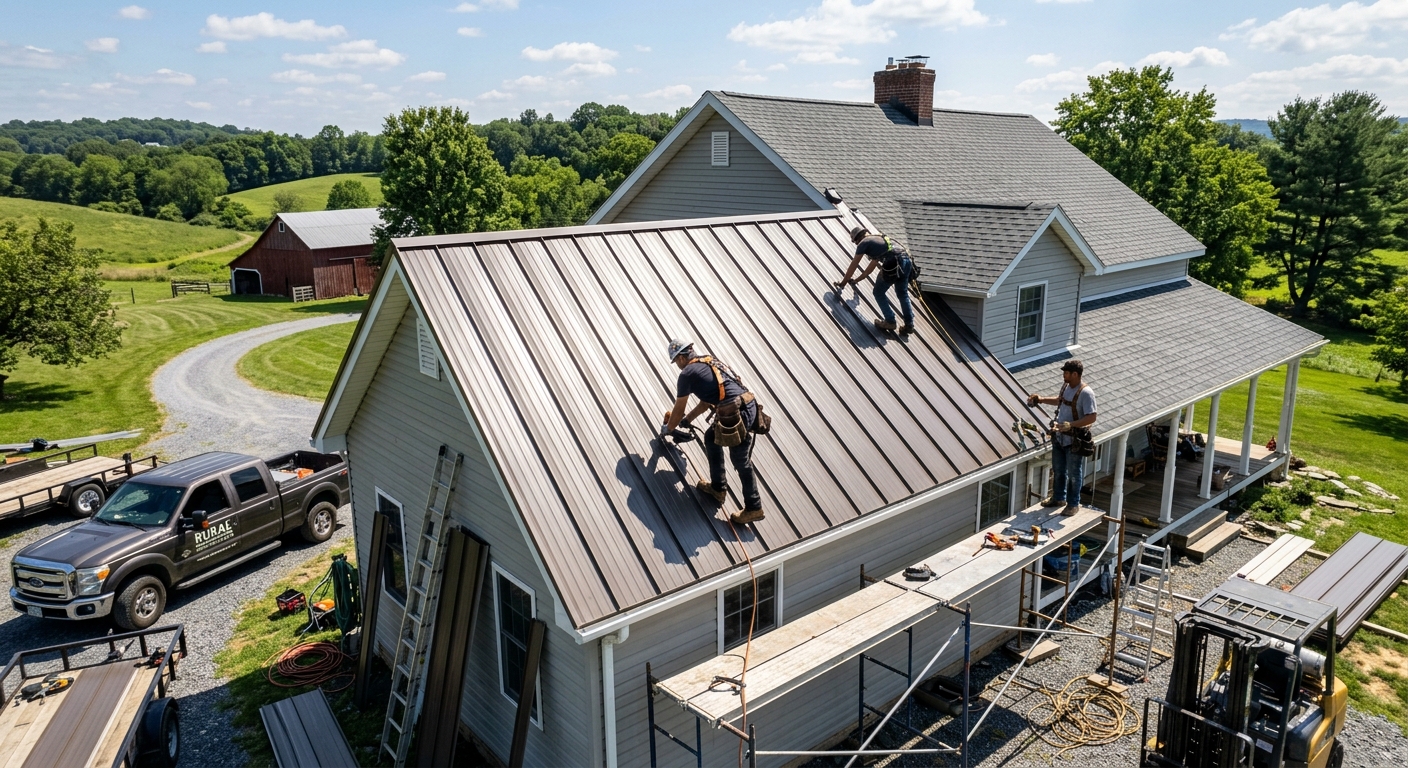
Roofing Replacement & Repair costs in Duquesne — 2026
In Duquesne, roofing costs reflect not just the size of your home, but the specific challenges of local housing. With a population of 5,241 and a high share of homes built before 1980 (U.S. Census Bureau, ACS 2024), many Duquesne homeowners face aging roofs with layers of past repairs. In this market, 44.6% homeownership and modest median incomes mean roof work is often deferred until failure—forcing urgent tear-offs or repairs, not planned upgrades.
Because much of Allegheny County’s housing dates from 1900–1950, roof replacement here almost always exposes deck damage: old boards, past leaks, or spongy spots that need replacement mid-project. For Duquesne, that pushes many jobs beyond a simple shingle-over and means thicker debris from old layered shingles to dispose of. If you’re budgeting, include some allowance for hidden wood repairs or extra disposal, even on modest homes.
Here’s what Duquesne homeowners pay for common roofing work in 2026:
| Material / Scope |
Lifespan |
Best for |
Price range (installed) |
| Asphalt shingles — architectural (30-yr) |
25–30 yrs |
Duquesne single-families, best cost/durability |
$8,900–$19,000 |
| Asphalt shingles — impact-resistant (Class 4) |
30+ yrs |
Storm-prone sections or those under trees |
$14,500–$19,000 |
| Metal standing seam |
40–70 yrs |
Long-term, low-maintenance, snow shedding |
$21,500–$38,500 |
| Flat roof — TPO or EPDM |
15–25 yrs |
Low-slope porches, additions, rowhouses |
$11,500–$22,500 |
| Roof repair — leak or isolated section |
n/a |
Targeted repair on newer roofs |
$475–$1,800 |
Prices are estimates for a typical Duquesne home and vary with roof size, pitch, decking condition and material selection.
When to book roofing work in Duquesne
In southwestern Pennsylvania, the best window for roof replacement in Duquesne starts in late March and runs until early November. Asphalt shingle replacement requires temperatures above 40°F for proper sealing—if it’s too cold, the bond is weak and your roof’s lifespan drops. The peak months, from May through September, see roofing crews booked solid, especially in late summer when heavy Ohio Valley storms bring in emergency tarping and insurance work.
An emergency in February is tough: crews work shorter days to allow adhesives to cure, snow adds removal time, and rates can run close to the high side of $475–$1,800 just for temporary repairs, with premiums for after-hours calls. In Duquesne’s busy roofing market, don’t expect to call in August for a full replacement and have it done before fall—area contractors serve the saturated Greater Pittsburgh metro, and the bottleneck isn’t lack of contractors but high demand concentrated into 7–8 workable months.
For planned replacements (not leaks), schedule your estimate as early as March. September and October are ideal for shingle jobs: less humidity, steady crew schedules, and time to catch hidden deck issues before real cold sets in. Leaving a replacement for late fall gambles with early frost and a rush to close up before snow or freezing rain arrives.
Pennsylvania code and Allegheny County permit rules for roofing
Roofing in Duquesne falls under the Pennsylvania Uniform Construction Code (UCC), which is based on the International Residential Code (IRC). The code authority is the PA Department of Labor & Industry, but most enforcement in Allegheny County—including Duquesne—is handled by municipalities, or by L&I only if the town opts out. In Pittsburgh, the Department of Permits, Licenses, and Inspections oversees building and roofing code enforcement for the county.
In practice, permit requirements are clear: if you’re replacing more than 50% of your structure’s roof in Pittsburgh (which covers most full reroofs in Duquesne), expect to need a building permit. Like-for-like repairs under a small area threshold, such as replacing a few blown-off shingles, usually proceed without permits. Always ask your contractor: if more than half the roof needs replacement, permits are nearly always required.
Pennsylvania’s Home Improvement Contractor (HIC) registration is mandatory for any contract over $500—including almost every roof. Always verify your contractor’s HIC at hic.attorneygeneral.gov. Confirm their workers’ compensation coverage (required for any roofing crew) at the state portal: WCAIS (wcais.pa.gov). Do not hire anyone for roof work on your home without checking both. The law also requires a written contract for work over $500 and gives you a three-day right to cancel.
Choosing a roofing material for Duquesne's climate
With a ground snow load of 30 psf and winter design temps dropping to 8°F, Duquesne roofs have to handle heavy freeze-thaw cycling and the weight of Ohio Valley snow in a way that can defeat the wrong system. Metal standing seam excels at shedding snow and has a 40–70 year lifespan, but its high upfront cost means it’s rarely chosen for classic single-family homes in this area. TPO or EPDM membranes are used only on flat or low-slope sections—these do not perform on pitches over about 2/12 and have a shorter 15–25 year service life in this climate, where UV and ponding water are constant threats.
The real reason architectural asphalt shingles dominate Allegheny County roofs is balance: at $8,900–$19,000 installed, they provide enough resilience for our freeze-thaw cycles and resist wind uplift if installed with modern nails and appropriate underlayment. Class 4 impact-resistant shingles can justify their higher cost ($14,500–$19,000) on homes regularly exposed to hail or branches, but for most Duquesne properties the standard dimensional shingle is the best fit for both budget and expected lifespan. Upgrading to metal only makes sense if you’re in your forever home, plan to stay put for decades, or have persistent ice damming issues that shingles can’t solve.
| Material |
Installed cost |
Lifespan |
Cold-climate performance |
Maintenance |
| Asphalt architectural |
$8,900–$19,000 |
25–30 yrs |
Handles snow, freeze-thaw; wind resistant |
Inspect after storms; moss cleaning |
| Asphalt Class 4 impact-resistant |
$14,500–$19,000 |
30+ yrs |
Good hail/wind protection, resistant to impacts |
Same as standard architectural |
| Metal standing seam |
$21,500–$38,500 |
40–70 yrs |
Sheds snow, zero water absorption |
Minimal; occasional fastener check |
| TPO / EPDM membrane |
$11,500–$22,500 |
15–25 yrs |
No freeze-thaw issues, but prone to ponding |
Annual inspection for punctures, sealing seams |
When a Duquesne roof is worth repairing — and when it isn't
In Duquesne, quick repairs are smart for a newer roof with a single leak, but most roofs here are decades old and repairs become false economy after 20+ good years. For a 1940s house that hasn’t been reroofed in decades, repeated repairs in the $475–$1,800 band add up fast—three visits for leaks or blowoffs can easily total $3,000, close to a third the cost of a full shingle roof. If your roof is over 25 years old—even if it “doesn’t look bad”—the odds of finding rot or soft decking during a repair jump sharply, and patch jobs won’t last through southern PA freeze-thaw and wind gusts.
On the other hand, a younger roof with sound decking can be nursed along if the damage is minor and isolated. Storm-related damage typically justifies full replacement, especially with insurance involved. For flat roofs, recurring ponding or blistering is almost never worth chasing with patches—membrane failures only accelerate here, and a full system swap is more reliable.
| Situation |
Recommendation |
Typical cost |
Reasoning |
| Under 15 years, one isolated leak |
Repair |
$475–$1,800 |
Roof isn't near end of life; patch holds |
| 15–25 years, several leak points |
Replace |
$8,900–$19,000 |
Patching adds up; deck likely has hidden rot |
| 25+ years, any active leak |
Replace now |
$8,900–$19,000 |
End of life; repair cost not justified |
| Storm damage, wind or hail |
Document, claim, replace |
$8,900–$19,000 |
Insurance covers most; new system smarter |
| Flat roof ponding or blistering |
Replace membrane |
$11,500–$22,500 |
Patching weak; failure will recur |
| Active leak entering winter |
Emergency repair, schedule replacement |
$475–$1,800 |
Stop damage now, plan proper fix come spring |
Low-slope and flat roofs in Duquesne
Flat and low-slope roofs are everywhere in Duquesne, especially on porches, rear additions, and attached housing. These areas cannot be roofed with shingles—our freeze-thaw cycles and ponding rainfall will quickly force water beneath shingle laps on any pitch below about 3/12. Putting shingles on a 2/12 pitch, as a few contractors here still do, signals poor standards and guarantees leaks after a harsh winter.
On these sections, a properly installed TPO or EPDM membrane system is the only solution. Expect membrane replacements at $11,500–$22,500 for a full job, with good systems lasting 15–25 years if drainage is right. The key is positive pitch and unblocked downspouts—Duquesne’s clay soils and dense hilly lots make poor drainage lethal to flat roofs. Patching blisters or split seams will only hold so long; when ponding is visible for more than 48 hours, replacement is usually the only lasting answer. Don’t cut corners here—membrane costs a bit more, but skipping it leads to rot and interior damage you can’t see from the outside.
Reading a roofing estimate line by line
In Duquesne, a good roofing estimate should detail every step and let you compare apples to apples. Every quote should list the total roof area in “squares” (100 sq ft units), pitch, and whether that number is measured or guessed. Tear-off and disposal should be its own line, showing how many layers get removed and if dumpster fees are included. Underlayment and ice/water barrier must be named by brand/type, not just “felt”—this matters for local wind and ice buildup. Decking replacement should appear as a per-sheet price in case hidden rot turns up (especially common in older Duquesne homes). All flashing, vent work, and lineal feet of guttering or downspouts should be explicit.
Workmanship and manufacturer warranties are not the same—look for each named separately. Payment should be structured with a modest deposit (no more than 15%) and the balance only when work is finished. If the estimate gives you a lump sum with no breakdown or just says “roof replacement,” you’re not really protected—missing detail allows for shortcuts, surprises, and disputes.
| Line item |
What to look for |
Red flag if… |
| Roof area |
stated in squares, with pitch |
no measurement given |
| Tear-off and disposal |
number of layers, dumpster included |
bundled into one figure |
| Underlayment |
product type and coverage |
listed only as 'felt' |
| Ice and water shield |
coverage height at eaves |
omitted entirely |
| Decking |
per-sheet contingency price |
no allowance at all |
| Warranty |
workmanship years stated separately |
only the shingle warranty |
| Payment |
deposit under 15%, balance on completion |
large upfront cash |
Frequently asked questions — roofing in Duquesne
Does homeowner's insurance cover roof replacement in Duquesne?
In Duquesne, homeowner’s insurance covers roof replacement only if there’s a qualifying loss—typically storm damage from wind, hail, or a fallen tree (a real concern with our local Ohio Valley storms). Age or general wear rarely qualify: if your 30-year-old shingles are simply worn out, insurance will not pay. However, if a sudden event causes damage, your insurer will often pay actual cash value for the old roof, and replacement cost with the right policy. Remember, waiving or “eating” your deductible is prohibited under Pennsylvania’s Home Improvement Consumer Protection Act (HICPA). For a typical job, you’ll be looking at $8,900–$19,000, but out-of-pocket cost depends on your coverage, deductible, and insurer’s estimate. Always document the damage with photos and get the claim started quickly after a major storm.
What is the best roofing material for Duquesne's climate?
For Duquesne’s freeze-thaw cycles, ground snow load, and the need for decades of service without constant upkeep, architectural asphalt shingles are the best value. These are engineered to withstand our local 30 psf snow load and cold snaps down to 8°F, hold up to gusty wind, and work on most roof slopes—while installed cost stays in the $8,900–$19,000 range for average homes. Metal standing seam performs even better in ice and snow, but its high price makes sense only if you plan to live in the house a very long time or have ongoing issues with snow or ice dams. Flat-roof sections require membrane (TPO or EPDM) due to ponding and drainage challenges. Most Duquesne homeowners opt for shingles because they reliably balance cost, performance, and neighborhood appearance.
Are there historic district rules affecting roofing in Duquesne?
At this time, Duquesne does not list specific historic districts with extra roofing restrictions in the available Allegheny County framework. This means you aren’t subject to special material or color controls beyond those in the Pennsylvania Uniform Construction Code (UCC) and regular municipal permit rules. If your property borders or includes an individually protected structure, double-check with your local office: typically, you can proceed with appropriate modern materials such as architectural shingles or flat roof membranes and won’t face the extra review Pittsburgh homeowners do in official historic areas. Your roofer should still meet all HICPA consumer protection and permitting requirements for any job over $500.
Should I use a local roofer or a national company?
For Duquesne’s older housing stock and frequent hidden deck repairs, a local roofing contractor is almost always the better choice. Local firms know how to work with steep, hilly terrain and understand the quirks of roofs built before 1950. They also know Allegheny County’s permit process and can quickly handle local compliance. National chains may offer longer warranties, but they’re likely to subcontract work and can struggle to deliver the detailed customer service you need when a $14,500 roof project runs into unexpected deck rot or gutter issues. Ask to see their Pennsylvania HIC registration and confirm recent work in the Greater Pittsburgh area before committing.
Is a sagging roof line an emergency?
In Duquesne homes, a sagging roof—especially on pre-1950 structures—should never be ignored. While not every dip signals total failure, sagging often means that decking or structural framing has been compromised by repeated water intrusion or past storm damage. If you see a new sag after a storm or when leaks are active, contact a roofer immediately; an emergency call may start in the $475–$1,800 range for temporary shoring or tarping. Leaving it risks a full roof collapse or major water damage over the winter, especially given our 30 psf snow loads. Get the situation inspected and plan on full repair or replacement before the next major snow or freeze.
What does roof replacement cost per square in Duquesne?
Roofing is typically priced “per square,” with one square covering 100 square feet. In Duquesne, a straightforward architectural shingle replacement, including tear-off and standard deck repair, generally runs in the $450–$650 per square range for standard architectural shingles, depending on complexity, pitch, and material chosen. That means a 20-square roof (2,000 sq ft) will fall into the $8,900–$13,000 range, with higher costs for complex roofs or those with rot and multiple layers. Metal, Class 4, or membrane roofs run higher. Always make sure your estimate lists total squares measured and installed so you’re billed for actual work, not a round number that inflates your price.
How far ahead should I book a roofer in Duquesne?
In Duquesne, because the Greater Pittsburgh area is a saturated market and roofers see their schedules fill for months once spring hits, it’s best to contact contractors for estimates at least 4–8 weeks before you want work to start. During peak season (May through September), wait times of eight weeks or more aren’t uncommon for full replacements, though small repairs can be handled faster—sometimes within a week during quieter stretches. Emergencies command a premium: an urgent winter repair can easily go over $1,800 for specialized labor on short notice. Don’t let a leak wait until the last minute, especially in the busy summer-to-fall window.
Is a metal roof worth the extra cost in Duquesne?
For most Duquesne homeowners, a metal standing seam roof is only worth the higher upfront investment if you plan to stay put for decades or have serious issues with snow, ice dams, or constant wind damage. Metal sheds snow better than anything else and its 40–70 year lifespan can make the $21,500–$38,500 investment pay off over time. But it’s rarely cost-effective for rental properties or homes you’ll sell soon, since the resale boost rarely matches the initial outlay. For most single-family homes in Duquesne, architectural shingles offer a near-equal weather defense for far less, making them a smarter choice unless you want “one-and-done” roofing with minimal maintenance forever.
How much snow load can a Duquesne roof handle?
By code, roofs in Duquesne and Allegheny County are built to a ground snow load of 30 pounds per square foot (psf). This figure is based on UCC requirements for southwestern Pennsylvania and takes into account the region’s heavy, wet Ohio Valley snows and frequent freeze-thaw cycles. Most modern shingle or metal roofs installed to code will handle this without trouble, unless your underlying framing or decking has deteriorated from age or leaks—a common risk with our high percentage of pre-1980 homes. If you’re seeing roof leaks or sagging after snow, don’t wait: a timely inspection or repair in the $475–$1,800 range could prevent a structural failure and much larger bill later.