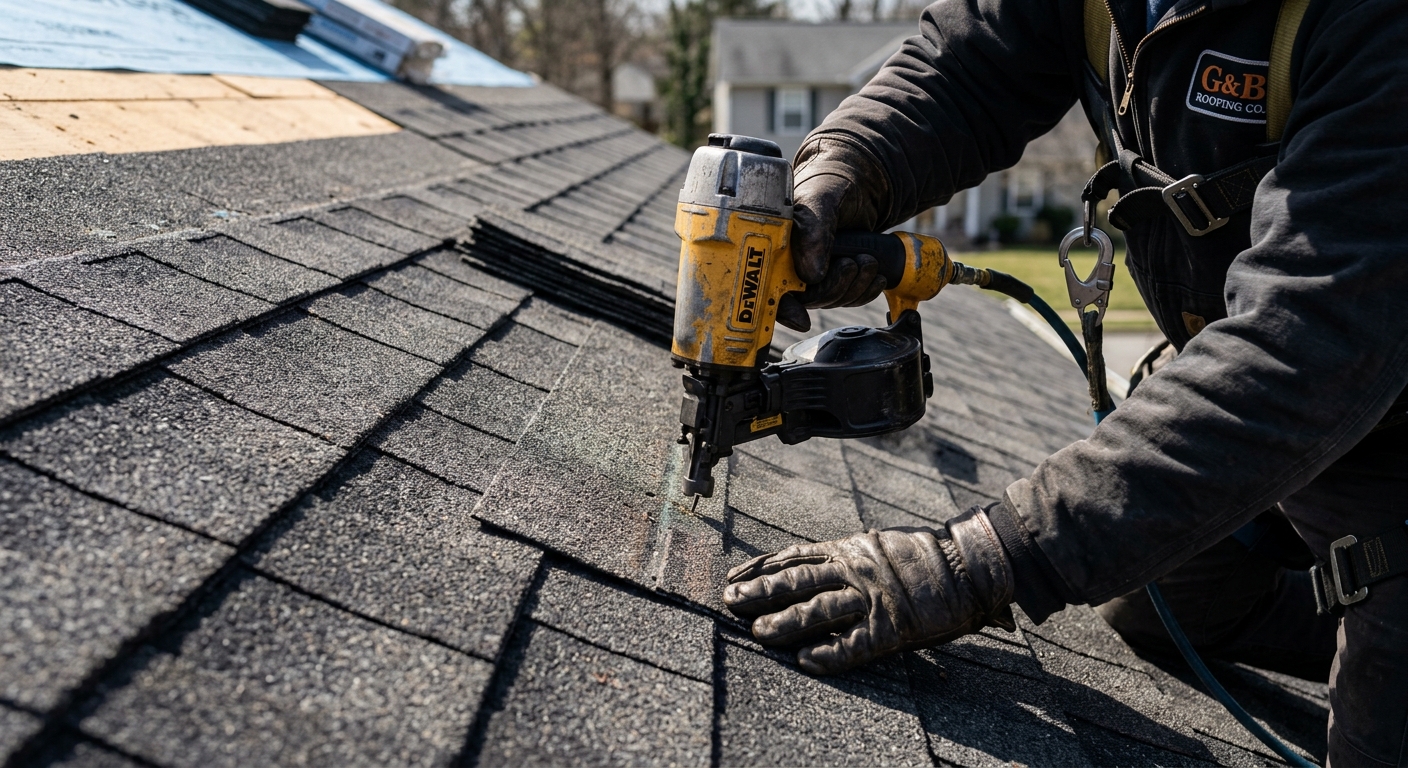
What roof replacement costs in Washington in 2026
If you're a homeowner in Washington, Franklin County, planning a roof replacement in 2026, knowing the price range up front is crucial. The typical homeowner here has a single-family residence—just under 70% of homes fit this profile (U.S. Census Bureau, ACS 2024)—which means a straightforward, moderately-sized project. Median household income also means most homeowners do not opt for the most expensive option available, but expect reliable materials that perform in freeze-thaw winters.
A unique reality for Washington and much of Franklin County: a large share of homes were built between 1950 and 1980. Many of these homes have their original roofs or a single-layer asphalt overlay. As a result, we’re seeing neighborhoods reach the end of shingle lifespan around the same time, driving coordinated replacements and occasional travel surcharges as contractor demand spikes. For most Washington homes, that means roofers are tackling single-layer asphalt tear-offs—rarely a simple overlay, and nearly always a full replacement of worn-out fields and leak-prone flashing.
Most roofs here are architectural shingles, which balance lifespan with cost. Metal is popular for those planning to stay 30+ years or more, but the initial outlay is steep. Flat membranes (TPO/EPDM) are limited to certain low-slope additions and porches. Expect repairs—often storm or wind-driven in valleys like ours—to be priced at the lower end only for small, accessible leaks.
| Material / Scope |
Lifespan |
Best for |
Price range (installed) |
| Asphalt shingles — architectural (30-yr) |
25–30 yrs |
Single-family homes, average slope, moderate budget |
$9,300–$19,500 |
| Asphalt shingles — impact-resistant (Class 4) |
30+ yrs |
Storm-exposed areas, longer-term owners |
$15,000–$19,500 |
| Metal standing seam |
40–70 yrs |
Higher budgets, long-term investment, low maintenance |
$22,500–$40,000 |
| Flat roof — TPO or EPDM |
15–25 yrs |
Low-slope porches, additions, garages |
$11,500–$23,500 |
| Roof repair — leak or isolated section |
n/a |
Localized leaks, missing shingles, flashing fixes |
$500–$1,850 |
Prices are estimates for a typical Washington home and vary with roof size, pitch, decking condition and material selection.
Pennsylvania code and Franklin County permit rules for roofing
All residential roofing in Washington, Franklin County falls under the Pennsylvania Uniform Construction Code (UCC), which is based on the International Residential Code (IRC). In the Borough of Chambersburg, if your roof replacement includes changes to the structural sheathing or framing—not just shingle replacement—a building permit is required, issued by the Borough of Chambersburg Codes Enforcement Office. In the surrounding unincorporated Franklin County townships, straightforward asphalt shingle replacement (tear-off and install) is often completed without a building permit unless structural wood replacement is involved. The practical effect? Many roofs are legally replaced without any municipal paperwork unless deck damage is severe enough to require new plywood.
Contractors must be registered as Home Improvement Contractors (HIC) for any contract or scope over $500. You can—and should—verify HIC registration directly using the Pennsylvania Office of Attorney General’s database at hic.attorneygeneral.gov before signing. Insurance, especially workers’ compensation, is not optional if your contractor uses employees; verification is available to the public at the state's WCAIS system (wcais.pa.gov). Always confirm that both insurance and HIC registration are active before work starts. For pre-1978 homes, any reroofing disturbing painted surfaces may fall under the federal EPA Lead RRP Rule, with certified renovators searchable at certifiedrenovatorsearch.epa.gov.
There is no state-mandated roofing license beyond HIC registration, so verifying registration and insurance is your best safeguard.
Asphalt, metal or membrane — what suits a Washington roof
Washington’s winters bring ground snow loads of 30 psf and winter design temperatures dipping to 12 °F, conditions that test any roofing material. Architectural asphalt shingles dominate here for a reason: they deliver 25–30 years of service at the lowest up-front cost and have proven reliable under moderate snow. They’re also specified directly for most stick-framed homes built during the county’s postwar housing boom. Metal standing seam systems shine in our pronounced freeze-thaw cycles and are chosen by owners planning to stay on their property for decades; they naturally shed snow and resist ice damming better than anything else. Flat TPO or EPDM membrane is not a good fit on most Washington homes, but is essential for porches, additions or garages with roofs too shallow for shingles.
Metal is the right upgrade if you’re fixing chronic ice dams, plan to stay long-term, and can swallow the $22,500–$40,000 upfront. For a property you’ll sell within 10–15 years, architectural shingles are simply more cost-effective. Class 4 impact-resistant asphalt shingles make sense if your roofline is particularly exposed to valley winds funneled through local ridges, but don’t reliably pay back unless storms routinely dislodge shingles. So, unless your insurance discounts make it worthwhile, most choose the standard shingles that have proven to last.
| Material |
Installed cost |
Lifespan |
Cold-climate performance |
Maintenance |
| Asphalt architectural |
$9,300–$19,500 |
25–30 yrs |
Good with proper attic ventilation, performs in snow/freeze cycles |
Low; periodic inspection for damaged/missing shingles |
| Asphalt Class 4 impact-resistant |
$15,000–$19,500 |
30+ yrs |
Superior wind and hail resistance, comparable ice dam risk |
Low; similar to standard asphalt |
| Metal standing seam |
$22,500–$40,000 |
40–70 yrs |
Excellent, sheds snow, resists ice dams |
Very low; periodic fastener and seam checks |
| TPO / EPDM membrane |
$11,500–$23,500 |
15–25 yrs |
Good for flat/low-slope, poor snow shedding on pitched roofs |
Low; seams and penetrations require periodic checks |
When to book roofing work in Washington
South-central Pennsylvania’s roofing season in Washington typically runs from late March through early November. Shingle manufacturers require temps above 40 °F for proper self-sealing; if you replace a roof in January or February, crews may need to return to hand-seal tabs in spring, which adds to your labor bill. September and October are the sweet spot for both pricing and craftsmanship—summer heat is past, and the risk of early-morning frost hasn’t set in. Most roofers in the Franklin County area, traveling from the Harrisburg–Carlisle market, see demand spike at the first spring thaw, then again after any late-summer hail event.
Because our county is more rural than metro, finding an available crew often means calling a week or two ahead rather than booking months in advance—unless a big storm rolls through, which tends to thin out contractor availability for urgent jobs. Emergency work in February, when gutters are frozen solid and shingles don’t seal, can add hundreds to a standard repair. Meanwhile, those who schedule ahead for a standard shingle replacement in autumn find more predictable pricing and workmanship.
If you know your roof is approaching the 25–30 year mark, avoid spring and late summer logjams: plan your replacement early and keep control over both schedule and cost.
The scope items Washington homeowners don't budget for
If you’re planning a roof replacement in Washington, Franklin County, it’s easy to focus on the price per square of shingles and miss the hidden costs that add up once the tear-off starts. In older homes all over our area (41.4% built before 1980), it’s common to uncover rotted roof decking—especially above poorly ventilated attics or along north-facing slopes. Replacing a sheet of plywood decking averages $75–$150 per sheet. For a typical three-bedroom ranch, that can mean adding $300 for minor repairs or over $1,500 if a whole section is gone.
Attic ventilation is critical here. Our climate experiences pronounced freeze-thaw cycling; without enough soffit and ridge venting, warm air builds up in the attic, melting snow and causing ice dams—which is often why you’re needing a new roof in the first place. Upgrading the ridge vent or adding ventilation can cost $400–$1,200.
Other common changes found at tear-off: leaking or missing chimney and wall flashings ($250–$650), cracked vent boots ($100–$250 each), and drip edge that was never installed the first time around ($350–$600). These aren’t extras—they’re crucial for waterproofing and warranty. The only way to avoid surprise charges is to plan for these items ahead of time and clarify what’s included in your bid.
Gutters, drainage and roof longevity in Washington
Your roof and gutters are not separate investments in Washington—they’re a system. If you replace shingles without updating the gutters, water seeps behind new drip edge or overflows at the eaves, finding its way into the basement just as often as through the ceiling. Because downspouts draining too close to the house often cause damp basements and settling in Franklin County’s clay-heavy soils, most roofers here recommend new gutters and downspout extensions with a total roof replacement.
Some shingle and membrane warranties even require proving that water safely clears the eaves—especially with our freeze-thaw cycles that can back up ice under shingles. Seamless aluminum gutter replacement alongside a new roof typically costs $1,900–$3,400 for a single-family home in Washington. Adding debris guards raises that by $400–$800, but can help prevent overflow, siding stains, and foundation cracks. Prioritize full-system drainage early, or you’ll pay for it in repair bills later.
Why two Washington roofing quotes can differ by 40%
Homeowners in Washington often see wide price swings between roofing bids—even for the same size home. One key reason: most houses here are single-layer shingle jobs built between 1950 and 1980, but the actual size of each roof footprint varies dramatically. Each “square” is 100 sq ft. A ranch might be 18 squares, a Colonial double that.
Pitch makes just as much difference. Steep 10/12 pitches or second-story work require harnessing and slow down the crew, bumping up labor costs by as much as 20–30%. In areas just outside the denser Harrisburg–Carlisle market, travel surcharges are not uncommon for homes south of Chambersburg, adding up to $450–$1,000 for rural jobs.
Hidden layers can create surprise costs. If you have two or more layers of old shingles to tear off, expect $500–$1,500 extra for disposal and the added man-hours. Rotted plywood decking, only revealed at tear-off, costs $75–$150 per sheet. Materials make a difference too—a basic 3-tab shingle is cheaper, but few homes here use them. Class 4 impact-resistant shingles, necessary where winds off the ridgeline are severe, can push a bid to the top of the range at $19,500.
| Factor |
Why it matters here |
Cost impact |
| Roof size in squares |
Each square is 100 sq ft of roof surface |
Primary multiplier |
| Pitch and access |
Steep pitches need harnesses and slow the crew |
+20–30% labor |
| Existing layers to tear off |
Two or more layers means full tear-off and disposal |
$500–$1,500 per layer |
| Decking condition |
Rot is found during tear-off, not before |
$75–$150 per sheet |
| Ice barrier at eaves |
Required where ice damming has a history |
$300–$800 |
| Material grade |
3-tab vs architectural vs Class 4 impact-resistant |
$500–$2,500 |
Frequently asked questions — roofing in Washington
Will the crew damage my landscaping or driveway?
Most roofers in Washington will take precautions such as covering foundation plantings and placing plywood over your driveway to keep falling debris and discarded shingles from causing visible damage. However, on narrow lots or where driveways run close to the eaves, you should expect some minor scuffing or tire tracks, since dump trailers and material deliveries are often close to the house. If you’re concerned, ask the contractor to detail their protection plan and put it in writing. Clean-up is typically included, but for homes with prized landscaping, it’s reasonable to ask for extra tarping. If heavy dumpster trucks must park on new blacktop, there can be marks—especially in a hot Pennsylvania August. While this is standard risk in the region, a careful crew will return your yard to pre-project condition. For a regular asphalt shingle tear-off and install costing $9,300–$19,500, request final walk-through before final payment.
What are the signs of hail damage on a roof?
In Washington, hail damage shows up as bruised or missing granules on asphalt shingles, pock marks especially noticeable in the valleys, and sometimes dented metal vent covers or gutters. With Franklin County’s exposure to valley-funneled winds and periodic storms, damage is often first spotted after a major summer squall. Look for soft spots where granules have been driven off or for irregular dark spots—you’ll feel the bruising if you run your hand across it. Metal roofs may show small dents but are rarely punctured by hail at the size most common in south-central Pennsylvania. If your roof is architectural asphalt and repairable, expect a leak fix to run between $500–$1,850. Many insurers send out their own inspectors, but always get an opinion from a reliable local roofer.
How do I confirm a roofer carries workers' compensation?
In Pennsylvania, all roofing contractors employing workers—even just one—are required to carry workers’ compensation insurance. This protects you if a crew member is injured on your property. Before any work starts in Washington, always verify this insurance directly using the state’s WCAIS system at wcais.pa.gov. Ask the contractor for their business name or federal ID (FEIN); enter that into the database to confirm their coverage is active and matches the company on your contract. Don’t just take a printed certificate. If you’re unsure, it’s better to walk away—even on a small job like a $1,150 roof repair—than risk liability. No reputable roofer here will refuse this request.
Do metal roofs shed snow better in Washington?
Yes—metal standing seam roofs are ideal for Washington’s climate because they naturally shed snow and ice, preventing the buildup that can cause leaks or structural concerns. With ground snow loads of 30 psf standard here, a properly installed metal roof reduces stress on framing and vastly lowers ice dam risk compared to asphalt shingles. That’s especially helpful for homes set in the valleys where winter wind piles snow along eaves. If you plan to own your home for decades or want a permanent fix for recurring ice dams, metal’s up-front investment—ranging from $22,500–$40,000 installed—is worth considering.
What should a roofing quote include in Washington?
A clear quote from a Franklin County roofer should spell out the exact shingle or metal system to be used, underlayment type, number of layers to be removed, the scope of flashing replacement, attic ventilation upgrades, and specific costs for extras (like rotted decking). It must also include warranty terms and how debris will be handled. Pennsylvania’s Home Improvement Consumer Protection Act requires all contracts over $500 to be in writing. Be sure everything is detailed—including any contingencies like wet plywood at $75–$150 per sheet. No legitimate contractor will object to putting it all on paper. Review and ask questions before signing.
Does homeowner's insurance cover roof replacement in Washington?
Typically, homeowner’s insurance covers roof replacement only if the damage is sudden and accidental—think hail or wind, which does occur in Washington’s exposed valleys. Routine wear or old age is excluded. After a storm, contact your insurer immediately for inspection and keep documentation (photos, dates). Repairs related to covered damage, such as a leak repair billed at $500–$1,850, may qualify, but insurers won’t pay for full roof replacement just because shingles are worn. Never agree to a contractor “waiving your deductible”—it is prohibited in Pennsylvania and a red flag.
How much snow load can a Washington roof handle?
Roofs in Washington are typically designed for a ground snow load of 30 pounds per square foot (psf), as established by local code requirements. This means the average stick-built house here can safely support the region’s expected winter load when the structure and deck are in good repair. Excess weight from compacted snow or ice dams—often triggered by poor attic ventilation—can sometimes approach those limits, especially on older homes. If you have a low-slope roof or see sagging, it’s worth a proactive inspection. If you need reinforcement or major repairs from snow damage, costs range from basic service at $500–$1,850 to structural upgrades.
How much does a new roof cost in Washington?
A new architectural asphalt shingle roof for a single-family home in Washington typically runs from $9,300–$19,500 installed, with most projects falling around $15,000. Metal standing seam starts at $22,500 but can climb to $40,000 for higher-end profiles and complex roofs. If your home has low slope or requires TPO/EPDM membrane, expect $11,500–$23,500 depending on area to be covered. Final price depends on roof size, pitch, number of layers to tear off, and the scope of any needed decking repairs—you’ll always get a more exact number at the in-person inspection.
Why is my Washington roofing quote higher than the online average?
Online averages rarely reflect the true conditions in Washington, Franklin County. Many area homes were built 1950–1980 and are now reaching the end of their first or second roof, making full tear-off and decking repairs more common. Our dominant architectural shingles cost more than basic 3-tabs reported in some national averages, and ridgeline winds and freeze-thaw cycles here drive up the need for impact-resistant or upgraded materials. Travel surcharges and rural delivery fees (for homes outside Chambersburg) aren’t factored into generic web calculators. For example, final quotes run from $9,300–$19,500 for shingle replacement here, not the $7,000–$9,000 you might see elsewhere online. The estimate you get in Washington is tailored to local climate, code, and site specifics.