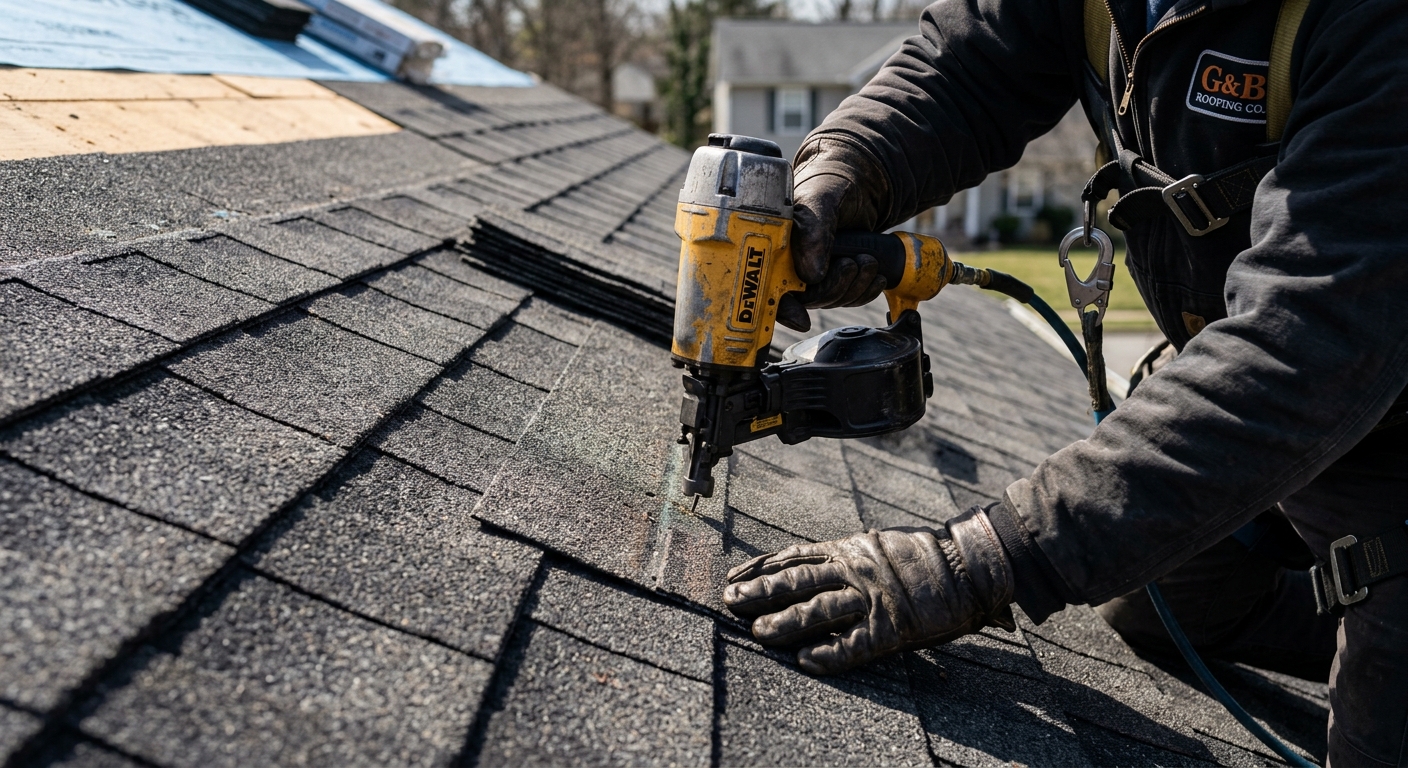
What roof replacement costs in Washington in 2026
Washington, Pennsylvania, has its own rhythm when it comes to roof replacement, defined partly by the area’s high percentage of older single-family homes and a homeownership rate that trails the national average. With only 2,654 owner households (U.S. Census Bureau, ACS 2024), most roofs to be replaced here have already seen decades of cycles between freeze and thaw. The split-levels and ranches that dominate Peters Township and North Strabane Township, built during the post-1960 suburban growth, tend to feature medium-pitch roofs and straightforward rectangular lines—factors that influence install times, costs, and the practical options for re-roofing or repair.
In Washington County, especially the city of Washington itself, architectural asphalt shingles are the typical call—not just because they’re affordable, but due to supply roots and developer trends unique to suburban Pittsburgh. With frequent storm exposure from the Ohio Valley corridor, insurance claims for wind and hail are more common here than east in the Appalachian plateau, making it more likely that homeowners will be working with adjusters on replacement projects. The following table gives a clear sense of expected costs for the main materials and scopes encountered in Washington homes:
| Material / Scope |
Lifespan |
Best for |
Price range (installed) |
| Asphalt shingles — architectural (30-yr) |
25–30 yrs |
Split-levels, ranches, moderate replacement cycles |
$8,600–$18,000 |
| Asphalt shingles — impact-resistant (Class 4) |
30+ yrs |
Hail-prone exposures, insurance discounts |
$14,000–$18,000 |
| Metal standing seam |
40–70 yrs |
Low maintenance, accent roofs, long-term durability |
$21,000–$37,000 |
| Flat roof — TPO or EPDM |
15–25 yrs |
Small commercial, porches, low-pitch additions |
$11,000–$22,000 |
| Roof repair — leak or isolated section |
n/a |
Early failure, isolated damage, flashing fixes |
$450–$1,700 |
Prices are estimates for a typical Washington home and vary with roof size, pitch, decking condition and material selection.
What insurance covers on a Washington roof
In Washington County, after a wind or hail event, homeowners must act fast but methodically: the first step is to document the roof condition with clear photos before any emergency cleanup, especially since the Ohio Valley corridor increases the frequency of insurance claims here compared to some neighboring areas. Contact your insurer and request a written scope of loss before signing any contracts. Claims are settled by “actual cash value” (the roof’s depreciated value at time of loss) or “replacement cost” (what it takes to restore with new materials); your policy will spell out which applies, so read closely or ask your adjuster.
Once a claim is opened, expect a field adjuster visit—almost all local carriers will insist on seeing storm, hail, or wind damage firsthand for Washington addresses. The adjuster’s findings, not the contractor’s, control the payout. If your roof is covered by a replacement cost policy, expect an initial payment (actual cash value) with recoverable depreciation paid once proof of completed work is submitted. Pennsylvania’s Home Improvement Consumer Protection Act (HICPA) requires a written contract for any roof job over $500. Be aware: a contractor offering to “waive” your deductible is violating state law. Waiving or rebating the deductible is prohibited, and any such offer is a reason to walk away, since it risks both your claim and the contractor’s status. Protect yourself by insisting on a transparent contract and documented scope.
Keep receipts and all written communications with your contractor and insurer; insurance companies in this region are meticulous with storm claims and may decline to cover secondary interior water damage if initial evidence or timelines are missing.
Roofing permits in Washington: what you need before work starts
In Washington County, roofing work is regulated under the Pennsylvania Uniform Construction Code (UCC), which is based on the IRC and specifically enforced by the City of Washington Code Enforcement Office, or, in other municipalities, by their local building code departments. Full roof replacement—including tear-off—typically requires a building permit in the City of Washington. On the other hand, small patch repairs on single-family homes in the county’s boroughs can often be completed without a permit.
Before work starts, verify your contractor’s Home Improvement Contractor (HIC) registration for any contract over $500 using the Pennsylvania Office of Attorney General’s registry at hic.attorneygeneral.gov. Workers’ compensation coverage is mandatory for all employers, and you can check a contractor's compliance using the WCAIS system at wcais.pa.gov. This is especially relevant in Washington, where roofing contractor density is higher along the I-79 corridor and unregistered outfits occasionally solicit work after storms.
For any contract over $500, you are legally entitled to a written agreement under Pennsylvania’s Home Improvement Consumer Protection Act. In short: permit required for full replacements, often not for patch repairs; verify HIC registration and workers’ compensation before signing anything.
How southwestern Pennsylvania's weather shapes roofing here
The climate in Washington County has a direct impact on both what materials last and what fails prematurely. The area’s position along the Ohio Valley hail and wind corridor means shingle bruising and wind shear are regular culprits; hail here often leaves shingles with barely visible bruises, but over time these spots become leak points requiring repair—costing $450–$1,700 each. This is different from neighboring highland counties that see less hail risk.
Ground snow load in southwestern Pennsylvania is 30 psf, not as high as the Northern Belt but plenty to drive ice damming along the eaves, especially when freeze-thaw cycles are frequent. Here’s how it plays out in dollar terms: heat escapes through older roof decks (common in Washington’s pre-1980 housing stock), melts the lowest layer of snow, and that water re-freezes at the eave. The resulting ice dam can force water backwards under the shingles and, if left unchecked, require not just repairs but full replacement—potentially running $8,600–$18,000 for asphalt shingle jobs.
Because winters drop to a design temp of 8 °F and frost reaches 36 inches down, roofers in Washington routinely install ice and water shield higher up the eaves than code minimums, especially where valley snow piles up. The economic consequence: initial install costs include ice-barrier upgrades not always seen in adjacent counties less exposed to such cycles—but skipping that step here means you’ll be paying for interior ceiling and drywall repairs after just a few winters.
Patching vs full replacement in Washington
For Washington homeowners, the decision between patching and full replacement usually comes down to roof age and leak pattern. With most local homes built before 1980 and the county’s mix of weather exposure and freeze-thaw, repairs make sense only when the shingle field is young and leaks are isolated—think one flashing fail or a nail pop under 15 years old. But once a Washington roof crosses the 20-year mark, especially with multiple leaks, more money is wasted patching than replacing: just three repairs at $1,100 each quickly approach the cost of a full tear-off in the $8,600–$18,000 range. Flat roofs under 20 years with ponding or blistering almost always need membrane replacement, not patching.
Storm damage from hail or strong wind in Washington often triggers insurance involvement, and coverage is typically for full replacement if the loss is documented. Entering another winter with an active leak is always a false economy—roofers in this market can tarp and patch for $450–$1,700, but it’s a stopgap, not a solution. Here’s a simple breakdown:
| Situation |
Recommendation |
Typical cost |
Reasoning |
| Under 15 years, one isolated leak |
Repair |
$450–$1,700 |
Shingles are still in their service window; fixing one spot is cost-effective. |
| 15–25 years, several leak points |
Replace |
$8,600–$18,000 |
Multiple leaks signal systemic aging; repairs don't last. |
| 25+ years, any active leak |
Replace now |
$8,600–$18,000 |
Past expected life; leaks keep coming until fully replaced. |
| Storm damage, wind or hail |
Document, claim, replace |
$8,600–$18,000 |
Insurance will usually cover roof if documentation is complete. |
| Flat roof ponding or blistering |
Replace membrane |
$11,000–$22,000 |
Localized repairs rarely hold long on failing flat membranes. |
| Active leak entering winter |
Emergency repair, schedule replacement |
$450–$1,700 |
Tarp or patch to prevent immediate water entry; full job asap. |
Why gutters get replaced with the roof
In Washington County, gutters and downspouts aren’t just add-ons; they’re an integral part of the roof assembly designed to direct water away from the foundation—essential when local soils are clay and prone to swelling. Replacing the roof without updating the gutters or ensuring proper drip edge installation is a half-measure that won’t solve long-term moisture or basement seepage issues. Water that’s not managed at the eave will pool against the home, especially when downspouts discharge too close to the foundation, causing basement dampness and—in Washington’s older homes—sometimes actual wall movement.
Many manufacturer warranties here require proof of sound gutters and proper drainage for coverage to apply; skipping gutter work can void both workmanship and material guarantees. The cost to replace gutters at roof replacement typically ranges from $1,500–$3,900 for an average residence, depending on gutter material and house size. Outflow extensions, leaf guards, and proper grading often add little in labor since the staging is already set for the roof. If the budget only covers new shingles but not drainage, it is sometimes better to wait and do both.
What a proper Washington roofing quote contains
A trustworthy roofing estimate in Washington spells out the roof area in “squares” (100 square feet each) and makes pitch explicit—steeper roofs cost more and affect disposal and staging. Tear-off is itemized by layers, with dumpster rental and dump fees called out, not just rolled into a lump sum. Underlayment should be named by brand and type (e.g., synthetic or 30# felt), and ice and water shield should have exact coverage at the eaves or valleys. Decking (the plywood below the shingles) is priced as a per-sheet contingency so if rot is found, you know what extra will actually cost. Flashing details—especially around chimneys and sidewalls—should be listed. Every line item differentiates workmanship warranty from shingle manufacturer warranty, and the payment schedule only asks for a modest deposit (not more than 15%), with the remainder on completion.
If your estimate is just a lump sum, with no square count or breakouts, it’s impossible to compare apples to apples—you’re left in the dark on labor scope, material choice, and unexpected costs. See the table below for specifics:
| Line item |
What to look for |
Red flag if… |
| Roof area |
stated in squares, with pitch |
no measurement given |
| Tear-off and disposal |
number of layers, dumpster included |
bundled into one figure |
| Underlayment |
product type and coverage |
listed only as 'felt' |
| Ice and water shield |
coverage height at eaves |
omitted entirely |
| Decking |
per-sheet contingency price |
no allowance at all |
| Warranty |
workmanship years stated separately |
only the shingle warranty |
| Payment |
deposit under 15%, balance on completion |
large upfront cash |
Frequently asked questions — roofing in Washington
Will the crew damage my landscaping or driveway?
Roofing work in Washington does require staging ladders, dumpsters, and material deliveries, which puts mature landscaping and driveways at some risk—especially on the hilly, clay-heavy lots common here. Most reputable local contractors use tarps to catch shingle debris, and plywood sheets to protect driveways if setting a dumpster. However, it's honest to say that some trampling is hard to avoid if shrubs hug the house or the only access is through a tight side yard. If there are special plantings or pavers near your Washington home, flag them before work starts and request protective measures in the contract. While a careful crew can minimize impact, the only way to entirely avoid marks or ruts is relocating items ahead of time. Set realistic expectations and know that cleanup and some minor re-grading are usually part of the standard $8,600–$18,000 roof replacement scope in Washington.
How many quotes should I get for a roof in Washington?
In Washington County, getting at least three quotes is wise because contractor pricing, material brand, and warranty vary widely along the I-79 corridor. Local companies may emphasize architectural asphalt, while an out-of-county crew might push a different system. Comparing three detailed quotes lets you spot outliers or red flags, especially when prices for a typical replacement run $8,600–$18,000. Beware of any lump sum bid that doesn't specify squares or manufacturer—if a quote is substantially lower than others, it often means shortcuts or missing scope. With demand rising after storm events in the area, some crews book up quickly or quote higher to discourage small jobs, so having multiple bids also gives leverage to negotiate timing and scope to suit your Washington home's needs.
Why do roofs fail faster in southwestern Pennsylvania?
Roofs in Washington, Pennsylvania, and the wider southwestern part of the state fail more often before reaching their advertised lifespan because of persistent freeze-thaw cycling, hail exposure along the Ohio Valley corridor, and hidden deck rot in older housing stock. Ice dams form at the eaves whenever heat leaks through older attics, pushing water beneath the shingles and causing leaks that aren’t always obvious in the first year. Hail bruises the granule surface, weakening shingles even when you don’t see a hole—this damage usually requires repairs in the $450–$1,700 range but, left unchecked, often leads to full replacements. This unique combination of climate, storm frequency, and housing era means Washington homeowners can’t bank on “lifetime” claims from big box retailers.
Does roof pitch affect the price in Washington?
Absolutely. Most split-level and ranch homes in Peters and North Strabane have moderate 5:12 to 7:12 pitches, which are straightforward to stage. Steeper roofs in Washington, especially original farmhouses around the city, need extra safety gear and labor—sometimes adding up to 20% to the job. When you see estimates for architectural asphalt in the $8,600–$18,000 range, the spread often tracks to complexity: steep pitch, valleys, and stories add to installation costs. Reputable roofers in the Washington market will call out the pitch on their written quote. If the pitch isn’t referenced or your home’s shape isn’t addressed, ask for specifics: you deserve transparent, apples-to-apples comparisons.
How much does a new roof cost in Washington?
For a typical home in Washington County—most often a split-level or ranch from the post-1960 suburban wave—an architectural asphalt shingle replacement usually lands between $8,600–$18,000, with the average job running about $14,000. Metal standing seam roofs, which are less common in the city core but growing in popularity for accent and high-end replacement, are higher at $21,000–$37,000. Flat roofs, mainly on porches or some brick single-story homes, range from $11,000–$22,000. These bands reflect not just material, but roof size, pitch, and the typical need for new underlayment and ice guard thanks to frequent freeze-thaw cycles in southwestern Pennsylvania.
What if my insurer denies my roof claim?
If your insurance provider denies your roof claim in Washington, start by requesting the decision and scope of loss in writing. Pennsylvania’s Home Improvement Consumer Protection Act ensures you receive a written contract for any job over $500, so you’re not stuck guessing about liability or scope gaps. You’re free to challenge the denial with supplemental inspections or independent adjusters—but be prepared: not all storm or age claims are covered, especially on older homes where routine wear is expected. If you end up self-paying, know that repairs typically run $450–$1,700 for an isolated leak, but full replacement could cost $8,600–$18,000. Local contractors are used to working with denied claims and can often prioritize urgent patching while you pursue appeals with your insurer.
What are the signs of hail damage on a roof?
In Washington, the most common hail damage isn’t gaping holes—it’s subtle bruising in the asphalt shingle’s granule layer caused by spring and summer storms. These bruised spots feel soft underfoot and will expose underlying mat over time, which accelerates leaks. Look for clusters of small, dark circles (often dime-sized) that don’t line up with shingle nailing; even if you don’t see missing granules from the ground, a roofer in Washington will spot the difference. If left, these impact points become future water entry—usually requiring repairs around $450–$1,700 per incident, but widespread damage often tips the scale toward insurer-paid replacement. It’s worth having a professional inspection after any hail-producing storm, given the storm frequency in this county.
Are there historic district rules affecting roofing in Washington?
The City of Washington does have some older neighborhoods, but only specific historic overlays would restrict what roofing can be installed, and these are limited. For the majority of homes in Washington, especially the post-1960 subdivisions in Peters Township and North Strabane, architectural asphalt shingles are standard and do not face historic materials restrictions. However, if your house is in a recognized scenic or designated area, local code could dictate color or profile. These special districts are the exception, not the rule, so for most roof replacements at $8,600–$18,000, you won’t run into any unique historic compliance costs. Always ask your contractor to double-check at the city or township office before ordering materials.
Is metal roofing noisy in rain?
Metal roofing on homes in Washington is much quieter than the barn roofs of the past, especially when installed over solid decking and modern synthetic underlayment. Most residential standing seam is attached directly over plywood (not open beams), which dampens much of the rain and sleet noise common in southwestern Pennsylvania storms. Insulation in attic cavities further buffers sound. At today’s prices—$21,000–$37,000 for standing seam—no one is paying that kind of premium for an unlivable result; specify that full underlayment is included in your bid for the quietest finish. If you’re worried, ask the contractor if they’ve installed in older homes with wood lathe, which can resonate more. In nearly all post-1960 Washington homes, metal roofs are no noisier than high-quality shingles once in place.