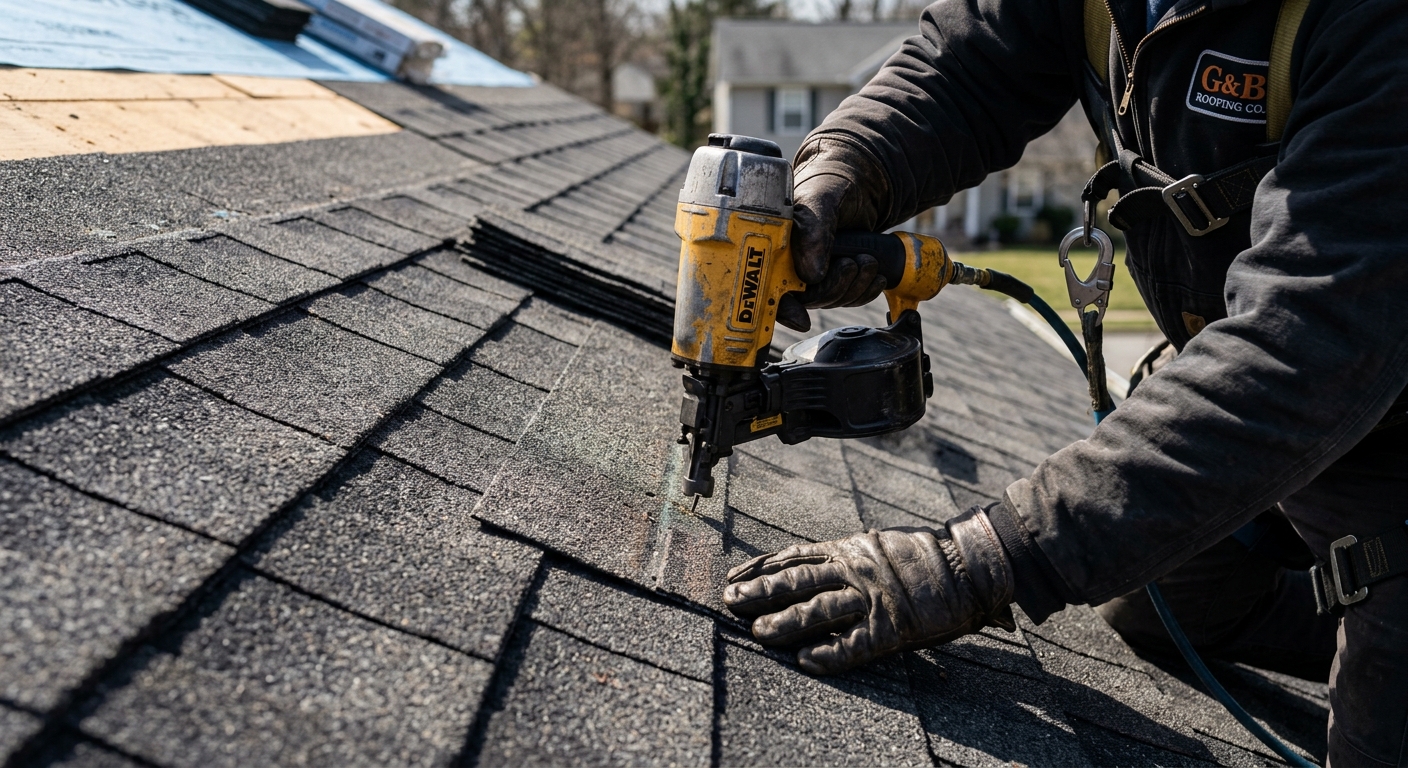
What roof replacement costs in Dingman in 2026
Dingman sits in an area where nearly 87% of homes are single-family, and most are owner-occupied (U.S. Census Bureau, ACS 2024). That means the bulk of roofing work here is for houses built for year-round families, not weekend cabins. Many neighborhoods near Dingman’s Ferry saw a surge of construction in the 1980s and 1990s, leaving a wave of roofs now passing their useful lives—targeting replacements soon and driving steady local demand for re-roofing. Most of these homes were originally finished with architectural asphalt shingles, thanks to their moderate price and wide availability from suppliers out of Scranton.
As a result, Dingman’s roof replacement jobs are rarely small patch-ups: full replacement is common, especially as owners hold onto homes longer and want the security of a single, warrantied install. With the local homeownership rate above 88%, most residents are footing the bill themselves—whether a cash investment or through insurance for storm losses after the frequent high winds on the ridges near Milford. The price range here reflects realistic Dingman sizes and local climate pressure, not just generic Pennsylvania averages.
| Material / Scope |
Lifespan |
Best for |
Price range (installed) |
| Asphalt shingles — architectural (30-yr) |
25–30 yrs |
Typical single-family home, cost-conscious |
$10,000–$21,000 |
| Asphalt shingles — impact-resistant (Class 4) |
30+ yrs |
Homes facing tree branches, hail, or wind exposure |
$16,500–$21,000 |
| Metal standing seam |
40–70 yrs |
Long-term owners, heavy snow areas, steep roofs |
$24,000–$43,000 |
| Flat roof — TPO or EPDM |
15–25 yrs |
Low-slope add-ons, porches, garages |
$12,500–$25,500 |
| Roof repair — leak or isolated section |
— |
Local leaks, missing shingles, small wind/storm repairs |
$550–$2,000 |
Prices are estimates for a typical Dingman home and vary with roof size, pitch, decking condition and material selection.
Pennsylvania code and Pike County permit rules for roofing
The Pennsylvania Uniform Construction Code (UCC), based on the International Residential Code, is the standard for all residential roofing work in Dingman. In Pike County, individual municipalities like Dingman Township handle their own permitting offices, separate from Milford Borough. If you live in Dingman Township, minor like-for-like shingle repairs under one square usually don’t require a permit, but full replacements or larger section work will. In Milford Borough, if you replace more than 25% of your structural roof deck, you must pull a building permit through the Milford Borough Code Enforcement Office. Neighboring municipalities may interpret requirements differently, but full roof replacements almost always warrant a call to the local office to check the current rules.
Your contractor must have a Home Improvement Contractor (HIC) registration from the Pennsylvania Office of Attorney General for any job over $500. You can verify this at hic.attorneygeneral.gov. Workers’ compensation insurance coverage is mandatory for all employers in Pennsylvania; homeowners should request proof and confirm it directly through the WCAIS system at wcais.pa.gov. Do not accept a verbal assurance. HIC registration and proper workers' comp are must-haves—if a contractor won’t show these, move on.
For older homes (pre-1978), contractors disturbing painted surfaces must be certified under the EPA Lead RRP Rule; check certification at certifiedrenovatorsearch.epa.gov. There’s no special roofing license or county registry—just HIC registration, written contracts over $500 by law, and those permit triggers by municipality.
Material comparison for Dingman homeowners
Dingman’s climate brings real cold (4 °F design temp) and heavy winter snow with a ground snow load of 40 psf. The dominant roof here is architectural asphalt—it’s simply more affordable, and its performance is sturdy enough for most local homes unless they have extreme exposure. Metal standing seam is best for owners planning to stay put for decades, especially on roofs that fight continuous snow load or ice dams, as metal easily sheds snow and is far less likely to ice up at the eaves. TPO and EPDM membranes are reserved for flat or very low-slope roofs: garages, porches, or rear additions, where shingles would fail. Class 4 impact-resistant shingles provide extra peace of mind for homes in the wind corridor along the Delaware River valley or those with frequent falling limbs, but the punchy cost means you need clear risk of damage to justify them over regular architectural shingles. Metal’s price is steep—unless you’re living here long-term and face repeated ice damming, most Dingman owners do fine with a quality asphalt job and a solid ice barrier.
| Material |
Installed cost |
Lifespan |
Cold-climate performance |
Maintenance |
| Asphalt architectural |
$10,000–$21,000 |
25–30 yrs |
Moderate; ice dams can form if ventilation is poor |
Check for loss of granules after winter storms |
| Asphalt Class 4 impact-resistant |
$16,500–$21,000 |
30+ yrs |
Better against ice and wind-driven debris |
Lower chance of cracked shingles after storms |
| Metal standing seam |
$24,000–$43,000 |
40–70 yrs |
Excellent—snow sheds quickly, resists ice damming |
Rarely needs attention except for fastener/gasket checks |
| TPO / EPDM membrane |
$12,500–$25,500 |
15–25 yrs |
No ice damming risk, but seams must withstand freeze/thaw |
Check for punctures and seam lifting in spring |
The cost drivers behind a Dingman roof replacement
In Dingman, what you pay for a new roof comes down to more than just square footage. The local housing stock, with many homes built during the 1980s–1990s near Dingman’s Ferry, means roofs are often moderate- to large-sized with older decking and steep, simple lines. Snow loads of 40 psf in this part of Pennsylvania demand beefier underlayment, ice barrier, and sometimes extra deck reinforcement—adding both materials and labor. High ridge-line wind along the Delaware River valley is hard on shingles here, so you may find quotes promoting Class 4 impact-resistant shingles, which can add $500–$2,500 for a typical full roof.
Roofing crews often commute in from Scranton or Wilkes-Barre, given the thin rural contractor market, driving travel and delivery costs into Dingman bids. Several upgrades push the number up: adding an extra layer of ice/water shield at the eaves for ice dam protection ($300–$800), full tear-offs for double-layered old roofs ($500–$1,500 per layer), and rotten deck replacements ($75–$150 per sheet). These are not hypothetical—decking and underlayment surprises are almost expected in 1980s roofs that have seen a few hard winters. The difference between a low and high bid can easily hit several thousand dollars, just based on these scope factors and how they’re spelled out.
| Factor |
Why it matters here |
Cost impact |
| Roof size in squares |
Each square is 100 sq ft of roof surface |
Primary multiplier |
| Pitch and access |
Steep pitches need harnesses and slow the crew |
+20–30% labor |
| Existing layers to tear off |
Two or more layers means full tear-off and disposal |
$500–$1,500 per layer |
| Decking condition |
Rot is found during tear-off, not before |
$75–$150 per sheet |
| Ice barrier at eaves |
Required where ice damming has a history |
$300–$800 |
| Material grade |
3-tab vs architectural vs Class 4 impact-resistant |
$500–$2,500 |
Reading a roofing estimate line by line
A proper Dingman roofing estimate spells out each piece, in writing—not just a lump sum. Look for the total roof area stated in squares (100 sq ft sections), along with your roof’s pitch (steeper means more labor and material wastage). The quote should list tear-off and disposal separately, naming exactly how many layers are included and whether a dumpster is provided. Underlayment and ice/water barrier should be named by product and coverage area—at least 3-foot-wide at the eaves for ice dam risk here. Decking replacement should be a separate contingency, priced per sheet of plywood or OSB, since most hidden rot is only caught during tear-off. Make sure all new flashing and vent boots are itemized. Warranty terms must be shown separately for both installation (workmanship) and shingle product. The payment schedule should favor you: a modest deposit, most paid at completion. A vague one-line quote means corners cut, surprises later, or no real accountability.
| Line item |
What to look for |
Red flag if… |
| Roof area |
Stated in squares, with pitch |
No measurement given |
| Tear-off and disposal |
Number of layers, dumpster included |
Bundled into one figure |
| Underlayment |
Product type and coverage |
Listed only as 'felt' |
| Ice and water shield |
Coverage height at eaves |
Omitted entirely |
| Decking |
Per-sheet contingency price |
No allowance at all |
| Warranty |
Workmanship years stated separately |
Only the shingle warranty |
| Payment |
Deposit under 15%, balance on completion |
Large upfront cash |
How to vet a Dingman roofing contractor
In Dingman, the first step is verifying HIC registration with the Pennsylvania Office of Attorney General for any contract over $500—search hic.attorneygeneral.gov by company name. Next, request a current certificate of workers’ compensation, then confirm it on the WCAIS portal (wcais.pa.gov) to be sure it’s not expired or lapsed. For pre-1978 homes, confirm EPA Lead RRP certification for your own liability protection. Insist on a clear written contract under the Home Improvement Consumer Protection Act, and reserve payment until work is done to your satisfaction. No local trade license or Pike County registry exists for roofers; if anyone claims otherwise, it’s a red flag.
- HIC registration verified at hic.attorneygeneral.gov
- Certificate of workers’ compensation, confirmed at wcais.pa.gov
- Written contract for any job over $500 (by law)
- EPA Lead RRP certification for pre-1978 houses
- Physical address—ask for one, not just a PO box
- Proof they’ve worked local jobs (ask for addresses/references)
- Itemized estimate (see quote anatomy)
- No pressure sales, no “today only” discounts
- Manufacturer certifications for materials (ask to see them, not just logos)
- Warranty terms for both materials and workmanship, in writing
- Proof of insurance (liability and workers’ comp both needed)
- No requests for large upfront cash deposits
Red flags in Dingman’s thin rural market: a crew that won’t show a real local address, no jobs you can inspect nearby, pushy tactics from crews chasing wind damage claims, out-of-area phone numbers with no local references, and “contractors” offering suspiciously low prices or no written contract.
Roofing warranties in Dingman: what's actually covered
Every Dingman roof comes with two types of warranties: the manufacturer’s shingle/material warranty and the contractor’s workmanship/installation warranty. Shingle warranties cover you against material defects—a rare issue with quality brands, and typically prorated, meaning less coverage later in the life of the roof. These are not “no-questions-asked” policies; most require registration (often by the installer), and they’re voided if you layer new shingles over old, or if your attic ventilation is so poor it bakes or ices up the roof. Read the small print.
The workmanship warranty covers leaks or problems caused by how the products were installed. The bracket is usually 5–10 years from established Dingman-area companies. If a company is only two years old, be wary of a 25-year “workmanship” promise: they may be gone before you ever need them. Make sure you get the warranty in writing, see that it separates materials and labor, and check if it can be transferred when you sell the house—some warranties drop or change when ownership does.
Things that void coverage here: failing to register, inadequate attic ventilation, adding a second layer of asphalt, storm damage not repaired promptly, or using components the manufacturer doesn’t approve.
Frequently asked questions — roofing in Dingman
Does attic ventilation matter in Dingman's climate?
Attic ventilation is critical in Dingman. With ground snow loads at 40 psf and winter temperatures routinely dropping to 4 °F, ice damming is a real threat. Poor ventilation leads to warm spots on the roof, melting snow, which then re-freezes, forcing water back under the shingles and into your house. Most insurance won’t cover the resulting interior damage if the ventilation is clearly substandard. A new architectural shingle roof in Dingman ($10,000–$21,000) should always include a review of the existing ventilation—ridge vents, soffit vents, and baffles as needed. Don’t let a contractor skimp; even the best shingles can fail early if they’re baked or frozen from poor airflow.
What is the difference between replacement cost and actual cash value?
In Dingman and throughout Pennsylvania, insurance policies for roof replacements are written as either “replacement cost” or “actual cash value.” Replacement cost covers the amount needed to put a brand new roof on your house—typically somewhere in the $10,000–$21,000 range for architectural shingles here. Actual cash value subtracts for age and wear (“depreciation”), often leaving you with a much smaller check, especially if your twenty-year-old roof is destroyed in a windstorm. Replacement cost protection is more expensive in annual premiums but pays off big during Pike County’s real storms. Make sure you know which you have before you file a claim.
Are impact-resistant shingles worth it in Dingman?
Class 4 impact-resistant shingles can be worth it for Dingman homes exposed to the frequent ridge-line winds and falling tree branches near the Delaware River valley. They cost more—typically landing your project closer to $16,500–$21,000—but pay off on houses where regular storms snap off limbs or frequent wind-driven debris impacts the roof. Otherwise, for many parts of Dingman, standard architectural shingles hold up well, and paying extra for impact resistance isn’t justifiable unless you have visible evidence of repeated shingle or tab damage after storms. A good contractor will tell you plainly if your exposure warrants the upgrade.
Is a metal roof worth the extra cost in Dingman?
Metal standing seam roofs are much pricier in Dingman—expect $24,000–$43,000, about double architectural shingles. They shed snow efficiently, helping prevent ice dams and leaks—a big plus given our heavy snow and deep freezes. If your property is hard to access in winter or you plan to retire here and never replace the roof again, metal pays off over the long term. For typical ranches or 1980s colonials replaced every 25–30 years anyway, the investment usually doesn’t pencil out, especially if you’re not seeing ongoing ice or wind failure on your current roof.
What does roof replacement cost per square in Dingman?
In Dingman, architectural asphalt shingle roof replacement usually runs between $500–$700 per square (each square equals 100 sq ft of roof surface) in 2026. Steep pitches, multiple layers of tear-off, rotten deck, or premium materials drive the price higher, sometimes exceeding $800 per square for complex jobs. Always get the cost per square listed in your estimate; vague lump sums without this metric hide labor and material markups, especially for rural homeowners not used to industry lingo. Dingman roofs aren’t the cheapest in Pennsylvania due to local labor/travel realities.
What is the best time of year to replace a roof in Dingman?
The best window for roofing work in Dingman is from late April through October, when temperatures regularly stay above freezing and materials can seal properly. Crews avoid the winter months here: deep snow, cold snaps down to 4 °F, and short daylight hours make for risky working conditions and potential shingle sealing issues. Summer is busiest, so late spring and early fall can bring shorter lead times and sometimes a better price—potentially shaving a few hundred dollars off the $10,000–$21,000 expected for a basic reroof. Avoid last-minute summer bookings if you want choices on contractor scheduling.
How many quotes should I get for a roof in Dingman?
It’s smart to collect at least two, preferably three, detailed written quotes for a roof replacement in Dingman. The thin rural contractor market means you’re often dealing with crews driving up from Scranton–Wilkes-Barre, so price spreads can be wide: the same roof might draw estimates from $13,000–$18,500. Always compare by square, not just lump sum, and check for what’s included—ventilation upgrades, disposal, contingencies for bad decking. Beware of a bid that undercuts the others by thousands; all real jobs here need ice membrane at the eaves, and nobody is buying shingles cheaper than the next guy.
Do I need a permit to replace a roof in Dingman?
In Dingman Township, like-for-like repairs under one roofing square (100 sq ft) are often done without a permit, but any full roof replacement, or any job involving more than one square or changes to the structure, should have the local permitting office notified. In neighboring Milford Borough, replacing more than 25% of your roof deck does trigger a building permit. Always check directly with your township office to avoid problems when selling your home. Permit fees are usually not a large part of the total project—well under $500—but lack of a required permit can complicate insurance claims or cause headaches during home resale.
What does it mean if my shingles are curling or losing granules?
In Dingman, curling, cracked, or granule-shedding shingles are a warning sign that your asphalt roof has aged past its lifespan—especially if your home near Dingman’s Ferry dates to the 1980s–1990s boom. The region’s freeze-thaw cycles and heavy snows accelerate this wear, and high winds will also tear up failing tabs. Left alone, you risk leaks and expensive interior repair. When you see these symptoms, it’s time for an honest roof assessment: a repair may run $550–$2,000, but if the whole field is failing, a replacement is in order. Don’t trust a contractor who promises “magic fixes” for brittle, curling shingles.