Roofing Replacement & Repair costs in Tamaqua — 2026
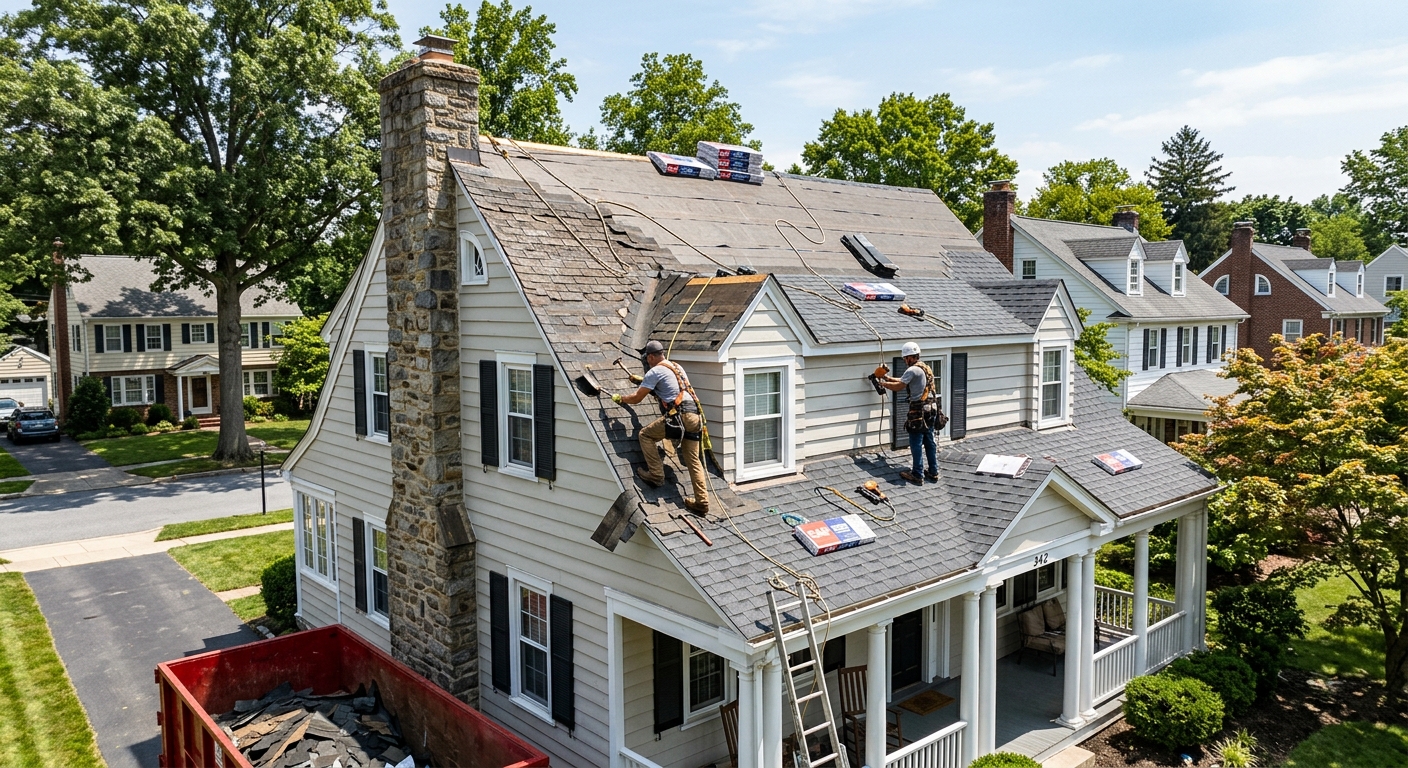
In Tamaqua, roof replacement and repair costs reflect both the local housing stock and the thin contractor market that defines Schuylkill County. With a homeowner rate above sixty percent and most properties built before 1980 (U.S. Census Bureau, ACS 2024), many Tamaqua homes are facing their second or even third generation of roofing needs. This creates steady demand for both full replacements and ongoing repairs. The area’s late-1800s coal-town rowhomes mean that many jobs here are on smaller, steep roofs tightly spaced on narrow lots, with tight access for equipment and debris removal—making even small-footprint jobs logistically cumbersome and rarely eligible for big-city volume discounts.
Multiple layers are common on these houses, which often translates to full tear-offs and re-decking when an old roof finally fails. The most widely used material remains architectural asphalt shingles, chiefly because local suppliers in Schuylkill Haven stock them and they’re proven on the steep slopes typical of Tamaqua’s historic homes. Here’s what Schuylkill County homeowners can expect to pay for roofing work in 2026:
| Material / Scope |
Lifespan |
Best for |
Price range (installed) |
| Asphalt shingles — architectural (30-yr) |
25–30 yrs |
Historic Tamaqua rowhomes, walk-ups, typical single-families |
$8,400–$18,000 |
| Asphalt shingles — impact-resistant (Class 4) |
30+ yrs |
High-wind exposure, ridgeline areas, longer lifespan |
$14,000–$18,000 |
| Metal standing seam |
40–70 yrs |
Longevity, steep slopes, minimal maintenance |
$20,500–$36,500 |
| Flat roof — TPO or EPDM |
15–25 yrs |
Low-slope rowhomes, porches, additions |
$10,500–$21,500 |
| Roof repair — leak or isolated section |
n/a |
Small leaks, sections blown off, emergency patching |
$450–$1,700 |
Prices are estimates for a typical Tamaqua home and vary with roof size, pitch, decking condition and material selection.
Workmanship vs manufacturer warranty
The two main roofing warranties in Tamaqua are the manufacturer warranty and the contractor’s (“workmanship”) warranty, and it’s easy to mix them up. The manufacturer warranty covers defects in the shingles or roofing material itself, not the installation. This kind of coverage is nearly always prorated and comes with fine print: if your roof isn’t ventilated to modern standards, or if it’s layered over old shingles, the warranty may get voided. For most major brands, registering your warranty after installation is a must—and there’s usually a strict deadline (typically 30–60 days).
The workmanship warranty covers any installation mistakes, leaks, or failures due to how the roof was put on—not the shingle itself. In Schuylkill County and Tamaqua, most reputable roofers offer somewhere from 5 to 15 years of coverage, but this is “only as good as the company’s survival.” A 25-year workmanship warranty from a company that’s only been in business for two years is far less valuable than a shorter guarantee from a roofer with a proven presence in the area. Always ask if the warranty can be transferred if you sell your Tamaqua home; with older housing and common sales, this point matters. Most manufacturers allow a one-time transfer, but only if you follow their process to the letter.
What Tamaqua's housing stock means for your roof
The vast majority of Tamaqua homes date back before 1980, and many are even older—built during the coal boom that shaped Schuylkill County. According to the U.S. Census Bureau (ACS 2024), more than 90% of local housing predates 1980. Roofs on these homes are steeply pitched, built to shed snow in a region where 40 pounds per square foot is the design snow load. You’ll often find original plank decking (rarely plywood or OSB), nailed up before modern codes required full-coverage sheathing.
This construction era means you’re likely to encounter roofs with multiple layers—often two, sometimes even three—as each past “repair” solved problems atop the last. Most of these homes went up well before ice and water shield at the eaves was code-required, which contributes to Tamaqua’s frequent ice damming and interior leak calls every winter. At tear-off, it’s common to find boards gapped wide, needing replacement or overlay for a proper shingle install. Many attics are poorly ventilated, making old shingles wear out even faster in our freeze-thaw climate.
If your house is one of the later mid-century single-families (not as common here), you’re likely facing a first or second replacement of a single-layer roof, with at least plywood decking underneath. But for the typical Tamaqua rowhome or detached, plan for extra cost and labor due to access and hidden deck surprises.
Permits and code requirements in Tamaqua
Roofing work in Tamaqua falls under the Pennsylvania Uniform Construction Code (UCC), which is enforced either by the local municipality or, in places that opt out, by the PA Department of Labor & Industry. For most roof replacements and structural repairs, a permit is required—simple patch repairs or shingle replacements sometimes do not, but full tear-offs or new membrane roofs almost always will.
Before hiring anyone, you should verify their Home Improvement Contractor (HIC) registration through the Pennsylvania Office of Attorney General; this is required for any roofing contract over $500. You can check a contractor’s HIC number at hic.attorneygeneral.gov. For insurance, especially workers’ compensation, always ask for proof and cross-verify through the WCAIS system (wcais.pa.gov), as all employers in Pennsylvania must carry this coverage.
If your home was built before 1978 (most Tamaqua houses), any roofing involving disturbing painted surfaces falls under the federal EPA Lead RRP Rule, and you can look up certified renovators at certifiedrenovatorsearch.epa.gov. There is no separate local “roofing licence”—only the HIC registration applies. Written contracts are mandatory over $500, and as a homeowner you have a 3-day right to cancel under state law.
Roofing season and lead times in Schuylkill County
Schuylkill County’s roofing season is set by temperature and daylight, not just the calendar. In our area, proper installation of asphalt shingles only happens when it’s reliably above 40°F—typically late March through early November. Schedules tighten dramatically in September and October, when many homeowners rush to get roofs done before winter’s freeze and snow. A well-timed summer job is easier to book and less likely to be held up by weather, while late fall work always runs the risk of cold snaps halting progress or causing material failures down the line.
Tamaqua’s thin rural contractor market is another issue. With fewer reliable crews than in the cities, reputable roofers book up swiftly for spring and early fall. Be prepared to wait 4–8 weeks during peak season. Emergency work—especially after a February ice dam or wind storm—often draws a premium, since cold-weather installs carry risk and working on icy, steep Tamaqua rowhomes is slow going. Advance planning gets both better pricing and more choice of crews.
Decking, ventilation and flashing — the hidden roof costs
On most Tamaqua re-roof projects, the quoted price covers materials and basic installation, but the real surprises—and extra costs—show up during tear-off. Decking is a big one: many of our rowhomes still have original planking with wide gaps, rot from old leaks, or broken boards. Each sheet of replacement decking usually runs $75–$150 installed, and most jobs need at least a few replaced on the spot.
Poor attic ventilation is a chronic issue in Schuylkill County, with inadequate eave and ridge venting quickly leading to ice dams in winter. If ventilation is missed or undersized, the shingle warranty from the manufacturer is void, and you’ll see ice backup and leaks long before the product’s rated life. Upgrading attic vents or installing ridge vent averages $250–$600 extra. Chimney and wall flashing—hardly ever replaced by past roofers—should be reset or upgraded to step flashing and a properly formed counterflashing; budget $400–$1,200 depending on how much masonry or wall tying is needed. New rubber vent boots cost about $45–$90 each.
Drip edge, required to meet code and essential in preventing fascia rot, usually adds $250–$450 on a typical Tamaqua home. These add-ons don’t show up until your roofer is on the roof and can actually see what’s there. Make sure your contract covers what happens when these hidden items crop up—don’t sign one that doesn’t say how extra costs are handled.
The cost drivers behind a Tamaqua roof replacement
Pricing for roof replacement in Tamaqua is shaped by several local realities. Most homes here are smaller than urban or suburban counterparts but have steep, tall, and sometimes hard-to-access roofs due to narrow alleys and close-together rowhouses. That increases labor costs even when the project seems small on a map. The region’s housing wave—late-1800s to early-1900s rowhomes—means two or more roof layers are common. Stripping each extra layer can add $500–$1,500 in labor and disposal fees, especially if layers include stubborn old slate or cedar shake under the asphalt.
Roof pitch is a major driver—rowhouses and classic Tamaqua singles often have a 10:12 pitch or steeper, requiring harnesses, roof jacks, and extra setup time. The steep pitch isn’t just about safety; it slows down every part of the job, sometimes increasing labor costs by 20–30%. Material choice has a clear impact, too: metal, for example, is costlier up front ($20,500–$36,500) but dominates where homeowners want 50-year life and minimal maintenance.
Winter exposure shapes pricing and installation. Areas like Minersville, St Clair, and ridgetop Tamaqua homes see high winds that punish older shingles, while ice damming along the eaves is routine in every cold season. Modern code requires ice barrier underlayment at the eaves—costing $300–$800 extra per project—but older roofs didn’t have it, so upgrades are often needed. Finally, supply chain limits in Schuylkill County mean material surcharges and longer supplier lead times, especially for metal panels or specialty shingles.
| Factor |
Why it matters here |
Cost impact |
| Roof size in squares |
each square is 100 sq ft of roof surface |
primary multiplier |
| Pitch and access |
steep pitches need harnesses and slow the crew |
+20–30% labour |
| Existing layers to tear off |
two or more layers means full tear-off and disposal |
$500–$1,500 per layer |
| Decking condition |
rot is found during tear-off, not before |
$75–$150 per sheet |
| Ice barrier at eaves |
required where ice damming has a history |
$300–$800 |
| Material grade |
3-tab vs architectural vs Class 4 impact-resistant |
$500–$2,500 |
Frequently asked questions — roofing in Tamaqua
Why do roofs fail faster in northeastern Pennsylvania?
Roofs in Tamaqua and northeastern Pennsylvania deal with harsh winter conditions and frequent freeze-thaw cycles. A 40 psf snow load, severe ice damming, and wind gusts—especially on Tamaqua’s ridgetop homes—mean that shingles and flat membranes break down faster than in milder climates. Older homes here usually have attic ventilation that isn’t up to current standards, which makes ice dams and heat loss worse. A typical architectural asphalt shingle here may only last 18–25 years—barely two-thirds the “30-year” rating printed on the package. As a result, it’s common to see full replacements in the $8,400–$18,000 range happening sooner here than in southern states. If you keep up with ice dam mitigation and proper attic venting, you can stretch your roof’s life, but our climate adds maintenance challenges you can’t ignore.
Will filing a roof claim raise my premium?
While Pennsylvania law does not prohibit insurers from raising premiums after a claim, most homeowners in Tamaqua will see at least some increase if they file for storm damage or a major roof repair. Smaller repairs (like a $450–$1,700 shingle patch) usually aren’t worth a claim—deductibles eat up most of the payout and your rates may rise regardless. After major hail or wind events, widespread claims can reset rates for an entire neighborhood. If your roof is already old, insurers may depreciate the value on payout. Consider a claim when the damage is widespread or catastrophic, but not for minor leaks that you can afford to repair out of pocket. Always check your policy and talk with your agent before making a final decision.
Is ice barrier underlayment required in Tamaqua?
Yes, under the Pennsylvania Uniform Construction Code, new roof installations in Tamaqua require ice barrier underlayment at the eaves wherever there is a history of ice damming—and Schuylkill County absolutely qualifies. Most Tamaqua homes were built before this rule and won’t have it unless a recent full replacement included the upgrade. The cost to add a strip of ice and water shield at the roof perimeter is generally $300–$800, but skipping it is risky. Without this barrier, water from melting snow backs up under shingles, causing leaks and rot inside the home. Even if your current roof doesn’t have it, all reputable contractors now include it on new jobs meeting code. Ask your roofer to be explicit about including ice barrier in your contract.
How many quotes should I get for a roof in Tamaqua?
For Tamaqua homeowners, two to three detailed quotes is usually enough. You’ll find the contractor pool in Schuylkill County is thin, with a handful of established roofers and some crews traveling in from the metros. Getting more than three bids gives a false sense of price shopping because most major crews will already have overlapping suppliers and market pricing. Look for clear scopes, included hidden items (like decking or flashing), and straightforward pricing—if two estimates are close, don’t automatically pick the lowest. Most architectural shingle replacements fall in the $8,400–$18,000 range. If a quote seems much cheaper or faster than others, dig into what’s being left out or ignored. The best contractor writes everything down and answers every question.
How much does a new roof cost in Tamaqua?
A full asphalt architectural shingle replacement for a typical Tamaqua rowhome or small single-family will land between $8,400–$18,000. Historic homes with steep, hard-to-access roofs are common here, so expect costs toward the upper end for multiple layers or decking work. Metal standing seam is popular for longevity—even with a higher upfront price of $20,500–$36,500. Smaller repairs (missing shingles, leaks) usually run $450–$1,700, but patching only buys time if your roof is already past its useful life. Tight lots and rural travel surcharges are part of living in Schuylkill County—a reason Tamaqua prices aren’t as low as you’d hope.
Is a sagging roof line an emergency?
In Tamaqua, a sagging roof line likely points to serious structural trouble. On older rowhomes, this is often from rotted decking, undersized rafters, or decades of heavy snow. If you see a fresh or worsening sag—especially after winter—call a qualified roofer or structural contractor immediately. While repairs can sometimes run in the $450–$1,700 range for a small isolated decking fix, major sags usually require more extensive work, possibly reframing or even partial rebuilds that hit several thousand dollars. Left unaddressed, a roof sag can turn from a nuisance into a sudden collapse, especially during heavy snow or rain events common in northeastern Pennsylvania. Don’t delay this repair, even if you need to get an emergency tarp up first.
How much does a flat roof replacement cost in Tamaqua?
Flat roofs—mostly TPO or EPDM membranes—are found on Tamaqua rowhome additions, porches, and some single-families. Replacement costs on these structures run $10,500–$21,500 in 2026, with local labor pricing influenced by small-job set-up and access. Most of these jobs are smaller than what you’d find in urban centers, but you don’t get a “small job” discount—Skilled crews factor setup and debris removal into every quote, no matter the size. Tearing off old built-up or tar-and-gravel roofing adds to cost because it’s more time-consuming to remove. If your flat roof needs insulation upgrades or re-decking, expect to pay toward the higher end. These roofs usually last 15–25 years if installed right, but with our local weather swings, sooner replacements are common.
What is the difference between TPO and EPDM?
TPO and EPDM are the two main flat roof membranes used in Tamaqua. TPO (thermoplastic polyolefin) is a white membrane that reflects heat and is popular for porch additions or rowhome flats where energy savings matter. EPDM is a black rubber sheet, flexible and time-tested, often preferred for older coal-town roofs with lots of penetrations or odd shapes. Both systems run in the same ballpark—$10,500–$21,500 for typical Tamaqua installations. TPO is heat-welded at seams, while EPDM relies on adhesive. Most Tamaqua roofers are comfortable with either, but make sure you’re getting one with experience in our cold, ice-prone climate—seams and flashing details are where most flat roofs here fail.
Do I need to leave my house during a roof replacement?
Most Tamaqua homeowners don’t need to leave during a roof replacement. Expect noise—hammering, shingle scraping, and footsteps overhead—from about 7am until late afternoon, with the work lasting one to three days for a typical job in the $8,400–$18,000 range. The crew needs outside and attic access for vent checks, so pets and kids are best kept clear. If you work from home or are noise-sensitive, plan for disruption. Only in major tear-offs or flat roof jobs on rowhomes (where interior ceilings may be disturbed) are you ever advised to vacate, and even then, it’s usually only for a day or two. Make sure your roofer has a cleanup plan—Tamaqua’s tight lots mean nails and debris don’t travel far but can cause trouble if left behind.